Self vs StellarFi: A Loan and a Card, Not Two Versions of One Thing
These two show up in the same lists, so people assume they’re rivals doing the same job. They aren’t.
Self is a credit-builder loan. StellarFi is a credit card now. One ends with savings in your pocket, the other ends with a card in your wallet.
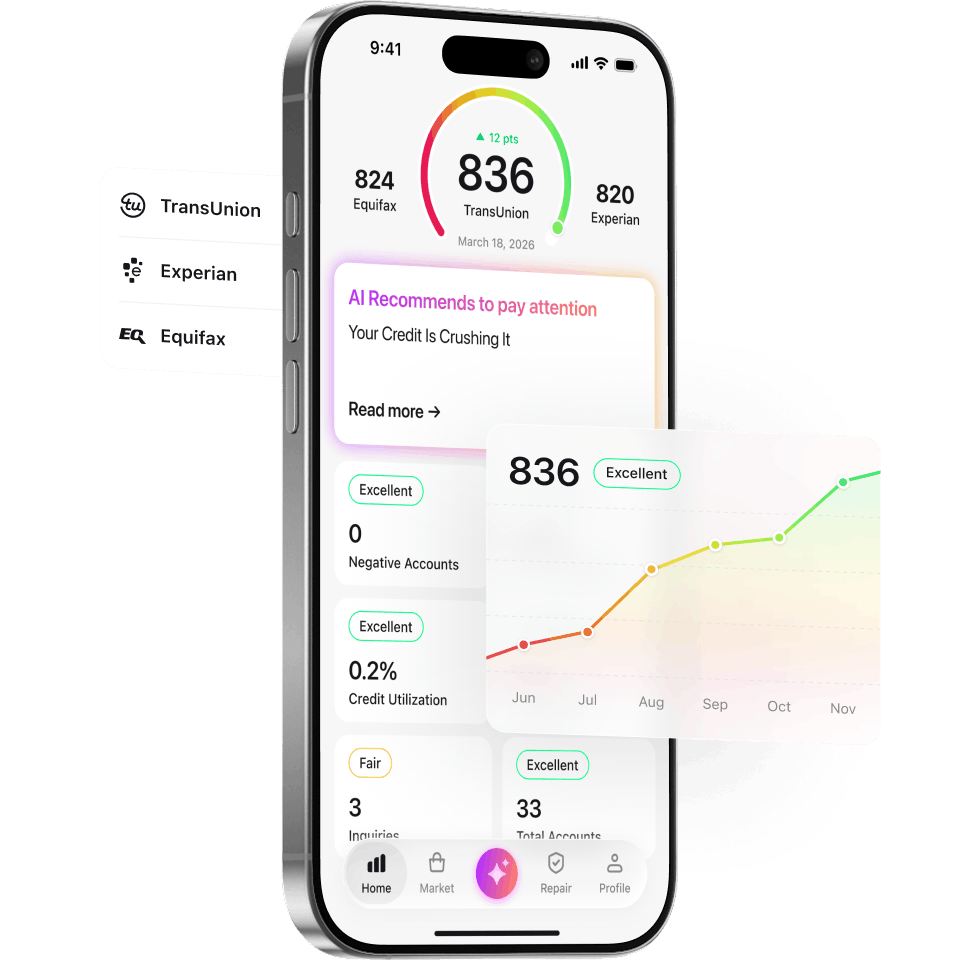
So the real choice is about what you want to walk away with, and whether either fixes your actual problem. If your score is low because of an error, neither one reaches it. Credit Booster AI reads all three of your reports, drafts the paperwork to challenge the errors, and reports rent and bills on top, for $9.99 a month.
The Short Version
- Want savings at the end? Self. The payments build a balance you get back.
- Want a card on your file? StellarFi. Silver is a $0-a-year secured card.
- Want rent reported too? Self offers rent reporting to all three bureaus.
- Score low from errors? Neither. Read the report and fix it first.
How They Build Credit
The mechanisms are opposites, which is the whole point.
Self works like a savings-backed loan. You pick a plan, pay a fixed amount each month, and Self holds that money in an account. It reports those on-time payments to all three bureaus as an installment loan. When the term ends, you get the balance back, minus interest and a small fee. So you’re building an installment tradeline AND forcing yourself to save at the same time. That installment history also helps your credit mix, which a card alone doesn’t.
StellarFi used to report your bills. Now it’s the Smart Card. You use the card, pay it on time, and it reports to all three bureaus like any card. The Silver tier is secured, meaning your deposit sets the limit, and it carries no annual fee. The old bill-reporting subscription is largely gone, so treat older StellarFi reviews with suspicion.
Both are real building. Both add history. Neither subtracts a problem.
Cost, Compared Fairly
Self’s monthly payment looks bigger, but most of it isn’t a cost. On a credit-builder plan running from about $25 to $150 a month, the bulk comes back to you as savings at the end. What you actually spend is the interest and the fee, not the whole payment.
StellarFi’s card tiers are a truer fee: $0 a year for Silver, $49 for Gold, $99 for Stellarite. Nothing comes back. But $0 for Silver is genuinely cheap.
So the honest comparison isn’t $25 versus $0. It’s “a small net cost plus forced savings” versus “a small flat fee and a card.” A saver who struggles to set money aside gets more from Self than the sticker suggests. Someone who just wants a cheap tradeline gets it from StellarFi’s Silver.
Where Each One Wins
Self wins for the person who wants to build credit and savings together, and who values an installment loan on a file that’s all cards or nothing. Getting money back at the end turns a credit tool into a savings habit. Add its rent reporting and you can cover two tradelines in one app.
StellarFi wins for the person who specifically wants a card, likes the Public Benefit Corporation mission, and wants the lowest possible entry at $0 for Silver. A secured card reporting to all three bureaus with no set score to qualify is a solid starter.
The honest caution on both: Self ties up money for the term, so it’s the wrong tool if cash is tight month to month. And StellarFi is mid-transition, so verify current terms before you rely on any specific detail.
The Verdict
Choose by what you want to end with. Savings and an installment tradeline, take Self. A secured card and the lowest entry cost, take StellarFi Silver. Both report to all three bureaus, and both work for all credit profiles.
But look at the shared blind spot. Neither reads your report. Neither challenges the wrong 30-day late or the collection that’s actually holding your number down. A loan and a card both add to the file, and adding does nothing about a mark that shouldn’t be there.
That’s where Credit Booster AI fits. It scans your Experian, Equifax and TransUnion reports, flags the errors likely dragging your score, drafts the paperwork to challenge them, and reports your rent and bills to build history, for $9.99 a month. On the right file the two together are worth 30 to 60 points. Free to download on iOS and Android, with a 7-day trial. Thin file, a builder like these is fine. Damaged file, start with the scan.
Related reading: See the StellarFi review, does rent reporting really raise your score, or the best rent reporting service.
Self vs StellarFi vs Credit Booster AI
A loan you get back, a credit card, and a report scan with rent reporting. Confirm current pricing on each company's site before you enroll.
| Feature | Self | StellarFi | Credit Booster AIThis is us |
|---|---|---|---|
| What it actually is | A credit-builder loan | A credit card now | Report scan plus rent and bill reporting |
| Monthly cost | From about $25 a plan | $0 to $99 a year | $9.99 a month |
| Reports to all 3 bureaus | Yes | Yes | Yes |
| Reports your rent | Yes, add-on | No | Yes |
| You get money back at the end | Yes | No | No |
| Finds and challenges report errors | No | No | Yes |
Source: Company pages: self.inc, stellarfi.com, creditbooster.ai. Pulled July 20, 2026.
Loving This Info? You'll Love Our App.
Everything you just read, plus AI-powered tools to understand and master your credit. 7 day free trial.
Get the AppFrequently Asked Questions
Is Self or StellarFi better for building credit?
It depends on whether you want savings at the end. Self is a credit-builder loan: you pay monthly, the money is held for you, and you get most of it back when the term ends, minus interest and fees. It reports to all three bureaus. StellarFi is now a credit card that builds credit through usage, and its Silver tier is a secured card at $0 a year. If you want to build credit and come out with a chunk of savings, Self. If you want a card on your file, StellarFi.
How much does each cost?
Self's credit-builder plans commonly run from about $25 to $150 a month, and much of that comes back to you at the end as savings. StellarFi moved to card tiers: $0 a year for Silver secured, a $49 annual fee for Gold, and a $99 annual fee for Stellarite. StellarFi's $0 Silver is the cheaper entry, but Self's monthly payment is partly savings, not a pure fee, so compare on net cost, not sticker price.
Does Self report rent too?
Yes. Beyond the credit-builder loan, Self offers rent reporting to all three bureaus, and for an added monthly fee it can also report utility and cell phone payments. So Self can cover both a loan tradeline and rent, where StellarFi's current focus is the card rather than bills.
Which reports to all three bureaus?
Both do. Self's credit-builder loan and rent reporting reach all three, and StellarFi's Smart Card reports to all three as well. StellarFi's retired bill-reporting model only reached two bureaus, so make sure any review you read is describing the current card, not the old product.
Do Self or StellarFi fix a damaged report?
No. Both add positive history, but neither reads your report for errors or challenges a wrong late payment or a collection. If your score is low because of something wrong on the file, a loan or a card sits next to it without removing it. Credit Booster AI scans all three reports, drafts the paperwork to challenge errors, and reports rent and bills, for $9.99 a month.