The Honest Answer: It Depends On One Thing
Most rent reporting ads skip the part that decides everything. They show you a big number and a happy renter. Here’s what they leave out.
Rent only helps the scores that actually count rent. That’s it. That’s the whole game.
FICO 8, the version most credit card issuers and plenty of lenders still pull, ignores rent completely. Rent does show up and does help on VantageScore 3.0 and 4.0 and on the newer FICO 9 and 10T. So the real question isn’t “does rent reporting work.” It’s “which score is the lender I care about going to pull.”
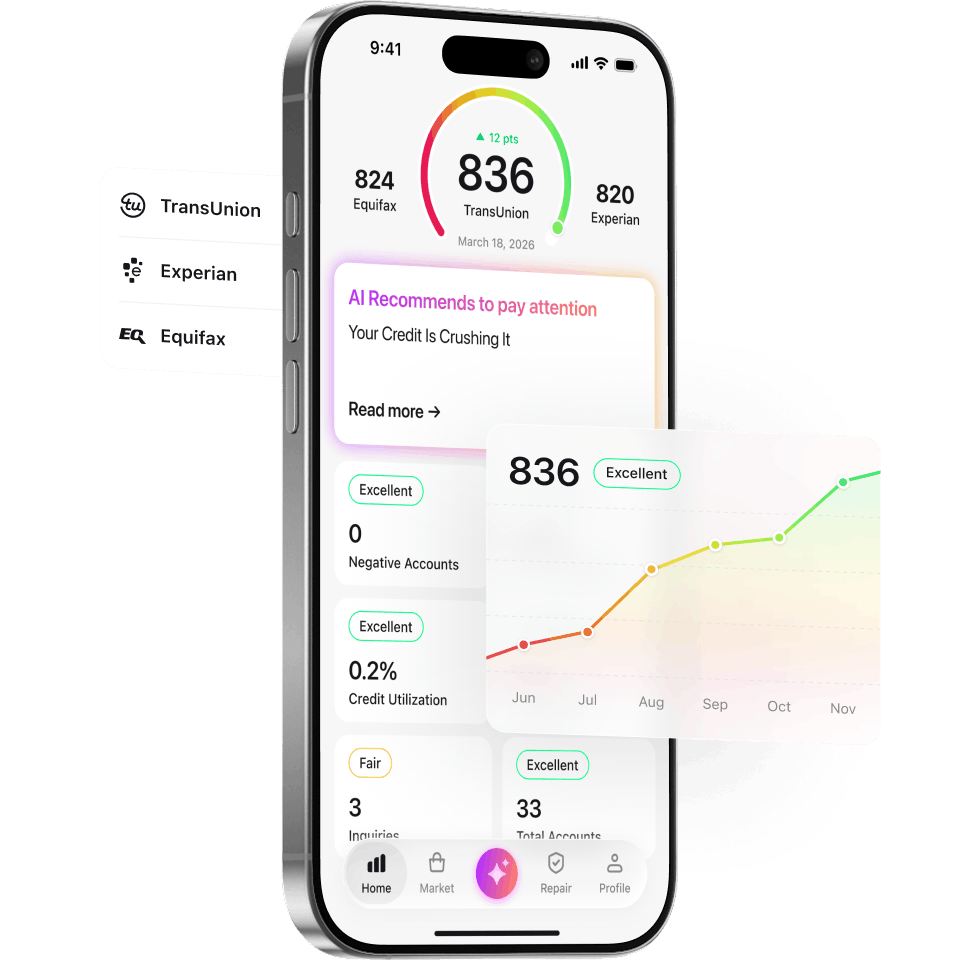
Get that one fact right and you’ll know whether to spend a dime on this. If your credit trouble is a wrong late payment or a collection, rent reporting won’t touch it. Credit Booster AI reads all three of your reports, flags the errors dragging you down, drafts the paperwork to challenge them, and reports rent and bills on top, for $9.99 a month.
Where Rent Actually Counts
Think of your credit not as one score but as a stack of different models, each reading your file its own way.
- VantageScore 3.0 and 4.0: count rent. This is what Credit Karma and many free apps show you.
- FICO 9 and FICO 10T: newer FICO models that count rent. Adoption is growing but slow.
- FICO 8: the workhorse. Most card approvals run on it, and it counts NO rent.
- Classic mortgage FICO (versions 2, 4 and 5): the standard mortgage pull, and they ignore rent too.
So a rent tradeline can lift the score your landlord’s screening tool sees and the score a VantageScore lender uses, while a card application that pulls FICO 8 shows nothing changed. That’s not a glitch. That’s the models disagreeing on purpose.
The honest limit: if the lender you’re aiming at pulls FICO 8 or a classic mortgage FICO, rent reporting does close to nothing for that specific decision. Confirm the pull before you pay.
Who Actually Benefits
Rent reporting is a real tool for the right file. It’s close to useless for the wrong one.
It helps most when your file is thin. If you have one card or none, and no loan history, adding a year or two of on-time rent gives a bare file something to stand on. Backdated rent from a service like Boom is what does the heavy lifting here, because it posts real history at once instead of dripping in month by month.
It helps least when your file is already thick. If you’ve got several accounts and a payment record, rent adds a line to a file that already tells the story. You might see a small bump. You might see nothing.
And it does nothing for the thing people most want fixed. A late payment, a charge-off, a collection: rent reporting sits next to those, it doesn’t remove them. If that’s your situation, the lever is cleaning the report, not stacking rent on top of a mark that’s still there.
What Rent Reporting Cannot Do
Here’s the part the ads won’t say out loud.
It can’t fix errors. A rent tradeline doesn’t challenge the wrong 30-day late that’s costing you 40 points. It can’t force FICO 8 to count rent, no matter how many bureaus the service hits. And it can’t guarantee a number, so run from anyone who promises you an exact points gain.
It also can’t undo a bad month. Report a late rent payment through one of these services and it can post as a negative, just like any late payment on a score that counts rent. That’s the trade for getting the on-time months to count.
So use it for what it’s good at. Thin file, on-time payer, lender who pulls a modern score. Outside that box, your money is better spent elsewhere.
The Verdict on Rent Reporting
Rent reporting is legit, and for a thin-file renter who pays on time and is heading toward a VantageScore lender, it’s a smart, cheap move. Backdating makes it better. Free options like Experian Boost and Piñata’s core tier make it low-risk to try.
But it’s a thickener, not a repair. If your score is low because something on the report is wrong or unpaid, rent won’t reach that. That job is reading all three reports, finding the errors, and challenging them, then adding history once the file is clean.
That’s the job Credit Booster AI was built for. It scans your Experian, Equifax and TransUnion reports, flags the items likely dragging your score, drafts the paperwork to challenge them, and reports your rent and bills to build history, for $9.99 a month. On the right file that combination is worth 30 to 60 points. Free to download on iOS and Android, with a 7-day trial. Start there, then let rent do its smaller job on top.
Related reading: See how rent reporting builds credit in 2026, compare the best rent reporting services, or check does my landlord report my rent.
By the numbers
The score that ignores rent
FICO 8
Still the most common version credit card issuers and many lenders pull. It counts no rent at all.
myFICO score versions, July 20, 2026
The scores that do count rent
VantageScore 3.0 and 4.0
Plus newer FICO 9 and 10T. VantageScore is what Credit Karma shows, and more lenders keep adopting it.
VantageScore, July 20, 2026
Cost of the free option
$0
Experian Boost adds on-time rent, utilities and phone to your Experian file at no charge, but it moves one bureau only.
Experian, July 20, 2026
Source: myFICO score versions. Pulled July 20, 2026.
Loving This Info? You'll Love Our App.
Everything you just read, plus AI-powered tools to understand and master your credit. 7 day free trial.
Get the AppFrequently Asked Questions
Does rent reporting actually raise your credit score?
Sometimes, and only on the scores that count rent. Rent appears on VantageScore 3.0 and 4.0 and on newer FICO 9 and 10T, so those scores can go up. FICO 8, the version most credit card issuers and many lenders still pull, does not count rent at all, so it will not move from rent alone. Whether rent helps you depends entirely on which score the lender you care about is going to pull.
Why does rent help my Credit Karma score but not my real one?
Credit Karma shows VantageScore 3.0, which counts rent. Most lenders pull a FICO score, and the common FICO 8 ignores rent. So it is normal to watch a rent tradeline lift your Credit Karma number while a card application that pulls FICO 8 sees no change. Both are real scores. They just weigh rent differently.
How many points can rent reporting add?
There is no fixed number, and anyone promising an exact figure is guessing. A thin file with little other history tends to gain the most, especially when a service backdates a year or two of on-time rent at once. A thick file with several existing accounts often sees little to nothing, because the file already has what rent would add. Treat rent as a thin-file thickener, not a rescue for a damaged report.
Is it worth paying for rent reporting?
It can be if you have a thin file, you pay rent on time, and you can confirm your target lender pulls a score that counts rent. It is usually not worth it if your score is low because of errors or collections, since a new rent tradeline does not remove those. Fixing what is wrong on the report moves the needle more than adding rent on top of a broken file.
Can rent reporting hurt my score?
On-time rent will not hurt you. But if a service reports a late or missed rent payment, that can land as a negative mark on the scores that count rent, the same way any late payment would. Only report rent you actually pay on time, and read whether the service reports missed months before you enroll.
What is the cheapest way to get rent on my credit?
Experian Boost is free, but it only touches your Experian file. Piñata has a free core tier that reports to all three bureaus. Boom runs about $3 a month and adds up to 24 months of past rent for a one-time fee. Pick based on which bureaus you need and whether you want backdated history, not on the lowest sticker price alone.