Is Credit One Predatory? No, but It’s Expensive by Design
Let’s kill the word first. “Predatory” implies a scam, and Credit One isn’t one. It’s a real bank, it issues real Visa and Mastercard cards, and it reports to all three bureaus, so the card genuinely builds credit. That part is true.
Now the fair criticism. Its main rebuilding card charges a $75 first-year fee, then $99 a year, plus an APR around 29.74%. And the fee is billed the day you open, so it shrinks your credit line before you spend anything.
So the honest verdict isn’t “scam.” It’s “you’re probably overpaying for a build you could get cheaper.” That distinction matters, because closing the wrong account can hurt you.
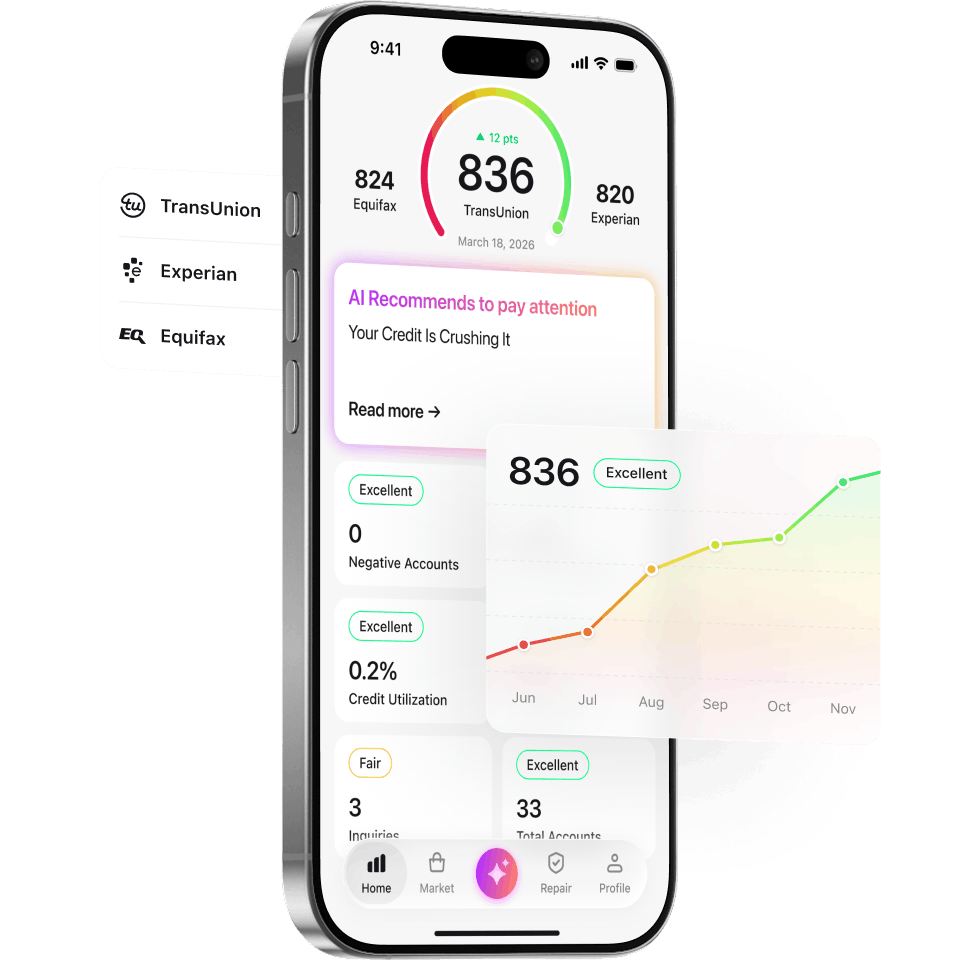
If your real problem is a negative already on your report, no card fixes that. Credit Booster AI scans all three reports and flags what looks wrong for $9.99 a month.
The Fees Nobody Reads Until Later
Here’s the part that generates the complaints, straight from Credit One’s own terms.
The Platinum Visa for Rebuilding Credit runs a $75 annual fee the first year, then $99, billed at about $8.25 a month. The purchase APR is roughly 29.74% variable. Late and returned payments cost up to $39 each. It does pay 1% cash back, but only on select categories, gas, groceries, mobile phone, internet and cable, not on everything.
The number that stings is the available credit. Credit One’s own disclosure gives the example: on the minimum $300 line, the $75 fee is deducted up front, leaving about $225 to actually use. You’re at 25% utilization of your usable credit on day one, before a single purchase.
None of that is hidden or illegal. It’s all in the terms. It’s just a lot of cost for a starting card.
The Comparison That Makes the Fee Look Worse
Here’s the concession that reframes everything, and it comes from Credit One itself. Credit One also offers a secured card with a $0 annual fee.
Same bank, same 1% category cash back, same three-bureau reporting, no $75 or $99 fee. The only difference is you put down a refundable deposit, starting around $200, which you get back later. So the fee on the Platinum card isn’t buying you anything the secured card lacks. It’s the price of skipping the deposit.
Widen the lens and it looks even more lopsided. Discover it Secured and Capital One Platinum Secured both charge no annual fee, both report to all three bureaus, and Discover even pays rewards with a first-year match. Against those, a $75 then $99 fee for a build-only unsecured card is a hard sell for anyone who can spare a deposit.
When Credit One Actually Makes Sense
To be fair to the card, there’s a real use case. If you’ve been declined for a secured card, or you genuinely cannot tie up any cash in a deposit right now, an unsecured card that approves challenged credit and reports to all three bureaus has value. Building history beats not building it.
That’s the narrow lane: no deposit available, and you’ll pay in full so the 29.74% APR never touches you. In that spot, the annual fee is the cost of a door that would otherwise be closed. Outside that lane, a no-fee secured card does the same job for less.
The Verdict on Credit One
Not predatory in the scam sense. Expensive in the honest sense. It’s a functioning card that builds real credit and reports to all three bureaus, and for someone with no deposit and no other approval, it opens a door.
But the $75 then $99 fee, the day-one hit to your available credit, and the high APR mean most people can do better with a no-fee secured card, including Credit One’s own. If you already have the Platinum card, don’t reflexively close it, especially if it’s your oldest account. Stop carrying a balance, build elsewhere, and do the utilization and age math before you cancel.
And remember what a card can’t do. It builds forward. It doesn’t remove a late or a collection already reported. Credit Booster AI reads all three reports, challenges what’s inaccurate, and builds history through rent and bill reporting, for $9.99 a month. Free to download on iOS and Android.
Sources
- Credit One Platinum Visa for Rebuilding Credit, annual fee ($75 then $99), APR (29.74% variable), 1% category rewards, $300 minimum line, and the available-credit disclosure: creditonebank.com/credit-cards/platinum-visa-for-rebuilding-credit and Credit One cardholder terms (verified 2026-07-20)
- Credit One Bank Secured Card, $0 annual fee, refundable deposit, three-bureau reporting: creditonebank.com/credit-cards/secured-card-visa (verified 2026-07-20)
Related reading: Compare no-fee options in the best starter credit cards with no history, or read credit builder app vs secured card.
What the Credit One Platinum rebuilding card actually costs
Real, current figures from Credit One's own terms. No exaggeration needed.
Platinum for Rebuilding annual fee
$75 then $99
Billed the day the account opens, before you spend a dollar.
Credit One Bank cardholder terms (rates accurate as of 6/30/2026), July 20, 2026
Usable credit on a $300 line, day one
about $225
Credit One's own example: the $75 fee comes straight out of your starting limit.
Credit One Bank, Platinum Visa for Rebuilding Credit disclosure, July 20, 2026
Purchase APR
29.74%
Variable. A carried balance gets expensive quickly at this rate.
Credit One Bank cardholder terms, July 20, 2026
Credit One's own secured card annual fee
$0
Put down a refundable deposit instead and the annual fee disappears.
Credit One Bank Secured Card, July 20, 2026
Source: Credit One Bank cardholder terms and product pages. Pulled July 20, 2026.
Loving This Info? You'll Love Our App.
Everything you just read, plus AI-powered tools to understand and master your credit. 7 day free trial.
Get the AppFrequently Asked Questions
Is Credit One Bank predatory or a scam?
It is not a scam. Credit One is a real, FDIC-insured bank, it issues Visa and Mastercard products, and it reports your payments to all three bureaus, so the card does build credit. The fair criticism is the cost structure on its rebuilding cards: a $75 then $99 annual fee, a roughly 29.74% variable APR, and a fee that reduces your available credit the day the account opens. Legal and functional, but expensive.
How much does the Credit One Platinum card cost?
The Platinum Visa for Rebuilding Credit charges a $75 annual fee the first year, then $99 a year after that, billed as about $8.25 a month. The purchase APR is around 29.74% variable. There are late and returned payment fees up to $39 each. It pays 1% cash back, but only on select categories like gas, groceries, mobile phone, and internet or cable, not on everything.
Why does my Credit One credit limit look smaller than approved?
Because the annual fee is billed the moment the account opens and comes straight out of your starting limit. Credit One's own example says that on the minimum $300 credit line, the $75 first-year fee leaves you with only about $225 of available credit before you spend a dollar. That is the single most common complaint, and it is baked into the terms, not a mistake.
Is there a cheaper alternative to the Credit One Platinum card?
Yes, and one of them is Credit One's own secured card, which has a $0 annual fee. If you can put down a refundable deposit, a secured card from Credit One, Capital One, Discover, or OpenSky builds the same three-bureau history without the $75 or $99 annual fee eating your limit. The Platinum rebuilding card mainly makes sense if you cannot or will not put down any deposit.
Should I close my Credit One card?
Not automatically. If it is your oldest account, closing it shortens your credit history and can raise your utilization, which may lower your score. Often the better move is to stop carrying a balance, pay the annual fee while you build elsewhere, and once you qualify for a no-fee card, keep the Credit One open in the background or downgrade if offered. Do the math before you close anything.
Does the Credit One card actually build credit?
Yes. It reports your activity to Experian, Equifax, and TransUnion, so on-time payments build real history across all three bureaus. That part works exactly as advertised. The debate is not whether it builds credit, it is whether you are paying more than you need to for a build a no-fee secured card would give you for less.