Capital One Savor Student Review: A Real Rewards Card for Students
Most student cards are boring on purpose. This one isn’t. No annual fee, and it pays 3% cash back on dining, entertainment, popular streaming, and groceries, which is most of what a student actually spends on. Everything else earns 1%.
Two features punch above the “student card” label. There’s no foreign transaction fee, so it’s genuinely good for studying abroad. And there’s a $100 bonus after just $300 of spending in the first three months, which most students clear without trying.
The honest catch is the APR. It runs a variable rate in the high teens to high twenties, so a carried balance is expensive. Pay in full and the rewards are pure upside.
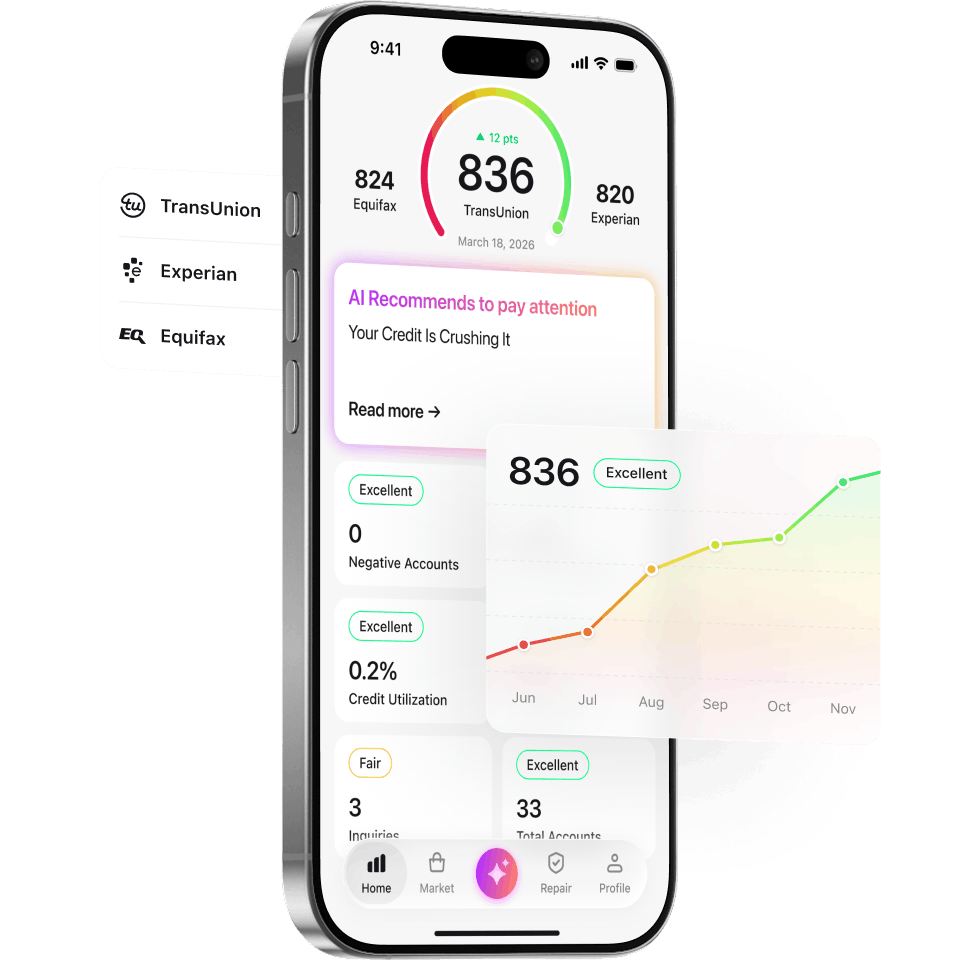
A card builds credit going forward. It can’t repair a report. If something is already hurting your score, Credit Booster AI scans all three reports and flags what looks wrong for $9.99 a month.
The Rewards, in Plain Numbers
Here’s where the card earns its keep. On dining, entertainment, popular streaming services, and at grocery stores, you get 3% back. On everything else, 1%.
There are two higher tiers through Capital One’s own booking channels: 5% on hotels and rental cars booked through Capital One Travel, and 8% on Capital One Entertainment purchases. Those only apply inside Capital One’s platform, so treat them as a bonus, not the everyday rate.
For a student whose budget is mostly food, streaming, and the occasional concert, 3% on the core categories with no annual fee is a strong return. The rewards don’t expire while the account’s open.
Savor Student vs a Flat-Rate Starter
Line it up against the Chase Freedom Rise and the split is about how you spend and who you are.
Savor Student wins on rewards for a student: 3% on the categories students live in, plus no foreign transaction fee for study abroad, plus a $100 bonus. If you’re enrolled and you eat out, it pays more.
Freedom Rise wins in two cases. You’re not a student, so the Savor Student’s enrollment requirement rules you out. Or you value a flat 1.5% on everything with nothing to think about and you bank with Chase. Freedom Rise also has no bonus category rules to learn. So it’s Savor Student for the enrolled spender, Freedom Rise for the non-student or the simplicity-seeker.
The Honest Limits
The APR is the main one. A student card is still a credit card, and carrying a balance at a high-teens-to-high-twenties variable rate erases your rewards fast. The whole value here assumes you pay in full.
The other limit is eligibility. You must be a student, 18 or older, and 21 if you have no independent income. If you don’t fit that box, this isn’t your card. And, like every card, it builds history but does nothing about a negative already sitting on your file. A rewards card is a building tool, not a repair one.
The Verdict on the Capital One Savor Student
It’s one of the better student cards you can hold. No annual fee, genuinely useful 3% categories, no foreign transaction fee, three-bureau reporting, and a $100 bonus that’s easy to earn make it a strong first card for anyone enrolled.
The caveats are the high APR if you carry a balance and the student-only eligibility. Neither is unusual, and neither matters if you pay in full and you’re actually a student.
If your score is being dragged down by an error rather than a thin file, a rewards card won’t fix that. Credit Booster AI reads all three reports, challenges what’s inaccurate, and builds history through rent and bill reporting, for $9.99 a month. Free to download on iOS and Android. Spend on the card to build, and clean the report separately.
Sources
- Capital One Savor Student Cash Rewards, no annual fee, 3% categories, $100 bonus, no foreign transaction fee, and student eligibility: capitalone.com/credit-cards/savor-student (verified 2026-07-20)
- Capital One Savor rewards tiers (5% Capital One Travel, 8% Capital One Entertainment, no foreign fee): Capital One, everything about Savor (verified 2026-07-20)
- Capital One three-bureau reporting: Capital One, the three credit bureaus (verified 2026-07-20)
- Savor Student purchase APR (variable, published as 18.49% to 28.49%), Capital One rates and disclosures as reported: U.S. News, Capital One Savor Student (verified 2026-07-20)
Related reading: See the best starter credit cards with no history, or the Chase Freedom Rise review.
Capital One Savor Student vs Chase Freedom Rise
A student rewards card with no foreign fee, against a flat-rate starter card.
| Feature | Capital One Savor Student | Chase Freedom Rise |
|---|---|---|
| Annual fee | $0 | $0 |
| Rewards | 3% dining, entertainment, streaming, groceries; 1% else | 1.5% flat cash back |
| Welcome bonus | $100 after $300 spend in 3 months | $25 autopay statement credit |
| Foreign transaction fee | $0 | 3% |
| Student enrollment required | Yes | No |
| Reports to all 3 bureaus | Yes | Yes |
| Purchase APR (variable) | 18.49% to 28.49% | 18.24% to 27.74% |
Source: Issuer pages: capitalone.com and chase.com. Pulled July 20, 2026.
Loving This Info? You'll Love Our App.
Everything you just read, plus AI-powered tools to understand and master your credit. 7 day free trial.
Get the AppFrequently Asked Questions
Is the Capital One Savor Student card worth it?
For a student who eats out, streams, and buys groceries, yes. It charges no annual fee, pays 3% cash back on dining, entertainment, popular streaming, and grocery stores, 1% on everything else, and has no foreign transaction fee, which is rare on a student card and great for studying abroad. There is also a $100 bonus after $300 in spend in the first three months.
What credit score do you need for the Capital One Savor Student?
It is designed for students with limited or no credit history, and Capital One says you may be eligible even without a credit history yet. You must be enrolled or admitted at an accredited school and at least 18, or 21 if you have no independent income. Third-party guidance often points to fair credit around the mid-600s for the smoothest approval, but a thin file can qualify.
Does the Capital One Savor Student have a foreign transaction fee?
No. It charges no foreign transaction fee, which is a standout for a student card and makes it well suited to studying or traveling abroad. Many starter and student cards charge 3% on foreign purchases, so a $0 foreign fee quietly saves real money on any spending outside the US.
How much does the Capital One Savor Student earn?
It pays 3% cash back on dining, entertainment, popular streaming services, and at grocery stores, and 1% on all other purchases. Through Capital One Travel and Capital One Entertainment it pays even higher rates, 5% on hotels and rental cars booked through Capital One Travel and 8% on Capital One Entertainment purchases. Rewards do not expire while the account is open.
Does the Capital One Savor Student report to all three bureaus?
Yes. Capital One reports to all three major bureaus, Experian, Equifax, and TransUnion, so on-time payments build your credit across every report a future lender might pull. That three-bureau reporting is what turns responsible student spending into a real credit history.
Savor Student vs Chase Freedom Rise: which is better for a student?
If you are enrolled and spend on dining, streaming, and groceries, the Savor Student pays more and charges no foreign transaction fee, which wins for study abroad. The Freedom Rise pays a flat 1.5% and leans on a Chase banking relationship for approval but does not require you to be a student. Choose Savor Student for the richer category rewards, Freedom Rise if you are not a student or already bank with Chase.