The Best First Card for No History Is the Discover it Secured
If you have no credit history and want one card, get the Discover it Secured. The deposit gets you approved when nothing else will, it charges no annual fee, it reports to all three bureaus, and it actually pays rewards. Most secured cards pay nothing.
That’s the pick for most people. The honest exception: if you bank with Chase and want no deposit, the Chase Freedom Rise is unsecured and just as good a builder.
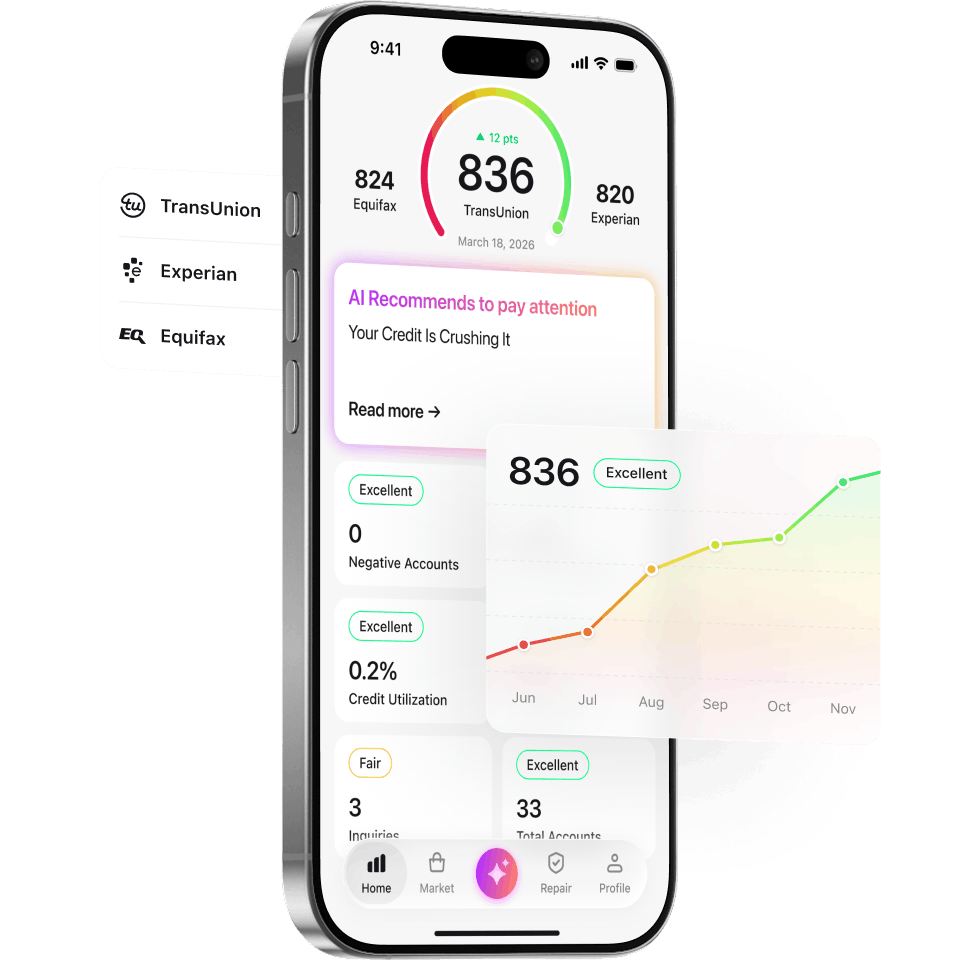
None of these fix a report. They build forward. If a negative is already dragging your score, Credit Booster AI scans all three reports and flags what looks wrong for $9.99 a month.
The Ranked Picks
Four cards, all no annual fee, all three-bureau reporting. Here’s the order for a no-history file.
- Discover it Secured best overall. Deposit-backed approval, 5% rotating rewards plus a first-year match, graduates to unsecured.
- Chase Freedom Rise best if you want no deposit and bank with Chase. Unsecured, flat 1.5% back.
- Capital One Savor Student best for students. Rich 3% categories, no foreign fee.
- Capital One Platinum Secured best low-deposit builder. A $200 line for as little as a $49 deposit, no rewards.
1. Discover it Secured: The One to Beat
This is the rare secured card that doesn’t feel like a penalty. The deposit is $49, $99, or $200 based on your credit, and it unlocks a line of at least $200. No annual fee. Reports to Experian, Equifax, and TransUnion.
What sets it apart is the rewards. You earn 5% on rotating quarterly categories you activate, 1% on everything else, and Discover matches all of it at the end of year one. On a card built for a thin file, that’s genuinely unusual, and it means the card pays you while it builds you.
It graduates, too. Build a positive track record and Discover returns your deposit and upgrades you to the Discover it Cash Back. The one real downside is the APR, about 27.24% variable, so pay in full and it never touches you. For most people with no history, this is the answer.
2. Chase Freedom Rise: No Deposit, If You Qualify
The Freedom Rise is the strong unsecured option. No deposit, no annual fee, a flat 1.5% cash back, and it’s built for people with no credit history. Chase says $250 in a Chase checking account within three days of applying can improve your odds, so it rewards a bank relationship.
The catch versus a secured card is certainty. A deposit guarantees the line; a bank relationship only improves your chances. And the 3% foreign transaction fee makes it a poor travel card. But if you’re a Chase customer with a clean, thin file, this keeps your cash in your pocket and graduates to a Freedom Unlimited.
3. Capital One Savor Student: Best for the Enrolled
If you’re in school, this one’s hard to beat. No annual fee, no foreign transaction fee, and 3% cash back on dining, entertainment, streaming, and groceries, which is most of a student budget. There’s a $100 bonus after $300 of spend in three months.
You have to be enrolled at an accredited school, and the APR runs high, so pay in full. But for a student building from zero who wants real rewards, it’s the pick.
4. Capital One Platinum Secured: The Cheapest Way In
Short section on purpose, because it does one thing. Some applicants can open a $200 line with just a $49 or $99 deposit instead of the full $200. No annual fee, three-bureau reporting, an upgrade path to unsecured.
It pays no rewards at all, which is why it’s fourth. But if the lowest possible entry cost is what matters, and you don’t care about cash back, it’s a fine, plain builder.
What Didn’t Make the List
Two honest cut-lines. Cards with annual fees, like the Credit One Platinum for Rebuilding, didn’t make it, because a $75 then $99 fee that shrinks your starting limit is hard to justify when four no-fee cards do the same job. If you can’t get approved for any of the above, that’s when a fee card earns a look, not before.
And credit builder apps aren’t here, because this list is cards. An app can build history without a card, which matters if you can’t get approved, but for a no-history file that can qualify, a no-fee card does more for less.
The Verdict
For no credit history, start with the Discover it Secured: guaranteed approval through the deposit, real rewards with a first-year match, no annual fee, and a graduation path. If you bank with Chase and want no deposit, the Freedom Rise. If you’re a student, the Savor Student. If you want the cheapest entry, the Capital One Platinum Secured.
Whatever you pick, the card builds forward. It can’t undo a negative already reported. Credit Booster AI reads all three reports, challenges what’s inaccurate, and builds history through rent and bill reporting, for $9.99 a month. Free to download on iOS and Android. Open a card to build, and clean the report separately.
Sources
- Discover it Secured: discover.com/credit-cards/secured-credit-card (verified 2026-07-20)
- Chase Freedom Rise: chase.com/personal/credit-cards/freedom/rise (verified 2026-07-20)
- Capital One Savor Student: capitalone.com/credit-cards/savor-student (verified 2026-07-20)
- Capital One Platinum Secured: capitalone.com/credit-cards/platinum-secured (verified 2026-07-20)
Related reading: Read the Discover it Secured review, or how to get your first credit card at 18.
Best starter cards for no credit history
All four charge no annual fee and report to all three bureaus. They differ on deposit and rewards.
| Feature | Discover it Secured | Capital One Platinum Secured | Chase Freedom Rise | Capital One Savor Student |
|---|---|---|---|---|
| Type | Secured | Secured | Unsecured | Unsecured (student) |
| Deposit | $49 to $200 | $49 to $200 | None | None |
| Annual fee | $0 | $0 | $0 | $0 |
| Rewards | 5% rotating + 1%, match year 1 | None | 1.5% flat | 3% on 4 categories |
| Reports to all 3 bureaus | Yes | Yes | Yes | Yes |
| Works with no credit history | Yes | Yes | Yes | Students only |
Source: Issuer pages: discover.com, capitalone.com, chase.com. Pulled July 20, 2026.
Loving This Info? You'll Love Our App.
Everything you just read, plus AI-powered tools to understand and master your credit. 7 day free trial.
Get the AppFrequently Asked Questions
What is the best starter credit card with no credit history?
For most people, the Discover it Secured. It approves thin files because the deposit backs the line, it charges no annual fee, it reports to all three bureaus, and unlike almost every other secured card it pays rewards, 5% on rotating categories plus 1%, and matches your first-year cash back. If you want no deposit and bank with Chase, the Chase Freedom Rise is the better unsecured pick.
Can I get a credit card with no credit history at all?
Yes. A secured card approves you based on a refundable deposit rather than your history, so a $49 to $200 deposit gets you a real card that reports to all three bureaus. Some unsecured cards, like the Chase Freedom Rise, are built for no-history applicants too, though they lean on a bank relationship for approval. Students can use a student card designed for limited or no credit.
Do starter credit cards build credit?
Yes, as long as they report to all three bureaus, which the mainstream ones do. Every on-time payment becomes positive history, the biggest factor in your score, and keeping the balance low helps your utilization. The card builds forward from the day you open it, but it cannot remove any negative already on your report, so it builds history rather than repairing damage.
Should my first card be secured or unsecured?
Secured if you want a guaranteed approval and do not mind a refundable deposit. Unsecured, like the Chase Freedom Rise, if you can qualify without one, usually through a bank relationship, so your cash stays in your pocket. Both build the same history. The deposit is the price of certainty, and you get it back when you graduate or close in good standing.
What credit card should a student with no history get?
The Capital One Savor Student is a strong pick: no annual fee, no foreign transaction fee, 3% cash back on dining, entertainment, streaming, and groceries, and it is built for limited or no credit history. You have to be enrolled at an accredited school. If you are not a student, a secured card or the Chase Freedom Rise are the better no-history options.
How do I get approved for my first credit card?
Apply for one card, not several, and pre-qualify with a soft pull first where you can, so a denial does not cost you a hard inquiry. Choose a card matched to your situation: a secured card for a guaranteed yes, a student card if enrolled, or the Chase Freedom Rise if you bank with Chase. Then use under 10% of the limit, pay in full, and set autopay.