Affirm vs Klarna vs Afterpay: Which Builds Credit? None of Them, Yet
Affirm reports the most, Klarna reports part, Afterpay reports nothing. And in 2026, none of the three builds the credit score a lender actually pulls. That is the referee’s call, and it settles the argument most comparison pages dance around.
The reporting really is different. Affirm furnishes all its plans, including the short Pay in 4, to Experian and TransUnion. Klarna reports only its longer monthly financing and keeps Pay in 4 off your file. Afterpay furnishes no buy now, pay later data beyond a limited Experian pilot.
But reporting is not scoring. Even Affirm’s data, the most complete of the three, is walled off from the FICO score lenders read. So “which builds credit” has a boring, honest answer: whichever you pick, not much.
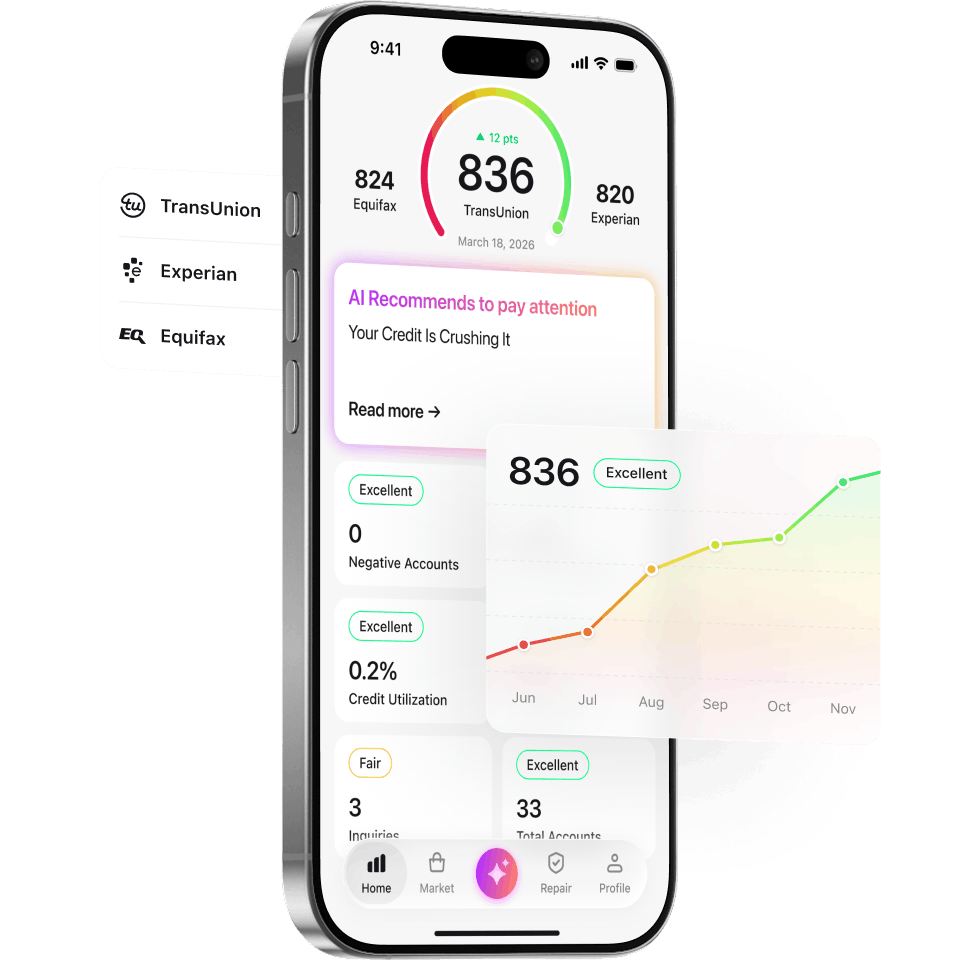
Want to see what any of them is actually reporting on your file? Download Credit Booster AI, free on iOS and Android, and read all three reports in one place.
The Ranking, Shortest Version
If you are only here for the order, here it is, most-reported to least.
- Affirm. Reports all pay-over-time plans, including Pay in 4, to Experian and TransUnion. Closest to a credit builder, but still not scored.
- Klarna. Reports its longer monthly financing to Experian and TransUnion. Pay in 4, the plan most people use, reports nothing.
- Afterpay. Reports no buy now, pay later activity automatically. On-time use is invisible.
Notice this ranking is by how much each reports, not by how much it builds. On building the score lenders pull, all three tie at roughly zero.
The Three-Way Breakdown
The table below is the verified detail, drawn from each company’s own reporting statements rather than second-hand summaries. Read the bottom two rows together: every one of the three is invisible to your FICO Score 8, and every one of them can still send you to collections.
How Reporting Turned Into a Myth
The confusion has one root. People read a reporting announcement and hear a scoring change.
When Affirm said it would report all pay-over-time products to Experian and TransUnion in 2025, the coverage was huge, and “buy now, pay later now affects your FICO” spread from there. But furnishing data to a bureau is step one of three. The bureau still has to make the data readable to a score, and it does the opposite, tagging it and keeping it out. Then a scoring model has to use it, and your lender has to run that model. Neither has happened at scale.
So the concession that ruins the tidy comparison is this: the provider that reports the most, Affirm, does not build the most, because none of the three can get its data scored yet. The order of reporting is real. The order of building is a tie at the bottom.
Where Each One Can Actually Hurt You
The risk is more consistent than the reporting, and it points down, not up.
All three share one exposure: collections. Stop paying at Affirm, Klarna or Afterpay, and the balance can be sold to a collection agency. That collection is ordinary derogatory data, not tagged as buy now, pay later, and it hits your score like any other. It is the one path from any of these apps to real, lasting damage.
Affirm carries one extra wrinkle. Some Affirm approvals route through partner lenders that run a hard credit check, which can shave a few points and shows as an inquiry. Klarna and Afterpay use soft checks to approve, so opening a plan there does not cost you points. So Affirm both reports the most and, on certain loans, is the only one that can add an inquiry.
What This Means For Your File
If you want to build credit, the choice between these three is the wrong question, because the answer to all of them is “not this.” Use a tradeline that is reported and scored: a secured card, a credit builder loan, or authorized-user history. Among buy now, pay later itself, Sezzle Up is the one built to report to your core file, which is a real difference from these three.
And whichever apps you use, the thing that moves your score is on your report already: balances, account ages, late marks, and errors. Errors are the one you can act on, because they are common and they are the only negative you can get removed. Credit Booster AI reads all three bureau reports, flags an item that is inaccurate, duplicated, or not yours, and drafts the letter to challenge it. Clearing genuine errors typically moves a score 30 to 60 points, over one to a few months, when there is a real error to clear.


Plans start at $9.99 a month with a 7-day free trial. Read your file first; if it is clean, you do not need us.
The Verdict
Affirm vs Klarna vs Afterpay, on building credit: Affirm reports the most, Klarna reports its monthly plans only, Afterpay reports nothing, and none of the three builds the score lenders pull in 2026. The reporting order is real; the building order is a tie near zero.
Two things to keep. One, if you want credit that counts, none of these is the tool yet, so use something that is both reported and scored. Two, all three can still hurt you through a collection, so the missed payment is the risk, not the plan.
Frequently Asked Questions
Which builds credit best: Affirm, Klarna, or Afterpay?
Affirm reports the most, so it is closest, but the honest answer is none of them builds the score lenders pull in 2026. Affirm furnishes all its plans, including Pay in 4, to Experian and TransUnion. Klarna reports only its longer monthly financing, not Pay in 4. Afterpay reports no buy now, pay later activity. And even Affirm’s reported data is walled off from the FICO score most lenders use, so it is on file but not yet scored.
Does Affirm report to more bureaus than Klarna or Afterpay?
Affirm and Klarna both report to Experian and TransUnion; Afterpay reports to none automatically. The difference is what they report. Affirm sends all pay-over-time products, including the short Pay in 4. Klarna sends only its longer monthly loans and holds Pay in 4 back. Afterpay furnishes nothing beyond a limited opt-in pilot with Experian.
Can any of the three hurt my credit?
Yes, all three, through the same door: collections. While you pay, the plans stay quiet. But a balance you abandon can be sold to a collection agency at any of them, and that collection reports the normal way and drags your score. Affirm can also add a hard inquiry on some partner-lender approvals. The plan itself is rarely the problem; the default is.
If Affirm reports my payments, does my score go up?
Not yet. Affirm furnishes the data to Experian and TransUnion, but the bureaus tag buy now, pay later data and keep it out of the FICO Score 8 lenders read. FICO built new scores to use it and they are not in market. So Affirm’s reporting shows on your report without lifting the score a lender actually pulls today.
Which should I use if I want to build credit?
None of the three, in 2026. If credit building is the goal, use a tradeline that is both reported and scored, like a secured card or a credit builder loan. Among buy now, pay later specifically, Sezzle Up is the one designed to report to your core file. Affirm, Klarna and Afterpay are for convenience, not for building a usable score right now.
Do the FICO BNPL scores change this comparison?
Not yet. FICO announced buy now, pay later scores in 2025, but they are not in market and no mainstream lender underwrites on them. Until that changes, Affirm reporting the most does not translate into building the most, because the data none of them can get scored. If lenders adopt the new models, Affirm’s broader reporting would matter more than it does today.
Related reading: Dig into whether Affirm builds credit, whether Klarna builds credit, and which BNPL app actually builds credit. See also whether Afterpay affects your credit score.
Sources
Every claim on this page traces to one of these, checked on July 20, 2026.
- Affirm, Affirm Expands Credit Reporting with Experian to Include All Pay-Over-Time Products
- TransUnion, Affirm Expands Credit Reporting with TransUnion to All Pay-Over-Time Products
- Klarna, Why Klarna does not report BNPL payments to US credit bureaus
- PaymentsJournal, Klarna and Afterpay Opt Not to Send BNPL Data to Credit Bureaus
What each of the three actually sends to a credit bureau
Verified against each company's own reporting statements, not against what other sites say about them.
| Feature | Affirm | Klarna | Afterpay |
|---|---|---|---|
| Reports Pay in 4 style short-term plans | Yes | No | No |
| Reports longer monthly financing | Yes | Yes | No |
| Bureaus it furnishes to | Experian, TransUnion | Experian, TransUnion | None (opt-in Experian pilot) |
| On-time payments can build credit | Reported, not scored yet | Monthly only, not scored yet | No |
| Application runs a hard credit check | Some partner loans | No | No |
| A missed payment can reach collections | Yes | Yes | Yes |
Source: Affirm investor releases (Mar and Apr 2025), Klarna press (May 2024), Afterpay statements reported 2025. Pulled July 20, 2026.
Loving This Info? You'll Love Our App.
Everything you just read, plus AI-powered tools to understand and master your credit. 7 day free trial.
Get the AppFrequently Asked Questions
Which builds credit best: Affirm, Klarna, or Afterpay?
Affirm reports the most, so it is closest, but the honest answer is none of them builds the score lenders pull in 2026. Affirm furnishes all its plans, including Pay in 4, to Experian and TransUnion. Klarna reports only its longer monthly financing, not Pay in 4. Afterpay reports no buy now, pay later activity. And even Affirm's reported data is walled off from the FICO score most lenders use, so it is on file but not yet scored.
Does Affirm report to more bureaus than Klarna or Afterpay?
Affirm and Klarna both report to Experian and TransUnion; Afterpay reports to none automatically. The difference is what they report. Affirm sends all pay-over-time products, including the short Pay in 4. Klarna sends only its longer monthly loans and holds Pay in 4 back. Afterpay furnishes nothing beyond a limited opt-in pilot with Experian.
Can any of the three hurt my credit?
Yes, all three, through the same door: collections. While you pay, the plans stay quiet. But a balance you abandon can be sold to a collection agency at any of them, and that collection reports the normal way and drags your score. Affirm can also add a hard inquiry on some partner-lender approvals. The plan itself is rarely the problem; the default is.
If Affirm reports my payments, does my score go up?
Not yet. Affirm furnishes the data to Experian and TransUnion, but the bureaus tag buy now, pay later data and keep it out of the FICO Score 8 lenders read. FICO built new scores to use it and they are not in market. So Affirm's reporting shows on your report without lifting the score a lender actually pulls today.
Which should I use if I want to build credit?
None of the three, in 2026. If credit building is the goal, use a tradeline that is both reported and scored, like a secured card or a credit builder loan. Among buy now, pay later specifically, Sezzle Up is the one designed to report to your core file. Affirm, Klarna and Afterpay are for convenience, not for building a usable score right now.
Do the FICO BNPL scores change this comparison?
Not yet. FICO announced buy now, pay later scores in 2025, but they are not in market and no mainstream lender underwrites on them. Until that changes, Affirm reporting the most does not translate into building the most, because the data none of them can get scored. If lenders adopt the new models, Affirm's broader reporting would matter more than it does today.