Does Affirm Build Credit? It Reports the Most and Builds the Least
Affirm reports more than any big buy now, pay later app. It still barely builds your credit. Both of those are true in 2026, and the gap between them is the whole story.
Here is what Affirm does. It furnishes all of its pay-over-time plans, including the short Pay in 4, to Experian and TransUnion. That is genuinely more than Klarna or Afterpay report. So on paper, Affirm looks like the credit builder of the group.
Now here is why it is not, yet. The bureaus tag that buy now, pay later data and keep it out of the FICO Score 8 that lenders actually pull. Reported, but not scored. On file, not in the math.
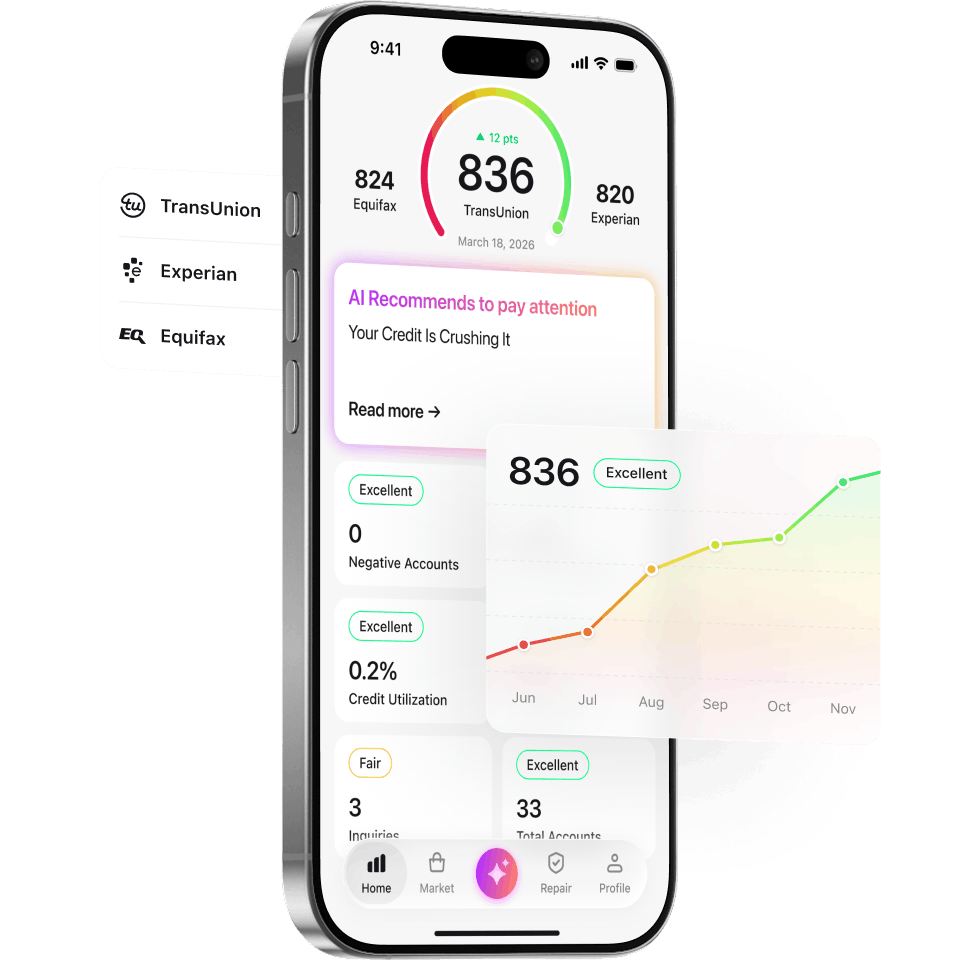
Want to see whether your Affirm plans are even showing on Experian and TransUnion? Download Credit Booster AI, free on iOS and Android, and read all three reports in one place.
Reporting Is Not the Same as Building
This is the trap almost every article falls into. They read “Affirm reports to Experian” and print “Affirm builds credit.” Those are two different claims.
Three separate things have to happen before an Affirm plan can lift the score a lender sees. All three.
- Affirm has to furnish the data. It does, to Experian and TransUnion, which is the part everyone gets right.
- The bureau has to put it somewhere a score can read. It does the opposite: it tags the data and walls it off from existing scores.
- The score model has to use it, and your lender has to run that model. FICO built new ones. They are not in market, and no mainstream lender is underwriting on them.
Affirm clears step one and stalls at step two. So paying your Affirm plans perfectly right now is real responsibility with almost no scoring reward. That is the honest cost of the good news, and it is the part the “Affirm builds credit!” headlines leave out.
Two Bureaus, Not Three
A detail worth knowing, because it changes what you even see.
Affirm reports to Experian, for loans issued on or after April 1, 2025, and to TransUnion, for loans from May 1, 2025. It has not announced reporting to Equifax. So your Affirm activity lives at two of the three bureaus, and if the free app you check pulls only Equifax, you will not find it at all.
That is not a reason to relax. It is a reason to know which report you are reading before you conclude anything about what Affirm is or is not doing to your file.
Where Affirm Can Still Cost You Points
Affirm is mostly soft, but “mostly” is doing work in that sentence.
Prequalifying with Affirm uses a soft check and does not touch your score. The wrinkle is that some approvals route through partner lenders, and those can involve a hard credit check. A hard pull shaves a few points and shows as an inquiry. So opening a large Affirm plan on a whim, right before a mortgage, is not free.
And the bigger risk is the same one that follows every buy now, pay later app. Stop paying and the balance can be sold to a collection agency. That collection is ordinary derogatory data, it is not walled off like the plan was, and it hits your score the normal way. Affirm barely helps your score going up, but a default can genuinely hurt it going down.
What This Means For Your File
If you want to actually build credit, Affirm is not the tool today, and it is honest to say so even though it reports. You need a tradeline that is both reported and scored: a secured card, a credit builder loan, or authorized-user history. Those count inside the FICO score lenders pull right now. Affirm does not yet.
Meanwhile, the fastest moves are already sitting on your report: your balances, your account ages, your late marks, and your errors. Errors are the one you can act on, because they are common and they are the only negative you can get removed. Credit Booster AI reads all three bureau reports, flags an item that is inaccurate, duplicated, or not yours, and drafts the letter to challenge it. Clearing genuine errors typically moves a score 30 to 60 points, over one to a few months, when there is a real error to clear.


Plans start at $9.99 a month with a 7-day free trial. Read your file first; if it is clean, you do not need us.
The Verdict
Does Affirm build credit? Not meaningfully in 2026, even though it reports more than any rival. Affirm furnishes all its plans to Experian and TransUnion, but the bureaus keep that data out of the scores lenders pull, so responsible use builds very little right now.
Two takeaways. One, do not treat Affirm as a credit builder yet; use a tradeline that is actually scored. Two, a hard-checked partner loan or a default can still cost you points, so Affirm can hurt more easily than it helps today.
Frequently Asked Questions
Does Affirm build credit?
Barely, as of 2026, even though it reports the most of any big buy now, pay later app. Affirm furnishes all its pay-over-time plans to Experian and TransUnion, but the bureaus keep that data out of the FICO Score 8 that lenders actually pull. So your Affirm payments are on file but not in the math, which means paying them perfectly does very little for your score today.
Does Affirm report to all three credit bureaus?
No, only two. Affirm reports its pay-over-time products to Experian, for loans from April 1, 2025, and to TransUnion, for loans from May 1, 2025. It has not announced equivalent reporting to Equifax. So if your credit app only shows Equifax data, you may not see your Affirm activity at all, even though it exists at the other two bureaus.
If Affirm reports my payments, why does not my score go up?
Because reporting and scoring are two different steps. Affirm sends the data to Experian and TransUnion, but those bureaus tag buy now, pay later information and keep it out of the score versions lenders read. FICO built new scores to use it and they are not in market yet. So the data exists on your report without being counted in the number that matters.
Can Affirm hurt my credit?
Yes, in two ways. Some Affirm approvals route through partner lenders that run a hard credit check, which can shave a few points and shows as an inquiry. And a missed Affirm payment that goes far enough can be sent to collections, which reports the normal way and drags your score. Prequalifying is a soft check and does not hurt you.
Does Affirm Pay in 4 build credit?
Not meaningfully today. Affirm does report Pay in 4 to Experian and TransUnion, which is more than most rivals do, but that reported data is still walled off from the scores lenders pull. So the short biweekly plan is on file but not building your usable score yet. When lenders adopt the new buy now, pay later scores, that could change.
What actually builds credit instead of Affirm?
A tradeline that is both reported and scored. A secured card, a credit builder loan, or being added as an authorized user all report on-time payments to the bureaus and count inside the FICO score lenders use. That is the difference: Affirm reports but is not yet scored, while those tools report and are scored today.
Related reading: See whether Affirm affects your credit score, whether Klarna builds credit, and which BNPL app actually builds credit. Compare the big three in Affirm versus Klarna versus Afterpay.
Sources
Every claim on this page traces to one of these, checked on July 20, 2026.
By the numbers
Affirm reporting
Experian + TransUnion
Affirm reports all pay-over-time products, including Pay in 4, since 2025.
Affirm, expands credit reporting with Experian, July 20, 2026
In the FICO 8 lenders pull
Not yet
The reported data is kept out of the traditional scores lenders use, near-term.
TransUnion, Affirm expands credit reporting, July 20, 2026
Build effect of on-time Affirm today
Minimal
On file, not in the math, so responsible use builds little right now.
Bankrate, Affirm to report to Experian, July 20, 2026
Source: Affirm, expands credit reporting with Experian. Pulled July 20, 2026.
Loving This Info? You'll Love Our App.
Everything you just read, plus AI-powered tools to understand and master your credit. 7 day free trial.
Get the AppFrequently Asked Questions
Does Affirm build credit?
Barely, as of 2026, even though it reports the most of any big buy now, pay later app. Affirm furnishes all its pay-over-time plans to Experian and TransUnion, but the bureaus keep that data out of the FICO Score 8 that lenders actually pull. So your Affirm payments are on file but not in the math, which means paying them perfectly does very little for your score today.
Does Affirm report to all three credit bureaus?
No, only two. Affirm reports its pay-over-time products to Experian, for loans from April 1, 2025, and to TransUnion, for loans from May 1, 2025. It has not announced equivalent reporting to Equifax. So if your credit app only shows Equifax data, you may not see your Affirm activity at all, even though it exists at the other two bureaus.
If Affirm reports my payments, why does not my score go up?
Because reporting and scoring are two different steps. Affirm sends the data to Experian and TransUnion, but those bureaus tag buy now, pay later information and keep it out of the score versions lenders read. FICO built new scores to use it and they are not in market yet. So the data exists on your report without being counted in the number that matters.
Can Affirm hurt my credit?
Yes, in two ways. Some Affirm approvals route through partner lenders that run a hard credit check, which can shave a few points and shows as an inquiry. And a missed Affirm payment that goes far enough can be sent to collections, which reports the normal way and drags your score. Prequalifying is a soft check and does not hurt you.
Does Affirm Pay in 4 build credit?
Not meaningfully today. Affirm does report Pay in 4 to Experian and TransUnion, which is more than most rivals do, but that reported data is still walled off from the scores lenders pull. So the short biweekly plan is on file but not building your usable score yet. When lenders adopt the new buy now, pay later scores, that could change.
What actually builds credit instead of Affirm?
A tradeline that is both reported and scored. A secured card, a credit builder loan, or being added as an authorized user all report on-time payments to the bureaus and count inside the FICO score lenders use. That is the difference: Affirm reports but is not yet scored, while those tools report and are scored today.