Indigo Mastercard Requirements in 2026: Fees, APR, and Approval Odds
The Indigo Mastercard is an unsecured credit card for people with bad or limited credit, which means there is no security deposit to fund. It is issued by Celtic Bank and serviced by Concora Credit (formerly Genesis FS Card Services). The honest headline: Indigo trades the deposit of a secured card for fees, and how much you pay depends on the offer you pre-qualify for. You can check your likely terms with no hard pull, and the card considers applicants with a past bankruptcy. This guide breaks down who issues it, what it really costs, and how to use it (or a cheaper option) to rebuild.
Not sure where your score actually stands across the three bureaus? Our comparison of AI credit tools walks through what each one reads and what it can realistically fix.
Who the Indigo Mastercard Is For, and the Requirements
Indigo is for people who want an unsecured card but keep getting turned down elsewhere. With no deposit, the bank prices in its risk through fees and a high interest rate instead. To apply you generally need:
- Age and residency. At least 18, or 21 in some states, and a US resident with a valid address.
- Social Security number or ITIN. Celtic Bank uses this to verify your identity.
- A checking or bank account. Needed to make your monthly payments.
- The ability to pay on time. There is no fixed income floor, but you should be able to pay the bill every month.
There is no minimum deposit, which is the main appeal over a secured card. The tradeoff is the fee structure covered below.
Indigo Mastercard Fees and APR (the Honest Breakdown)
This is where you need to read the fine print. Indigo does not publish one flat price. Your fee is set by the offer you pre-qualify for, which is tied to your credit profile.
- Annual fee. Varies by offer. Some applicants see 0 dollars, others see roughly 59 to 99 dollars per year, and a higher-fee tier can run about 175 dollars the first year before dropping in later years. It depends entirely on your pre-qualified terms.
- Monthly fee. Certain higher-fee offers add a monthly servicing fee (reported around 12.50 dollars) starting in year two. Not every offer has one, so confirm before you accept.
- Purchase APR. High, around 35.9 percent variable. If you carry a balance, interest adds up fast, so plan to pay in full each month.
- Starting credit limit. Often around 300 dollars, though some pre-qualified offers start near 700 dollars. The first-year annual fee is subtracted from your limit, so your available credit at opening is lower than the headline number.
The honest takeaway: on a low-fee or 0 dollar offer, Indigo is a reasonable unsecured builder. On the higher-fee offer with a monthly charge, a secured card with a refundable deposit can cost you far less over a year. Pre-qualify and do the math before you accept.
Indigo Mastercard Approval Odds
Indigo is built for bad and fair credit, so approval is broad relative to a normal unsecured card. Treat the table below as informed estimates, not a promise from Celtic Bank.
| FICO Score Range | Indigo Approval Odds | Notes |
|---|---|---|
| 670 and up | Very high | Better, cheaper cards are likely open to you |
| 580 to 669 | High | A core fit for this card |
| 500 to 579 | Moderate to high | Pre-qualify to see your fee and limit |
| Below 500 | Lower | Possible, often on the higher-fee offer |
| Discharged bankruptcy | Possible | Indigo considers applicants rebuilding after bankruptcy |
Your score is not the only gate. The offer you are shown, meaning the fee and limit, gets worse as your profile weakens, so a lower score usually means a costlier version of the card rather than a flat denial.
How to Apply and Pre-Qualify With No Hard Pull
Do not apply blind. Follow this order to protect your score and your wallet.
- Pre-qualify first. Use Indigo’s pre-qualification tool. It runs a soft inquiry that does not affect your score and shows your likely terms in under a minute.
- Read the exact offer. Check the annual fee, any monthly fee, the APR, and the starting limit you are actually shown. These are the numbers that matter, not the general ones online.
- Compare before you accept. If your offer carries a high fee plus a monthly charge, price it against a secured card. Our guide to secured versus unsecured credit cards shows the tradeoff.
- Submit only if it fits. Accepting the offer triggers a hard inquiry and a full application. See hard versus soft inquiries for what that does to your score.
- Use it lightly and pay on time. Put one small recurring charge on the card and pay the statement in full. Keep the balance under 30 percent of your limit, so under about 90 dollars on a 300 dollar line. Our credit utilization guide explains why that matters.
Indigo reports to Equifax, Experian, and TransUnion every month, which is what makes on-time use actually build your credit.
Raise Your Score Before You Apply
The best way to get a lower-fee Indigo offer, or to skip cards like this entirely, is to walk in with a cleaner file. A higher score moves you from the costly version of the card to the cheap one.
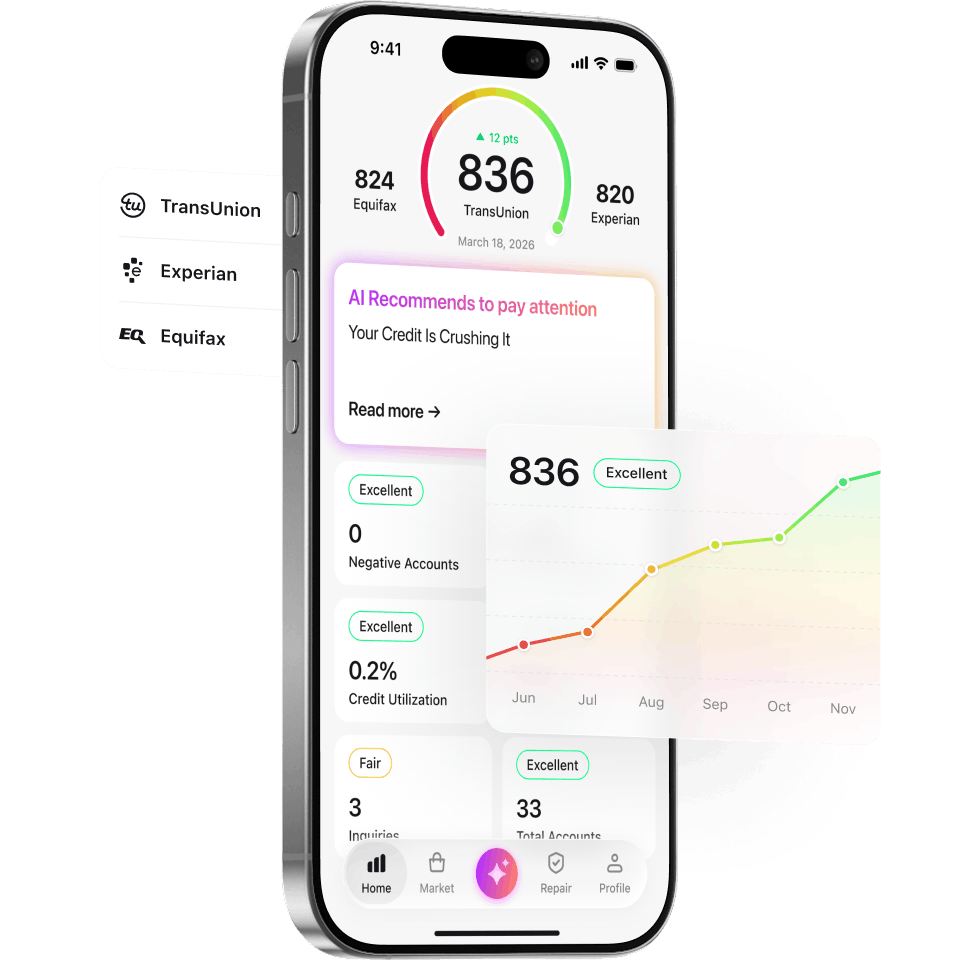
Download Credit Booster AI, free on iOS and Android. It scans all three of your credit reports, flags the errors that quietly drag your score down, generates the letters to get them corrected, and tracks your score as it climbs. Cleaner reports and lower utilization are exactly what turn a high-fee offer into a low-fee one. A realistic 90-day move from on-time payments and lower balances is 30 to 60 points, with more as your accounts season.
Better Alternatives to Weigh
Indigo is not your only option, and it is not always the cheapest.
- A secured card. If you can spare the cash, a refundable deposit avoids most fees. See the best secured credit cards for 2026.
- Other unsecured builders. Compare the requirements at Mission Lane, Merrick Bank, and Credit One before you commit. It is also worth reading is Credit One predatory so you know what to avoid.
- A path back from a rough patch. If a bankruptcy or charge-off is dragging you down, see how to rebuild credit after a charge-off and how to get approved with challenged credit.
The bottom line on the Indigo Mastercard: it is a real unsecured option for bad or limited credit, issued by Celtic Bank, with pre-qualification that uses no hard pull and considers applicants after bankruptcy. The catch is the cost, a roughly 35.9 percent APR and an annual fee from 0 to about 99 dollars (higher on some offers, with a possible monthly fee later). Pre-qualify, read the exact terms, compare against a secured card, and only accept if the numbers work.
Frequently Asked Questions
Who issues the Indigo Mastercard?
The Indigo Mastercard is issued by Celtic Bank and serviced by Concora Credit, which was formerly named Genesis FS Card Services. Celtic Bank is the bank that approves the account and reports it to the credit bureaus, while Concora Credit handles customer service and account management. Note that Concora also services the Destiny and Milestone cards, which are issued by The Bank of Missouri, so the servicer is shared but the issuing bank for Indigo is Celtic Bank.
Does Indigo do a hard pull to pre-qualify?
No. You can pre-qualify for the Indigo Mastercard with a soft inquiry that does not affect your credit score, and you see your likely terms in under a minute. A hard inquiry only happens if you accept an offer and submit a full application. Pre-qualifying first is smart because it lets you compare the fee and limit you are actually offered before any hard pull hits your report.
What is the Indigo Mastercard annual fee?
The annual fee varies by the offer you pre-qualify for, and it depends on your credit profile. Some applicants are shown a 0 dollar fee, while others see fees in the range of 59 to 99 dollars per year, and a higher-fee offer can run about 175 dollars the first year before dropping in later years. Certain offers also add a monthly fee starting in year two, so read your exact pre-qualified terms in full before you accept.
Can you get the Indigo Mastercard after bankruptcy?
Yes, the Indigo Mastercard is one of the more common unsecured cards for people rebuilding after a discharged bankruptcy. Because it is built for bad and limited credit, a prior bankruptcy on file does not automatically rule you out. Approval and your exact terms still depend on your full profile, so pre-qualify to see what you are offered without a hard pull.
Related reading: Weighing your options? Compare the requirements at Mission Lane, Merrick Bank, Credit One, and Capital One. For the wider view, read the credit score you need for a credit card and the First Progress secured card requirements.
Sources
- US News Money, Indigo Platinum Mastercard 2026 Review
- NerdWallet, What Is Concora Credit, and Are Its Credit Cards Right for You?
- Firstcard, Indigo Mastercard Review 2026: Fees, Features, Alternatives
- FinanceBuzz, Indigo Mastercard Review 2026
Approval odds are only half the decision. Our full Indigo Mastercard review covers the fees, the real credit limit, and whether the card is worth it in 2026.
Monitor your credit score and protect your identity with Credit Club, our credit monitoring and identity protection membership.
Need professional help? CreditBooster.com has been helping clients rebuild their credit since 2009.
By the numbers
Annual fee
$0 to $99
The fee depends on the offer you pre-qualify for.
Purchase APR
About 35.9% variable
Starting credit limit
About $300
Some pre-qualified offers start higher.
Deposit required
None
Unsecured, and it considers applicants after bankruptcy.
Source: U.S. News, Indigo Mastercard. Pulled July 23, 2026.
Loving This Info? You'll Love Our App.
Everything you just read, plus AI-powered tools to understand and master your credit. 7 day free trial.
Get the AppFrequently Asked Questions
Who issues the Indigo Mastercard?
The Indigo Mastercard is issued by Celtic Bank and serviced by Concora Credit, which was formerly named Genesis FS Card Services. Celtic Bank is the bank that approves the account and reports it to the credit bureaus, while Concora Credit handles customer service and account management. Note that Concora also services the Destiny and Milestone cards, which are issued by The Bank of Missouri, so the servicer is shared but the issuing bank for Indigo is Celtic Bank.
Does Indigo do a hard pull to pre-qualify?
No. You can pre-qualify for the Indigo Mastercard with a soft inquiry that does not affect your credit score, and you see your likely terms in under a minute. A hard inquiry only happens if you accept an offer and submit a full application. Pre-qualifying first is smart because it lets you compare the fee and limit you are actually offered before any hard pull hits your report.
What is the Indigo Mastercard annual fee?
The annual fee varies by the offer you pre-qualify for, and it depends on your credit profile. Some applicants are shown a 0 dollar fee, while others see fees in the range of 59 to 99 dollars per year, and a higher-fee offer can run about 175 dollars the first year before dropping in later years. Certain offers also add a monthly fee starting in year two, so read your exact pre-qualified terms in full before you accept.
Can you get the Indigo Mastercard after bankruptcy?
Yes, the Indigo Mastercard is one of the more common unsecured cards for people rebuilding after a discharged bankruptcy. Because it is built for bad and limited credit, a prior bankruptcy on file does not automatically rule you out. Approval and your exact terms still depend on your full profile, so pre-qualify to see what you are offered without a hard pull.