Does Zilch Affect Your Credit Score? Sometimes, and That Is the Point
Zilch can affect your credit score, which makes it unusual. Most buy now, pay later apps report nothing on-time. Zilch says it reports its longer plans.
Here is the shape of it. Zilch runs a soft check to approve you, so signing up costs your score nothing. For its Pay over 6 weeks and Pay over 3 months plans, Zilch says it shares your credit limit, usage and repayment with the credit agencies every month, which means on-time payments can help and missed ones can hurt. Its zero-interest biweekly plan, the free short option, is not reported at all.
So the honest answer is: it depends which Zilch you use. And that is the opposite of “buy now, pay later never touches your credit,” which is what most articles tell you.
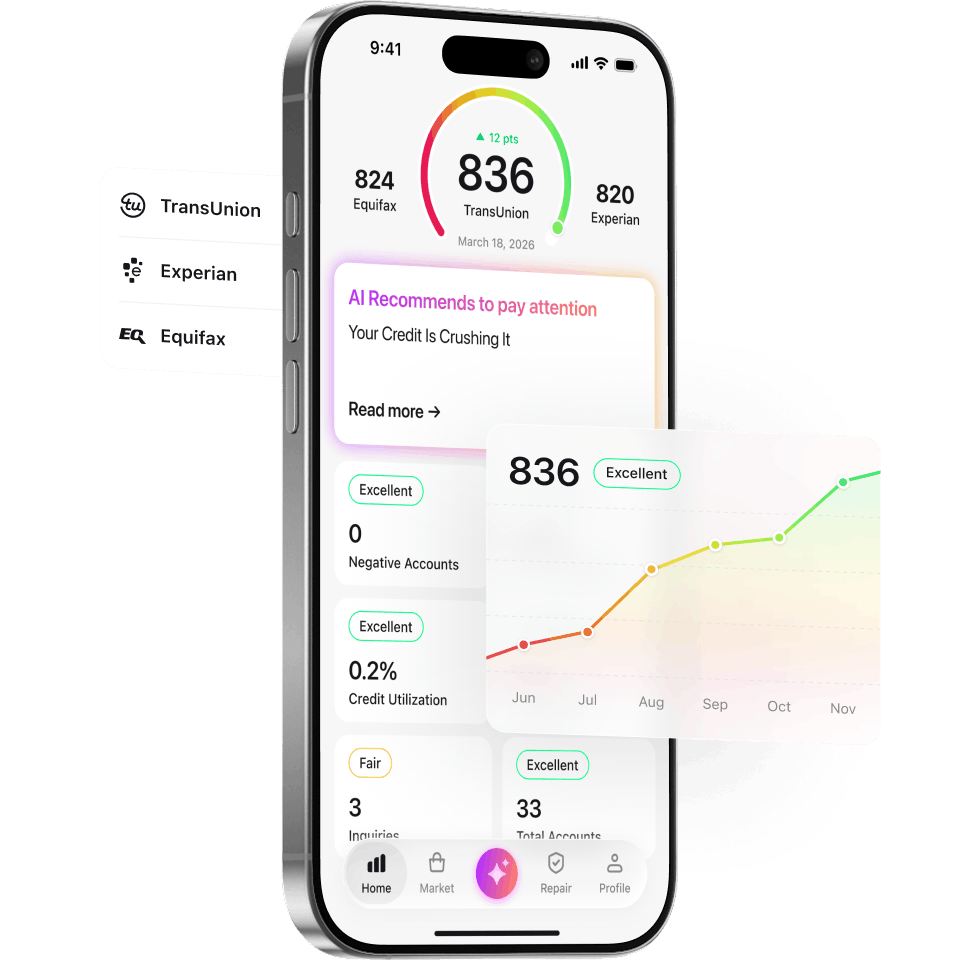
Want to see whether Zilch is actually showing up on your file? Download Credit Booster AI, free on iOS and Android, and read all three reports in one place.
Which Zilch Reports, and Which Does Not
This is the distinction that decides your answer, so do not skip it.
Zilch’s own help center draws the line by product. The Pay over 6 weeks and Pay over 3 months plans are the ones it reports to the credit agencies. The interest-free biweekly plan, the free split-it-in-a-few option, is not shared.
The honest cost sits right there. Pay off the interest-free plan flawlessly for a year and it builds nothing, because Zilch never sends it anywhere. If you chose Zilch specifically to build credit, you have to be on a plan Zilch actually reports, or you are doing invisible work.
Reporting Cuts Both Ways
A product that can build your score can also dent it. That trade is unavoidable, and Zilch is honest about it.
On a reportable plan, Zilch shares your data monthly, including a payment you miss. So a late mark on Pay over 3 months is not hidden; it goes to the agencies with everything else. Zilch’s help center says plainly that paying on time or early can help your score, while missing payments can hurt it.
And underneath all of that sits the universal risk. Any balance you stop paying can be pursued as a debt and, if it goes far enough, land in collections. A collection is ordinary derogatory data and hits your file like any other, regardless of which Zilch plan started it.
The US Caveat Worth Respecting
Here is the concession this page owes you, because pretending otherwise would be dishonest.
Zilch is a UK-founded company. It began credit reporting in its home market in January 2023, and its help center describes furnishing data to the credit reference agencies. Buy now, pay later reporting is uneven across providers and it changes, sometimes quietly, so which of your plans is being reported and to which bureau is worth confirming rather than assuming.
So treat Zilch’s reporting as real but verify your own account. Check whether your specific plan shows as a tradeline, and to which of the three US bureaus, before you lean on it for building credit. The safe assumption is the same one that protects you everywhere: a missed payment that reaches collections will hurt, no matter the app.
What This Means For Your File
If building credit is the goal, a reportable Zilch plan is a legitimate small lever, and that is more than most buy now, pay later apps offer. But keep it in proportion. It reports short installments, so it does not build much account age, and the effect on a real score is modest.
The bigger movers are on your report already: your balances, your oldest accounts, the late marks, and the errors. Errors are the one you can act on fastest, because they are common and they are the only negative you can get removed. Credit Booster AI reads all three bureau reports, flags an item that is inaccurate, duplicated, or not yours, and drafts the letter to challenge it. Clearing genuine errors typically moves a score 30 to 60 points, over one to a few months, when there is a real error to clear.


Plans start at $9.99 a month with a 7-day free trial. If your report is clean, you do not need us, and the trial is how you find that out.
The Verdict
Does Zilch affect your credit score? It can. The soft sign-up check does not, but Zilch’s longer Pay over plans are reported to the credit agencies, so on-time payments there can help and misses can hurt. The interest-free biweekly plan is not reported.
Two things to carry with you. One, only Zilch’s reportable plans do anything for your score, so know which plan you are on. Two, reporting is uneven and shifting, so confirm your own account rather than trusting a headline.
Frequently Asked Questions
Does Zilch affect your credit score?
It can, and Zilch is unusual among buy now, pay later apps for that. Zilch says it shares your account data with the credit agencies for its longer Pay over 6 weeks and Pay over 3 months plans, so on-time payments there can help and missed ones can hurt. Its zero-interest biweekly plan is not reported. The soft check to sign up does not affect your score either way.
Which Zilch products build credit?
Only the longer plans. Zilch’s own help center says the Pay over 6 weeks and Pay over 3 months products are the ones it reports to the credit agencies, while the interest-free short plan is not shared. So a perfect record on the free biweekly option builds nothing, because it never reaches your file. If you want the credit-building effect, it has to be a plan Zilch actually reports.
Does applying for Zilch hurt your credit?
No. Zilch performs a soft check to decide eligibility, and a soft check does not affect your score and is not visible to other lenders. The reporting Zilch does is about your ongoing payment history on its reportable plans, not a hard inquiry when you sign up.
Can Zilch hurt my credit score?
Yes, in two ways. On a plan Zilch reports, a missed or late payment is shared with the credit agencies and can drag your score. Separate from that, any Zilch balance you stop paying could be pursued as a debt and end up in collections, which hits your report the normal way. Reporting cuts both directions, which is the honest cost of a product that can build credit at all.
Is Zilch reporting the same in the US as the UK?
Not necessarily, and this is the caveat to respect. Zilch is a UK-founded company that began credit reporting there in January 2023, and its help center describes reporting to the credit reference agencies. Buy now, pay later reporting is uneven and it changes, so if you are in the US, confirm which of your Zilch plans is being furnished and to which bureau before you count on it for building credit.
How often does Zilch report to the credit agencies?
Monthly, according to Zilch. It reports your credit data, including credit limit, usage and repayment behavior, every month, with the prior month’s data reported at the start of the current one. It only begins sharing once you have an active, verified account, so a brand-new account may take a cycle before anything shows up.
Related reading: Compare whether Zip affects your credit score, whether Sezzle affects your credit score, and which BNPL apps report to the bureaus. For the overview, read BNPL and your credit score.
Sources
Every claim on this page traces to one of these, checked on July 20, 2026.
By the numbers
Zilch eligibility check
Soft
Zilch runs a soft check to approve you, which does not affect your score.
Zilch Help Center, Does Zilch affect my credit score, July 20, 2026
Zilch longer Pay over plans
Reported monthly
Zilch says it shares your credit limit, usage and repayment with the credit agencies.
Zilch Help Center, Is Zilch good for building my credit score, July 20, 2026
Interest-free biweekly plan
Not reported
Zilch does not report its zero-interest short-term plans to the agencies.
Zilch Help Center, Is Zilch good for building my credit score, July 20, 2026
Source: Zilch Help Center, Does Zilch affect my credit score. Pulled July 20, 2026.
Loving This Info? You'll Love Our App.
Everything you just read, plus AI-powered tools to understand and master your credit. 7 day free trial.
Get the AppFrequently Asked Questions
Does Zilch affect your credit score?
It can, and Zilch is unusual among buy now, pay later apps for that. Zilch says it shares your account data with the credit agencies for its longer Pay over 6 weeks and Pay over 3 months plans, so on-time payments there can help and missed ones can hurt. Its zero-interest biweekly plan is not reported. The soft check to sign up does not affect your score either way.
Which Zilch products build credit?
Only the longer plans. Zilch's own help center says the Pay over 6 weeks and Pay over 3 months products are the ones it reports to the credit agencies, while the interest-free short plan is not shared. So a perfect record on the free biweekly option builds nothing, because it never reaches your file. If you want the credit-building effect, it has to be a plan Zilch actually reports.
Does applying for Zilch hurt your credit?
No. Zilch performs a soft check to decide eligibility, and a soft check does not affect your score and is not visible to other lenders. The reporting Zilch does is about your ongoing payment history on its reportable plans, not a hard inquiry when you sign up.
Can Zilch hurt my credit score?
Yes, in two ways. On a plan Zilch reports, a missed or late payment is shared with the credit agencies and can drag your score. Separate from that, any Zilch balance you stop paying could be pursued as a debt and end up in collections, which hits your report the normal way. Reporting cuts both directions, which is the honest cost of a product that can build credit at all.
Is Zilch reporting the same in the US as the UK?
Not necessarily, and this is the caveat to respect. Zilch is a UK-founded company that began credit reporting there in January 2023, and its help center describes reporting to the credit reference agencies. Buy now, pay later reporting is uneven and it changes, so if you are in the US, confirm which of your Zilch plans is being furnished and to which bureau before you count on it for building credit.
How often does Zilch report to the credit agencies?
Monthly, according to Zilch. It reports your credit data, including credit limit, usage and repayment behavior, every month, with the prior month's data reported at the start of the current one. It only begins sharing once you have an active, verified account, so a brand-new account may take a cycle before anything shows up.