Does BNPL Affect Your Credit Score in 2026?
Mostly, no. As of mid-2026, buy now pay later does not touch the credit score most lenders actually pull. It gets collected in a few places. It is not scored yet. That is the honest answer, and it is the opposite of what a lot of sites are telling you right now.
Here is where they go wrong. You will see headlines saying “BNPL now affects your FICO,” usually pointing at FICO’s new BNPL score. That score is real. Lenders are not using it at scale. So the number a bank or a card issuer sees when they check you, the FICO Score 8 or the VantageScore they have run for years, still does not count your Klarna plan or your Affirm plan.
But there is a real way BNPL can hurt you, and almost nobody leads with it. Miss a payment, let it slide long enough, and the balance can be sold to a collection agency. A collection lands on your report the normal way, and it counts like any other. So the risk was never the plan. The risk is falling behind on it.
Quick verdict: BNPL mostly does not affect the score lenders pull in 2026, the FICO score that would change that is announced but not yet in wide use, and the thing to actually watch is a missed payment turning into a collection.
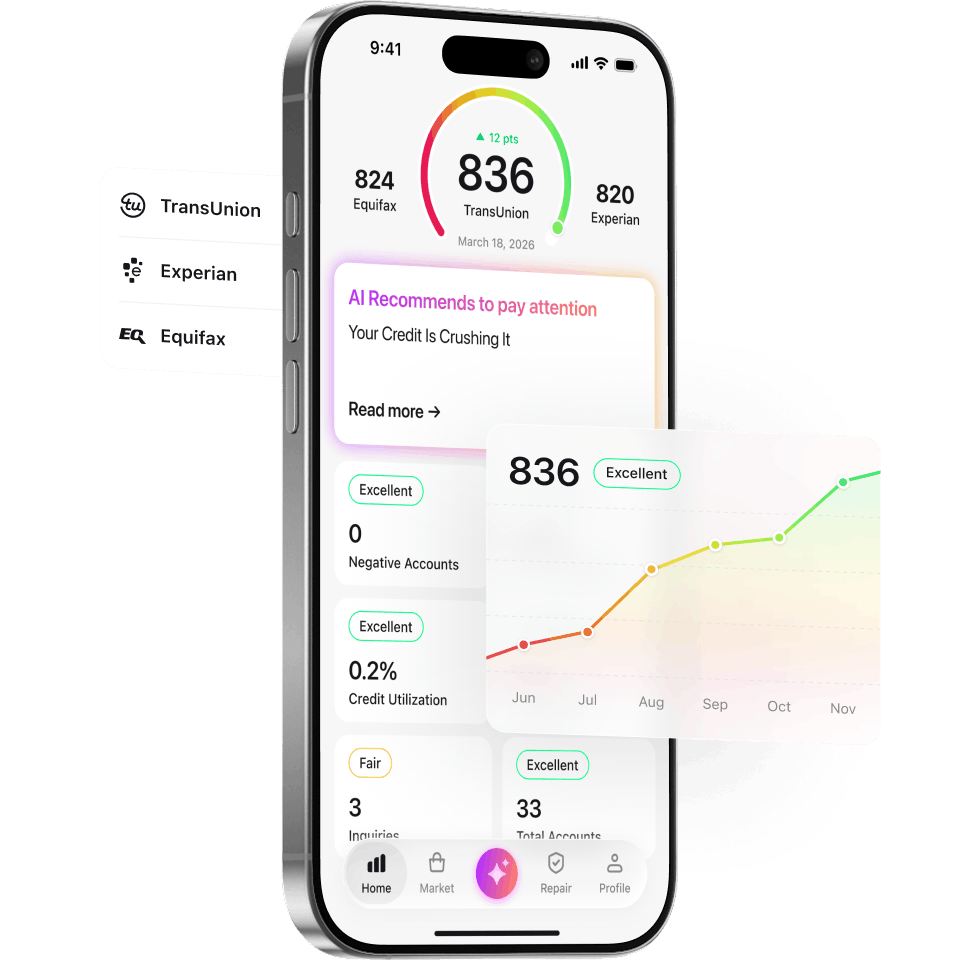
Want to see what is on your three reports right now, any BNPL collection included? Download Credit Booster AI, free on iOS and Android.
Who Reports BNPL, and Who Does Not
The providers do not agree with each other, which is half the confusion. Reporting is uneven, and it changed in 2025, so any advice older than that is stale.
Affirm went first. As of 2025 it reports its pay-over-time products, including the Pay in 4 plans, to Experian and to TransUnion. That sounds alarming until you read the fine print. Affirm and the bureaus have both said this data will not be factored into traditional credit scores in the near term. It is on file. It is not in the math.
Klarna splits the difference. Its Pay in 4, the four-installment plan most people use, is not reported to the US bureaus at all. Its longer monthly financing, the “pay over time” loans, is reported to TransUnion and Experian as an installment tradeline. So the same app can be invisible or visible depending on which product you tapped at checkout.
Afterpay is the simple one. It does not report BNPL activity to the US bureaus. Nothing you do inside Afterpay, good or bad, shows up on a normal credit report, right up until a missed balance goes to collections.
And the bureaus themselves hold this data at arm’s length. Experian has run a separate “Buy Now Pay Later Bureau” since early 2022, deliberately walled off from your core credit file. TransUnion collects BNPL too, but it has said scoring companies and lenders cannot use that data, so it does not move your score.
Here is the concession that ruins the neat story: none of this is locked in. It can change with a policy update you never see. If you are counting on BNPL staying invisible forever, do not. Treat every plan as if it could show up one day, because the direction of travel is toward more reporting, not less.
The FICO Score Built to Count It
FICO did build the tool. In June 2025 it announced two new scores, FICO Score 10 BNPL and FICO 10 T BNPL, designed specifically to fold buy now pay later into the number. That happened. They launched.
What has not happened is adoption. As of mid-2026 those scores are not in broad use by mainstream lenders, so the model your bank runs is still the older one that ignores BNPL. Announced, yes. In the score your lender pulls today, not yet.
That gap matters for one reason. A headline that says “BNPL now affects your FICO” is describing a capability, not what happens in your actual approval. Both things are true at once. FICO can score your BNPL, and the lender checking you this week almost certainly is not using the score that does. Do not make a decision based on the version that has not arrived.
The costly flip side is worth saying out loud. The day mainstream lenders switch to the BNPL score, the plans you have opened quietly for years start counting all at once, the on-time history and the stumbles together. There is no warning shot before that switch. So the safe move is to treat your BNPL like it already counts, even while it technically does not.
The Part That Can Actually Hurt You
Forget the score for a second. The concrete damage from BNPL is a missed payment that turns into a collection.
Here is how it goes sideways. You stack a few plans, each one small, each one on a different app with a different due date. One card gets declined, an autopay misses, and a balance you forgot about ages into a delinquency. If the provider sells it, a collection agency reports it, and that collection sits on your file like any other, dragging the score it was never supposed to touch.
So the two honest warnings are these. First, using BNPL responsibly will not build your credit right now, because it is not scored, so it is not a credit-building tool no matter how perfect your record is. Do not use it hoping to raise your number. It will not.
Second, stacking several plans is a real cash-flow risk even while it is invisible to your score. Say four plans at $50 a payment. That is $200 a cycle that no credit check ever flagged, because BNPL underwriting mostly skips the hard pull. The score stays quiet. The bank account does not. That is the trap the “it does not affect your credit” crowd never mentions.
If a BNPL collection has already landed on your report, that part is fixable when it is wrong. Credit Booster AI reads all three bureaus, flags a collection that is inaccurate, duplicated, or not yours, and drafts the letter to challenge it. Clearing genuine errors like that typically moves a score 30 to 60 points, over one to a few months, and only when there is a real error to clear. Download Credit Booster AI to read your file first.
How to Tell If Your BNPL Is Showing Up
You do not have to guess. Pull all three reports and look.
If a plan is being reported, it appears as a tradeline under the provider’s name, usually as an installment account with a balance and a payment history. Affirm and Klarna’s longer loans are the ones most likely to show. Pay in 4 from Klarna and anything from Afterpay usually will not appear at all. A collection is different: it shows under a collection agency’s name, not the store you bought from, which is why people miss the connection.
And here is the small trap in checking. Because Experian keeps BNPL in that separate bureau, a plan can exist in Experian’s BNPL data and still not appear on the core report a lender reads. So “I do not see it on my report” and “it counts for nothing” are two different statements. Right now they happen to point the same way, but do not assume they always will.
So, Should You Worry?
Short version. In 2026, buy now pay later mostly does not affect the credit score lenders pull, the new FICO score that would change that is announced but not yet in the scores mainstream lenders use, and the real risk is a missed payment reaching collections. Use the plans if the cash flow works. Skip them if you are already stretched. And do not treat them as a way to build credit, because today they build nothing.
What is worth doing is watching the file those plans could eventually reach. Ready to see all three reports in one place? Download Credit Booster AI, free on iOS and Android, with full plans from $9.99 a month. It shows what is on your report today and catches the BNPL collection that should not be there.
Frequently Asked Questions
Does BNPL affect your credit score in 2026?
Mostly, no. As of mid-2026, buy now pay later is not counted in the FICO Score 8 or the VantageScore that mainstream lenders pull. Some providers report it, but the bureaus keep that data separate or off-limits to scoring, so it does not move the number today. The one real exception is a missed payment that gets sold to a collection agency, which lands on your report and counts like any other collection.
Does buy now pay later build credit?
Not right now. Because BNPL is not folded into the scores lenders use, even a flawless payment record on Klarna or Affirm does nothing for your number. It is not a credit-building tool, whatever the checkout screen implies. If building credit is the goal, a secured card or a credit builder that reports on-time payments to all three bureaus does the job BNPL cannot.
Do Klarna, Affirm, and Afterpay report to the bureaus?
They each do something different. Affirm reports its pay-over-time plans, including Pay in 4, to Experian and TransUnion. Klarna reports its longer monthly loans to TransUnion and Experian but not its Pay in 4. Afterpay reports no BNPL activity to the US bureaus at all. And even where the data is reported, it is not yet used in the scores most lenders pull.
Will BNPL affect my FICO score?
Eventually it might. FICO announced BNPL-specific scores in 2025, FICO Score 10 BNPL and 10 T BNPL, and launched them. But as of mid-2026 mainstream lenders are not using them at scale, so the FICO score your bank actually pulls still ignores your BNPL plans. The capability arrived ahead of the adoption, which is why the headlines run ahead of your real approval.
Can BNPL hurt my credit?
In one specific way, yes. The plan itself does not lower your score while you pay it, but a payment you miss can be sent to a third-party collection agency, and that collection hits your report the normal way. So the danger was never the purchase. It is falling behind on it and letting the balance go to collections.
Does using multiple BNPL apps hurt your credit?
Not through your score, at least not yet, since the plans are not scored. The real damage is to your cash flow. Stacking four or five plans across different apps stacks up payments no credit check ever flagged, and one missed autopay in that pile is how a small balance becomes a collection. The score stays quiet right up until that moment.
Related reading: Dig into the specifics: does Affirm affect your credit score and does Afterpay affect your credit score. For a buy-and-build option that does report, see our Perpay review.
Monitor your credit score and protect your identity with Credit Club, our credit monitoring and identity protection membership.
Need professional help? CreditBooster.com has been helping clients rebuild their credit since 2009.
By the numbers
FICO's buy now pay later score status
Announced 2025
Built and launched by FICO, not yet in broad lender use.
FICO investor release, June 23 2025, July 19, 2026
Whether BNPL counts in the FICO score lenders pull
Not yet
Where it is reported at all, the bureaus keep it separate or off-limits to scoring.
Experian Buy Now Pay Later Bureau and TransUnion BNPL policy, July 19, 2026
Typical point gain from clearing genuine errors
30 to 60
A range, never a promise, and only when there is a real error to remove.
Credit Booster AI, July 19, 2026
Source: FICO investor release, June 23 2025. Pulled July 19, 2026.
Who sends your BNPL to a bureau, and who does not
Reporting is uneven and it changed in 2025. Same app, different product, different answer.
| Feature | Affirm | Klarna | Afterpay |
|---|---|---|---|
| Sends pay-over-time loans to a credit bureau | Yes | Longer-term only | No |
| Sends Pay in 4 style short-term plans to a bureau | Yes | No | No |
| Which bureaus receive it | Experian, TransUnion | Experian, TransUnion | None |
| Approval runs a hard credit check | Some partner loans | No | No |
| Counts inside your FICO Score 8 | No | No | No |
| A missed payment can still reach collections | Yes | Yes | Yes |
Source: Affirm, Klarna, Afterpay, Experian and TransUnion public reporting policies. Pulled July 19, 2026.
Loving This Info? You'll Love Our App.
Everything you just read, plus AI-powered tools to understand and master your credit. 7 day free trial.
Get the AppFrequently Asked Questions
Does BNPL affect your credit score in 2026?
Mostly, no. As of mid-2026, buy now pay later is not counted in the FICO Score 8 or the VantageScore that mainstream lenders pull. Some providers report it, but the bureaus keep that data separate or off-limits to scoring, so it does not move the number today. The one real exception is a missed payment that gets sold to a collection agency, which lands on your report and counts like any other collection.
Does buy now pay later build credit?
Not right now. Because BNPL is not folded into the scores lenders use, even a flawless payment record on Klarna or Affirm does nothing for your number. It is not a credit-building tool, whatever the checkout screen implies. If building credit is the goal, a secured card or a credit builder that reports on-time payments to all three bureaus does the job BNPL cannot.
Do Klarna, Affirm, and Afterpay report to the bureaus?
They each do something different. Affirm reports its pay-over-time plans, including Pay in 4, to Experian and TransUnion. Klarna reports its longer monthly loans to TransUnion and Experian but not its Pay in 4. Afterpay reports no BNPL activity to the US bureaus at all. And even where the data is reported, it is not yet used in the scores most lenders pull.
Will BNPL affect my FICO score?
Eventually it might. FICO announced BNPL-specific scores in 2025, FICO Score 10 BNPL and 10 T BNPL, and launched them. But as of mid-2026 mainstream lenders are not using them at scale, so the FICO score your bank actually pulls still ignores your BNPL plans. The capability arrived ahead of the adoption, which is why the headlines run ahead of your real approval.
Can BNPL hurt my credit?
In one specific way, yes. The plan itself does not lower your score while you pay it, but a payment you miss can be sent to a third-party collection agency, and that collection hits your report the normal way. So the danger was never the purchase. It is falling behind on it and letting the balance go to collections.
Does using multiple BNPL apps hurt your credit?
Not through your score, at least not yet, since the plans are not scored. The real damage is to your cash flow. Stacking four or five plans across different apps stacks up payments no credit check ever flagged, and one missed autopay in that pile is how a small balance becomes a collection. The score stays quiet right up until that moment.