What Is Credit Repair?
Credit repair is the process of identifying and disputing inaccurate, incomplete, or unverifiable information on your credit reports from Experian, Equifax, and TransUnion to improve your credit score.[1][2][3] It works under the Fair Credit Reporting Act (FCRA), where bureaus must investigate disputes within 30-45 days and remove unverified items.[3][4] You can do it yourself for free or hire a company, but it only fixes errors, not accurate negatives like late payments or bankruptcies.[1][6]
Ever stared at your credit report and spotted something off? Maybe a payment marked late when you paid on time, or a debt that isn’t yours. That’s where credit repair kicks in. It’s not magic. It’s a straightforward system to clean up mistakes that drag down your score. Poor credit blocks loans, apartments, even jobs. Fixing errors can unlock better rates, think dropping from 18% APR to 12% on a car loan, saving thousands.[2]
Credit Repair Meaning: Fixing Errors, Not History
The credit repair definition boils down to one goal: accuracy. Your report should mirror your real financial behavior. Common errors? Incorrect late payments, duplicate accounts, identity theft debts, wrong credit limits, or mismatched personal info like addresses.[3] Dispute these, and bureaus scrub them if unverifiable.[3][4]
Don’t expect miracles. Accurate negatives stick around 7-10 years, bankruptcies up to 10, late payments 7.[1][3] Credit repair explained simply: it’s like proofreading a report card. Pros or you file disputes. Creditors verify or it vanishes. Scores rise only if errors were tanking you.[2][3]
How Credit Repair Works Step by Step
Ready to dive in? Here’s the playbook.
First, grab your free weekly reports from AnnualCreditReport.com, law mandates it.[3] Scan every line. Spot an error? Dispute it online, by phone, or certified mail with proof like bank statements.[3][4] Bureaus have 30 days (45 max) to investigate.[3][4] No proof from the creditor? Gone.
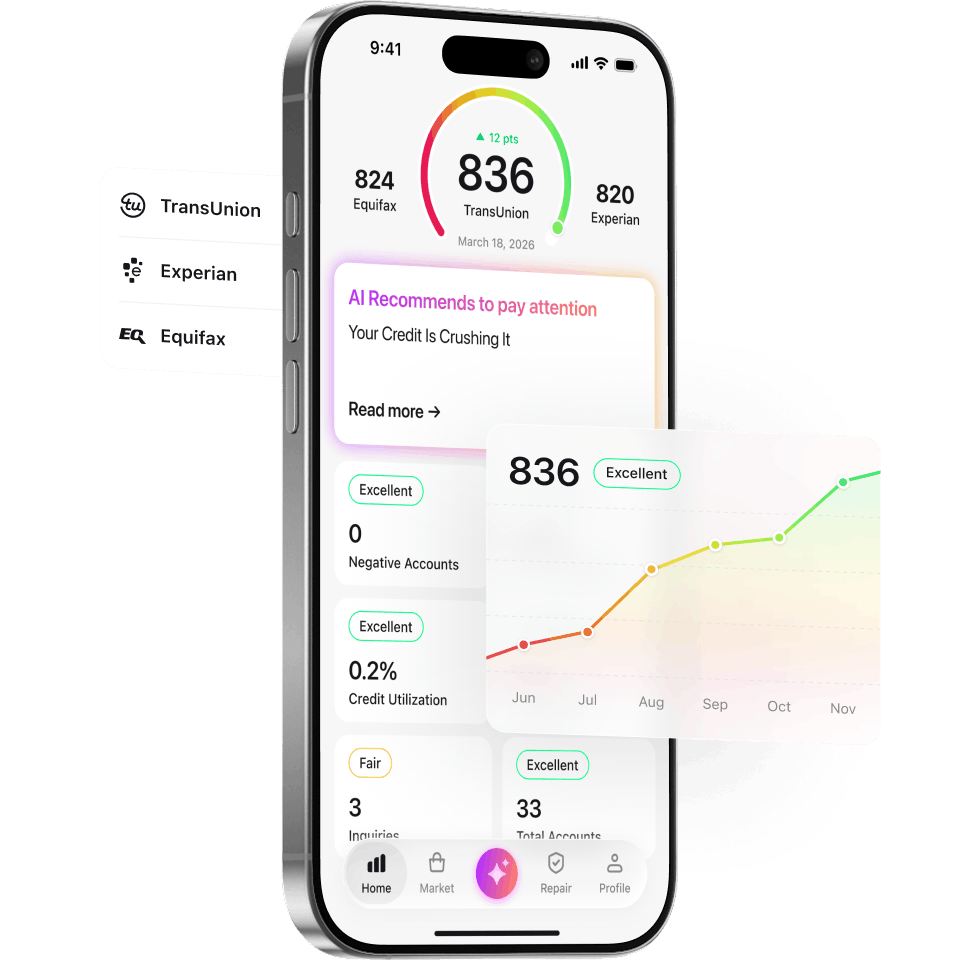
Companies follow the same steps but charge for the hassle, credit analysis, monitoring, creditor calls.[1][3] They might chase debt validation too.[3] Items can get temporarily suppressed, but reappear if verified later.[5] Track progress with apps. Credit Booster AI shines here: it scans reports, flags errors, generates dispute letters, and monitors changes, all in one app.[1][3]
Download Credit Booster AI, free on iOS and Android. It’s a smart sidekick for DIYers, not a replacement for your effort.
DIY Credit Repair vs. Hiring a Company
Should you go solo or pay up? Compare them head-to-head.
| Approach | Pros | Cons |
|---|---|---|
| DIY | Free. Full control. Same FCRA rights as pros.[3][6] | Time-consuming paperwork.[3] |
| Company | Handles disputes, monitoring, education.[1][3] | Fees add up. Scam risks.[3][6] |
DIY wins for most. FTC says anything legal they do, you can too, for zero cost.[6] Pay bills on time (35% of FICO), keep utilization under 30%, add positives like secured cards.[6] That’s real building.
Hiring? CROs (credit repair organizations) must follow Credit Repair Organizations Act (CROA). No upfront fees, pay post-service. Written contracts spell services, 3-day free cancel, timelines, costs. No guarantees or “new identity” nonsense.[1][4][6][7]
Common Credit Repair Misconceptions Busted
Think credit repair wipes your slate clean? Wrong. It can’t touch accurate info.[1][6] No score guarantees, illegal under CROA.[1][4]
“Companies have secret tricks?” Nope. Disputes are identical; bureaus don’t care who’s filing.[3][6] “Pay per delete” sounds slick but costs triple across bureaus, and deletions might not boost scores.[4]
Quick fixes? Temporary removals reinsert if verified.[5] Repair corrects; habits build. On-time payments trump disputes every time.[6]
Legal Rules Keeping Credit Repair Honest
CROA (1996) and FCRA guard you. CROs need contracts upfront: services list, cancel form, costs, no lies.[4][6][7] Violations? FTC fines them.
FCRA forces free disputes and investigations.[3][4] States add rules. You’re empowered, DIY or pro, rights stay yours.[6]
No big 2025-2026 shifts in data, but check CFPB for tweaks like better portals.[1][3]
Why Credit Repair Matters for Your Wallet
Errors aren’t rare, 1 in 5 reports has them. Fix a big one, like a fake collection, and watch your score jump 50-100 points.[3] Lower scores mean higher rates: 660 FICO pays 4.5% on mortgages; 740 gets 3.8%,$100K home saves $30K over 30 years.
Pair repair with habits. Credit Booster AI automates disputes and tracks, freeing you for payments. Real users see cleaner reports fast.
Practical Tips to Start Today
- Pull reports weekly.[3]
- Dispute with evidence; follow up.[3][4]
- Monitor identity theft.[1]
- Build: secured cards, low utilization.[2]
- Vet companies via BBB, CFPB.[6]
Short on time? Credit Booster AI analyzes, disputes, and updates you. Try it alongside DIY.
Frequently Asked Questions
What is the credit repair meaning in simple terms?
Credit repair means spotting and challenging wrong info on your credit reports to make them accurate.[1][2][3] Bureaus remove unverified errors within 30-45 days under FCRA, potentially raising your score.[3][4]
Can credit repair companies remove bankruptcies or late payments?
No, only if inaccurate or unverifiable, accurate ones stay 7-10 years.[1][3][6] CROA bans guarantees or removing true negatives.[1][4]
Is DIY credit repair as good as hiring a company?
Yes, it’s free and uses the same FCRA process.[3][6] Companies add convenience but charge; FTC says do it yourself.[6]
What are the costs of credit repair services?
No upfront fees per CROA, pay after services.[1][4][6] Contracts must list total costs; avoid “pay per delete” traps.[4]
How long does credit repair take?
Disputes resolve in 30-45 days per bureau.[3][4] Full process varies by errors, months for multiples, with follow-ups.[3]
Does credit repair guarantee a higher credit score?
Never, illegal to promise.[1][4][7] Scores improve only if errors were dragging you down; build with on-time payments.[2][6]
What’s the difference between credit repair and credit building?
Repair fixes errors; building adds positives like payments and low utilization.[2][6] Do both for best results.
Related research: For a deeper analysis of the fundamentals of credit repair, see our research library at JoinCreditClub.com.
Need professional help? CreditBooster.com has been helping clients rebuild their credit since 2009.
Frequently Asked Questions
What is the credit repair meaning in simple terms?
Credit repair means spotting and challenging wrong info on your credit reports to make them accurate. Bureaus remove unverified errors within 30-45 days under FCRA, potentially raising your score.
Can credit repair companies remove bankruptcies or late payments?
No, only if inaccurate or unverifiable, accurate ones stay 7-10 years. CROA bans guarantees or removing true negatives.
Is DIY credit repair as good as hiring a company?
Yes, it's free and uses the same FCRA process. Companies add convenience but charge; FTC says do it yourself.
What are the costs of credit repair services?
No upfront fees per CROA, pay after services. Contracts must list total costs; avoid 'pay per delete' traps.
How long does credit repair take?
Disputes resolve in 30-45 days per bureau. Full process varies by errors, months for multiples, with follow-ups.
Does credit repair guarantee a higher credit score?
Never, illegal to promise. Scores improve only if errors were dragging you down; build with on-time payments.
What's the difference between credit repair and credit building?
Repair fixes errors; building adds positives like payments and low utilization. Do both for best results.