How to Fix Your Credit Fast: 12 Proven Steps
Want to fix your credit fast? Start by pulling your free credit reports today from AnnualCreditReport.com, you can check weekly now, and dispute any errors right away. These 12 proven steps target the biggest factors in your FICO score: payment history (35%) and credit utilization (30%), delivering real boosts like 50-100 points in 3-6 months if you stick to them.[1][4][5][6]
You’ve got this. No fluff, no scams. Just actionable moves backed by experts from Experian, Consumer Reports, and the CFPB. Let’s dive into the steps.
Step 1: Check Your Credit Reports and Score Today
Grab your free reports from all three bureaus, Equifax, Experian, TransUnion, at AnnualCreditReport.com. Do it now; it’s weekly access under FCRA rules.[1][3][4]
Scan for errors: unfamiliar accounts, wrong personal info, fake inquiries, or late payments that aren’t yours. One in five reports has mistakes tanking scores.[3] Apps like Credit Karma give free scores too, but verify with official reports.
Pro tip: Spend 30 minutes per bureau. Note everything suspicious. This uncovers 20-50 quick points alone once fixed.[6]
Step 2: Dispute Inaccuracies Immediately
Found errors? Dispute online via bureau portals or mail FCRA letters with proof like bank statements.[2][3][8] Bureaus have 30 days to investigate, 45 if you add info, and must delete inaccuracies free.[3][8]
Example: A wrong $200 late payment? Attach your cleared check copy. In 2025 updates, medical collections under $500 vanish instantly, paid ones after one year.[1] Expect score jumps in 30-45 days.
Don’t pay “repair” companies upfront, CROA bans it, and they can’t erase accurate negatives.[2][8]
Step 3: Pay All Bills on Time, Starting Now
Payment history rules 35% of FICO. Set autopay for minimums right after payday.[1][4][5][6] Late marks stick 7 years, but recent on-time payments outweigh old ones in FICO 10T and VantageScore 4.0.[6]
Missed once? Use alerts. Amerisave says autopay even on high balances prioritizes timeliness over full payoff.[6] Perfect history alone nets 100+ points in six months.[1][4]
Step 4: Bring Past-Due Accounts Current
Call creditors for payment plans. Partial payments stop new lates.[1][3] Say your card’s 60 days late, offer $100 now, plan the rest. This halts damage fast.
Paid collections? FICO mostly ignores them now, especially zero balances.[2][4] No initial score dip like myths claim.
Step 5: Lower Credit Utilization Below 30%
Utilization is 30% of your score. Keep it under 30% overall, ideally 10%.[2][3][5][6] Example: $10,000 total limits with $4,000 owed? That’s 40%,pay down to $3,000 for instant relief.
Pay before statement closing dates; that’s what reports.[5] Dropped from 70% to 15%? See 50 points in one month.[6]
Step 6: Use Debt Snowball or Avalanche Method
Pick your fighter. Snowball: Wipe smallest balances first for momentum, like $500 card, then $2,000.[1][2][6] Avalanche: Hit highest interest (say 24% APR) to save cash long-term.
Budget $100 extra monthly beyond minimums. Track in a spreadsheet. This slashes utilization while building wins.
Download Credit Booster AI,free on iOS and Android. It analyzes your report, spots high-utilization cards, and generates dispute letters to speed this up.
Step 7: Request Credit Limit Increases
After 6-12 on-time months, ask issuers for hikes, no hard inquiry needed.[2][6] $1,000 limit to $2,000? Utilization halves without extra payoff.
Post-2025 competition means easier approvals. Say no? Try another card later.
Step 8: Become an Authorized User
Ask a trusted friend or family with a vintage, low-balance card (like 10 years old, 1% utilization) to add you.[2][6] Their perfect history piggybacks instantly, boosting your age (15% of score) and payment record.
Lexington Law calls this a top hack, 20-50 points easy if reported.[2] Confirm the issuer reports authorized users.
Step 9: Apply for a Secured Card or Credit-Builder Loan
No credit? Get one of the best secured credit cards for building credit (deposit $200-500 as limit) or a credit-builder loan (payments reported as you save).[2] Use lightly, pay full monthly.
Upgrade in 6-12 months. VantageScore 4.0 loves this for thin files, adding 20-50 points.[6]
Step 10: Consolidate High-Interest Debt
Swap card debt at 20%+ APR for a personal loan at 10-12%.[3][7] One payment simplifies life, frees limits for lower utilization.
Example: $5,000 cards to $5,000 loan, cards hit 0% use, scores soar.
Step 11: Write Goodwill Letters
Loyal to a creditor? Email a polite letter: “I’ve been a customer 5 years, paid on time since that one 2019 late due to job loss. Please remove as goodwill.” Success varies (20-30% rate), but it’s free.[2]
Target one-time lates, not patterns.
Step 12: Maintain Mix and Monitor Quarterly
Keep old accounts open, closing spikes utilization and hurts history (15%).[2][4][6] Aim for mix: cards (revolving) + loans (installment, 10%).[4]
Check reports every 4 months. Track via free tools.
Busting Myths That Slow You Down
Think closing old cards helps? Nope, it tanks history and utilization.[2][4][6] Credit repair firms don’t “erase” debt, just dispute like you can free.[2][8]
Carrying balances builds credit? Myth, pay in full for perfect history, zero interest.[5][6] Collections hurt when paid? Most FICO ignores them now.[4] No overnight miracles; math takes 1-2 cycles.[1][3]
Your Timeline for Results
Month 1: Disputes + payments = 20-50 points.[6]
Months 2-6: Low utilization + perfect history = 50-100+.[1][6][7]
Months 6-12: Limits, age, mix = ongoing gains.[6]
Severe damage? 12-24 months full recovery, but you’ll qualify for better rates sooner.[1][6]
Why Credit Booster AI Fits Here
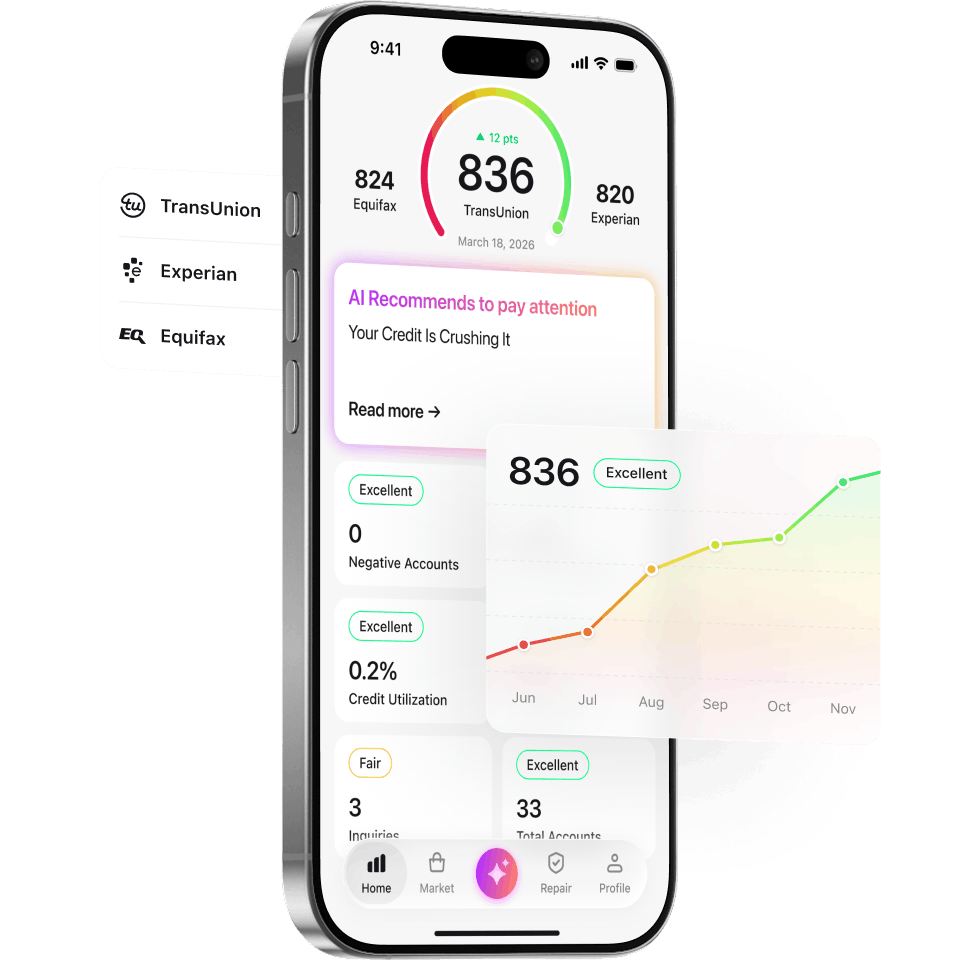
Credit Booster AI scans your reports for errors, predicts utilization impacts, and crafts FCRA dispute letters. Track progress in-app. It’s a sidekick, not a fix-all, pair it with these steps for faster credit score boosts.[App Info]
Ready to raise your credit score fast? Download now: Download Credit Booster AI,free on iOS and Android.
(Word count: 1523)
Frequently Asked Questions
How long does it take to fix credit fast?
Most see 20-50 points in 30 days from disputes and payments, 50-100 in 3-6 months with low utilization. Full rebuilds take 12-24 months for major damage.[1][6]
Can I improve credit quickly without paying anything?
Yes, dispute errors free, set autopay, pay down utilization before statements close. No need for paid services; FCRA mandates free fixes.[3][8]
Does paying off collections hurt my score?
No, current FICO ignores paid/zero-balance collections. Pay them for peace of mind, they won’t ding you.[2][4]
What’s the fastest way to lower credit utilization?
Pay cards before statement dates and request limit increases after 6 on-time months. Aim under 10% for max impact.[2][5][6]
Is becoming an authorized user safe for fixing credit?
Safe if on a trusted person’s pristine account, boosts history instantly. Confirm they report to all bureaus.[2][6]
How do I raise credit score fast with no credit history?
Get a secured card or credit-builder loan; VantageScore 4.0 adds 20-50 points via bank data. Pay on time.[2][6]
Related research: For a deeper analysis of realistic credit repair timelines, see our research library at JoinCreditClub.com.
Need professional help? CreditBooster.com has been helping clients rebuild their credit since 2009.
Frequently Asked Questions
How long does it take to fix credit fast?
Most see 20-50 points in 30 days from disputes and payments, 50-100 in 3-6 months with low utilization. Full rebuilds take 12-24 months for major damage.
Can I improve credit quickly without paying anything?
Yes, dispute errors free, set autopay, pay down utilization before statements close. No need for paid services; FCRA mandates free fixes.
Does paying off collections hurt my score?
No, current FICO ignores paid/zero-balance collections. Pay them for peace of mind, they won't ding you.
What's the fastest way to lower credit utilization?
Pay cards before statement dates and request limit increases after 6 on-time months. Aim under 10% for max impact.
Is becoming an authorized user safe for fixing credit?
Safe if on a trusted person's pristine account, boosts history instantly. Confirm they report to all bureaus.
How do I raise credit score fast with no credit history?
Get a secured card or credit-builder loan; VantageScore 4.0 adds 20-50 points via bank data. Pay on time.