Build Credit With No Credit History: Your Step-by-Step Guide
Having no credit history doesn’t mean you have bad credit, it means you’re invisible to lenders.[1][3] If you’ve never borrowed money, opened a credit card, or taken out a loan, credit bureaus have no data to create a score for you. The good news? You can start building credit from scratch, and it’s easier than you might think. With the right strategy, you’ll generate an initial credit score within about six months, and a solid score (670+) within a year.[2]
Being “credit invisible” affects millions of Americans. Without a credit history, you’ll struggle to qualify for apartments, car loans, mortgages, or even cell phone contracts. But the path forward is straightforward: you need to demonstrate responsible credit behavior, and several proven methods exist to do it.
Why No Credit History Is Different From Bad Credit
Here’s the critical distinction: no credit history is a blank slate, while bad credit is a negative one. When you have no history, lenders simply don’t have information about you. You’re not risky, you’re unknown. This actually works in your favor because you can build from zero without fighting against past mistakes.
The challenge is getting that first approval. Traditional credit cards and loans require credit history you don’t have yet. That’s why credit-building products exist. They’re designed specifically for people in your situation, with lower barriers to entry and built-in reporting to the three major credit bureaus (Equifax, Experian, and TransUnion).[5]
The Fastest Way to Build Credit: Secured Credit Cards
A secured credit card is your most direct path to building revolving credit history.[1] Here’s how it works: you deposit money ($200 to $5,000) with a card issuer, and that deposit becomes your credit limit.[5] You then use the card like any other credit card, and the issuer reports your activity to all three credit bureaus.
The beauty of secured cards is that they’re easy to qualify for, you don’t need a credit score at all. Discover it® Secured explicitly states no credit score is required, and many credit unions offer secured cards with minimal fees.[7]
To maximize impact, keep your balance under 30% of your limit and pay it off in full each month.[4][5] This demonstrates responsibility and helps your payment history, which makes up 35% of your credit score.[3] After 6-12 months of perfect payments, you’ll likely qualify for an unsecured card and can recover your deposit.
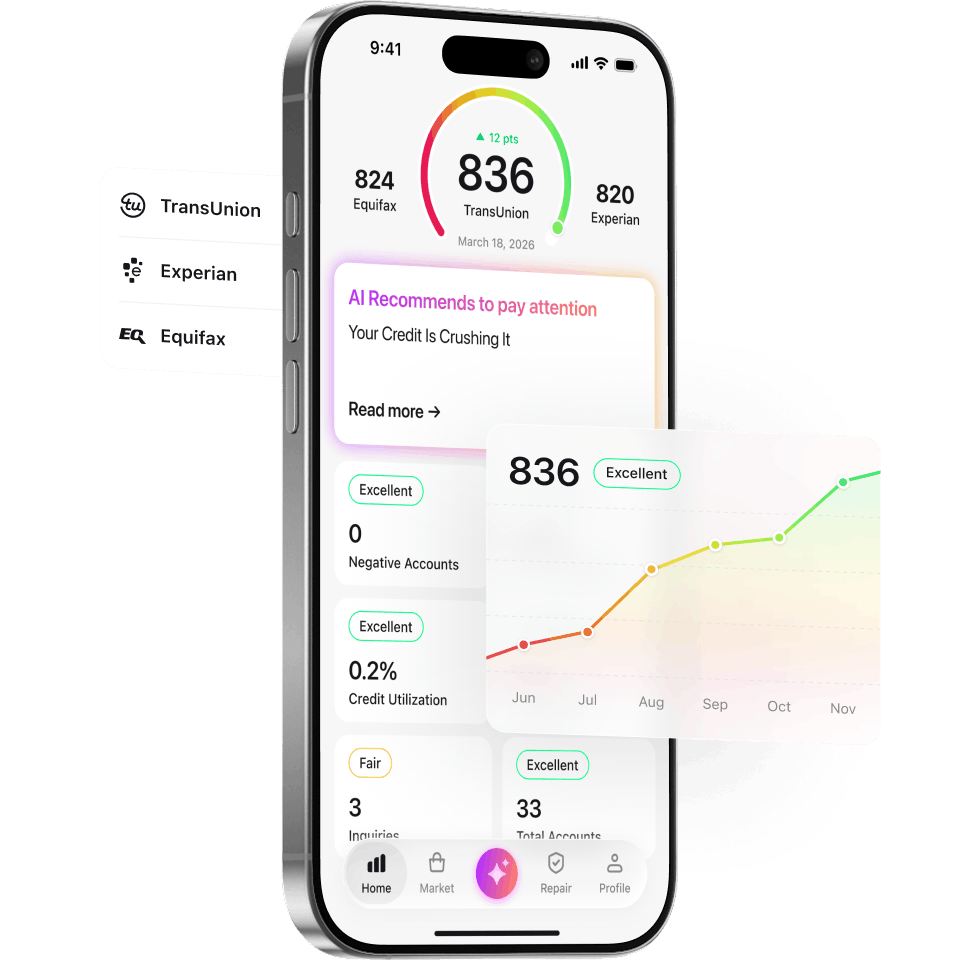
Download Credit Booster AI, free on iOS and Android, to track your secured card activity and monitor your score as it builds.
Become an Authorized User (The Easiest Option)
One of the simplest ways to build credit is to become an authorized user on someone else’s credit card, typically a family member or close friend with good credit.[2][3] You’ll be added to their account, get your own card, and their payment history will appear on your credit report.
The catch? Make sure the card issuer reports authorized users to the credit bureaus. Not all do, so ask first.[2][3] If they do report it, you’ll benefit from their positive history, low utilization, and on-time payments, without taking on personal debt or risk.
You don’t even have to use the card. Simply being added can help, though using it for small purchases and paying them off shows additional responsible behavior.
Credit-Builder Loans: Building Credit and Savings Simultaneously
A credit-builder loan is a reverse loan designed specifically for credit building.[1][3][5] Instead of receiving money upfront and paying it back, you make monthly payments (typically $25-$100) for 6-18 months, and then receive the full amount at the end.
Your payments are reported to all three credit bureaus, building installment loan history, a different type of credit than cards.[1][5] You also build a savings account in the process. Companies like Self offer these loans, and many credit unions do too.[1]
The downside? Your money is locked away during the loan term, and you’ll pay interest and fees. But if you need to save while building credit, it’s an excellent dual-purpose tool.
Leverage Your Existing Bills With Experian Boost
Here’s something most people don’t realize: you might already be building credit without knowing it. Experian Boost is a free tool that reports your phone bills, utility payments, and streaming subscriptions to Experian, one of the three major bureaus.[1][3]
After three months of on-time payments, these bills can boost your FICO score. The average increase is 13 points, according to Experian data, though results vary.[3] You can also add rent payments if your landlord doesn’t already report them.[3]
There’s no debt involved, no hard inquiry, and it’s completely free. If you’re opening a checking account anyway, Experian Smart Money Digital Checking links directly to Boost, making it even easier.[3]
Other Credit-Building Methods Worth Considering
Credit-building debit cards are another option. These work with Experian Boost to report your debit card spending and bill payments as credit activity.[3] You’re not borrowing money, just using a debit card, but your on-time payments get reported after three months.
Store credit cards are sometimes easier to qualify for than traditional cards, though they typically offer lower limits and higher interest rates. Use them sparingly if you go this route.[4]
The Timeline: How Long Does It Really Take?
Patience is essential. According to credit experts, it typically takes six months of consistent activity to generate an initial credit score.[2] To reach a good score (usually 670+), plan on up to one year.[2]
This timeline assumes you’re making all payments on time and keeping balances low. Missing even one payment can significantly slow your progress. Automate your payments if possible to ensure nothing slips through the cracks.
Pro Tips for Faster Credit Building
Start with one method rather than applying for multiple products at once. Each application triggers a hard inquiry, which can temporarily lower your score.[4] Once you’ve established a base score, you can diversify.
Monitor your progress with free weekly credit reports at AnnualCreditReport.com. Check for errors, they’re more common than you’d think, and disputing them is free.[1]
Keep your credit utilization (the percentage of available credit you’re using) under 30%, ideally under 10%.[5] This is one of the easiest ways to show lenders you’re responsible.
Download Credit Booster AI to get AI-powered analysis of your credit report, identify potential errors, and generate dispute letters automatically.
Common Mistakes to Avoid
Don’t fall for high-fee secured cards or predatory credit-builder loans. Legitimate options exist with minimal fees, shop around.[1][2]
Don’t ignore your credit report. Errors happen, and you have the right to dispute them for free under the Fair Credit Reporting Act.[3]
Don’t max out your cards just because you got approved. Low utilization is key to a strong score.[5]
Don’t apply for credit you don’t need. Each application creates a hard inquiry, which temporarily impacts your score.[4]
Frequently Asked Questions
How long does it take to build credit from nothing?
It typically takes six months to generate an initial credit score and up to one year to build a good score (670+).[2] The timeline depends on which methods you use and your consistency with on-time payments.
Can I build credit without a credit card?
Yes. Credit-builder loans, becoming an authorized user, and using Experian Boost all build credit without traditional credit cards.[1][3][5] However, secured credit cards are often the fastest option because they build revolving credit history, which is valuable to lenders.
Do I need money to start building credit?
Secured credit cards and credit-builder loans require deposits, typically $200-$5,000.[5] However, becoming an authorized user and using Experian Boost are free options to get started.[1][3]
What if I get rejected for a secured credit card?
Rejections are rare for secured cards since they’re low-risk for issuers. If you’re rejected, try a credit union, they often have more flexible approval standards and lower deposit requirements.[5] You can also start with Experian Boost or an authorized user arrangement while you save for a deposit.
Will being an authorized user hurt the primary cardholder?
No. Adding you as an authorized user doesn’t impact their credit negatively, and it helps you build history.[2][3] However, if they rack up debt or miss payments, it will hurt your emerging score, so choose a responsible primary cardholder.
How do I know if my progress is working?
Check your free credit report weekly at AnnualCreditReport.com after you’ve had accounts for at least six months.[1] You should see accounts appearing on your report and, after six months, an actual credit score. Credit Booster AI also tracks your progress and alerts you to changes in your credit profile.
Related research: For a deeper analysis of building credit from zero, see our research library at JoinCreditClub.com.
Need professional help? CreditBooster.com has been helping clients rebuild their credit since 2009.
Frequently Asked Questions
How long does it take to build credit from nothing?
It typically takes six months to generate an initial credit score and up to one year to build a good score (670+). The timeline depends on which methods you use and your consistency with on-time payments.
Can I build credit without a credit card?
Yes. Credit-builder loans, becoming an authorized user, and using Experian Boost all build credit without traditional credit cards. However, secured credit cards are often the fastest option because they build revolving credit history, which is valuable to lenders.
Do I need money to start building credit?
Secured credit cards and credit-builder loans require deposits, typically $200-$5,000. However, becoming an authorized user and using Experian Boost are free options to get started.
What if I get rejected for a secured credit card?
Rejections are rare for secured cards since they're low-risk for issuers. If you're rejected, try a credit union, they often have more flexible approval standards and lower deposit requirements. You can also start with Experian Boost or an authorized user arrangement while you save for a deposit.
Will being an authorized user hurt the primary cardholder?
No. Adding you as an authorized user doesn't impact their credit negatively, and it helps you build history. However, if they rack up debt or miss payments, it will hurt *your* emerging score, so choose a responsible primary cardholder.
How do I know if my progress is working?
Check your free credit report weekly at AnnualCreditReport.com after you've had accounts for at least six months. You should see accounts appearing on your report and, after six months, an actual credit score. Credit Booster AI also tracks your progress and alerts you to changes in your credit profile.