How Many Credit Cards Should You Have?
There’s no magic ideal number of credit cards,it depends on your financial habits and goals, but experts like Equifax and NerdWallet recommend 2-3 cards for most people to balance credit mix, utilization, and manageability without risking missed payments.[1][2][6] Americans average 3.9 cards per Experian 2023 data, yet those with top 800+ FICO scores often stick to 4-5 if they pay in full monthly.[3][4] Think of it this way: one card limits your options, but too many credit cards (say, 6+) can lead to tracking nightmares and score dips from inquiries or lapsed payments.[1][3]
Why the Ideal Number Varies by Your Situation
Ever wonder why credit gurus don’t just say “get exactly four”? Because FICO and VantageScore don’t penalize card counts directly, they care about how you use them.[4][6] Payment history (35% of your score) trumps everything, so if juggling bills stresses you out, stick to fewer.[1] New cards add hard inquiries (dropping scores 5-10 points temporarily) and shorten your average account age (15% of score).[6]
For beginners or recent grads, 1-2 cards build history safely. Synchrony Bank nails it: start simple, prove you can auto-pay on time.[3] Established users? Bump to 3-5 for rewards chasers. Multiple cards spread spending, say $3,000 across three $5,000-limit cards hits 20% utilization, not 60% on one, boosting that key 30% factor.[4][6] Equifax pushes 2-3 cards plus loans for a diverse credit mix (10% of score).[1][2]
Lenders see 3-4 as normal for qualified folks, but flag rapid apps as risky.[6][8] No law caps your cards, CARD Act only demands clear terms.[5][6] Bottom line: manage well, and multiple credit cards help your score; mismanage, and quantity hurts.
Busting Myths About Too Many Credit Cards
Myth one: More cards always tank your score. Wrong. They lower utilization if you keep it under 30% overall (10% for elites) and pay on time.[1][4][6] People with 800+ scores average 4-5 cards at 6% utilization.[4]
Myth two: One card’s safest. Nope, it spikes utilization fast and leaves you exposed if it’s frozen.[1][6] Two from different issuers? Backup gold.
Myth three: Unlimited’s fine. Legally yes, but 6+ risks forgotten fees ($40 each) and score hits from average age drops.[3][6][8]
Here’s a quick comparison of expert recs:
| Source | Recommended Range | Best For |
|---|---|---|
| Equifax[1][2] | 2-3 + loans | Credit mix, no missed payments |
| NerdWallet[6] | Start 2; build to 5+ accounts | Flexibility, utilization control |
| Experian[3] | Around 4 (U.S. avg.) | Rewards if managed |
| Synchrony[3] | 1-2 beginners; 3-5 rewards | Life stage matching |
Practical Tips: Finding Your Sweet Spot
Assess your life first. Building credit? One secured card, paid perfectly.[1] Rewards hunter? Three category kings, gas, travel, dining, redeem monthly.[3] Emergency fund? Keep a low-use card from another issuer.[6]
Key rules:
- Utilization hack: Total limits matter. $15,000 across three cards? $3,000 spend = 20%. Pay full to dodge interest (avg. 20%+ APR).[4][6]
- Apply smart: Max 1-2 new cards yearly, spaced 6 months. Monitor free weekly reports at AnnualCreditReport.com.[6]
- Track like a pro: Apps or auto-pay for due dates. Close unused cards? Wait, utilization jumps without them.[2][4]
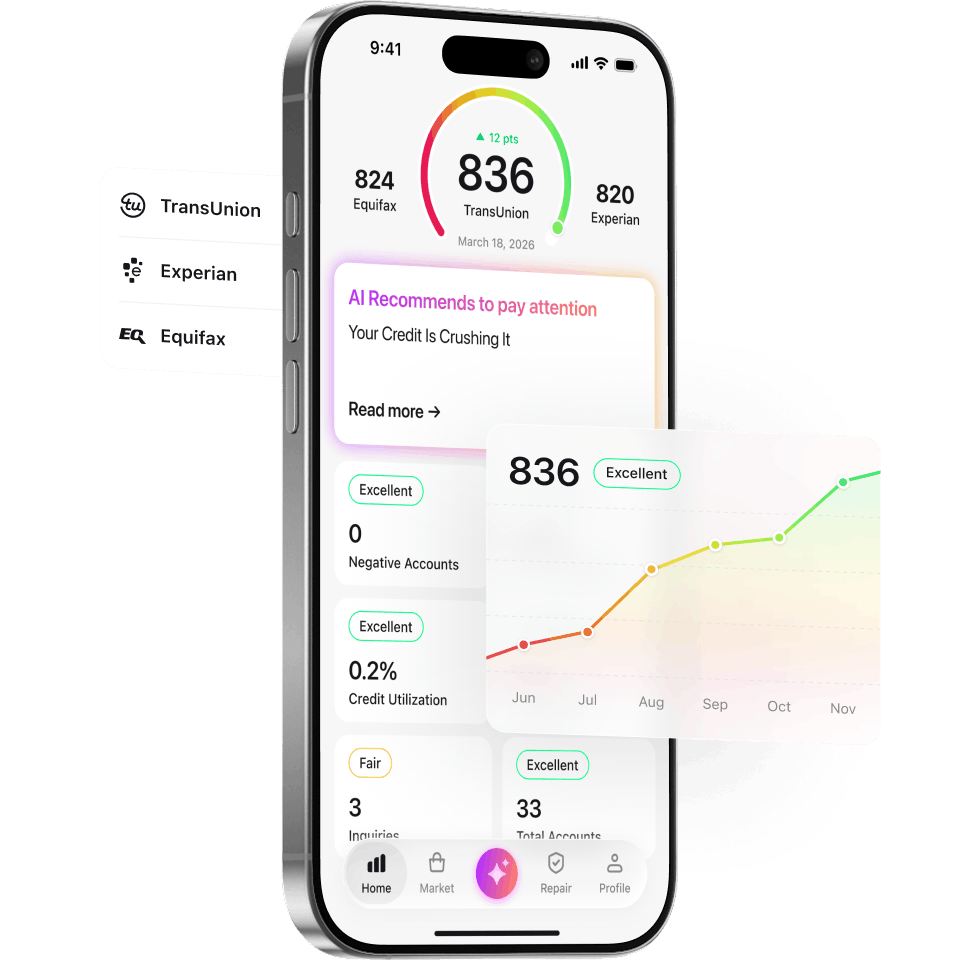
- Pro move: Credit Booster AI scans your report, spots errors, and crafts dispute letters. It’s helped users drop utilization fast by fixing limits.Download Credit Booster AI,free on iOS and Android.
For goals, match cards like this:
| Goal | Ideal Cards | Pro Tip |
|---|---|---|
| Build score | 1-2 | On-time payments > limits[1] |
| Max rewards | 3-5 | Rotate by category; pay off[3] |
| Backup buffer | 2+ issuers | One stays near-zero balance[6] |
Struggling? Credit Booster AI analyzes patterns, suggests optimizations, think AI spotting that high-utilization card dragging you down.
When Multiple Credit Cards Score Big (or Backfire)
Multiple credit cards shine for utilization and mix. Example: Solo card with $10k limit, $4k spend = 40% (score killer). Add two more for $25k total? Same spend = 16% (score booster).[4] But backfires? Missed payments on five cards? Fees pile, history tanks.[1][3]
Top scorers prove it: 4-5 cards, low balances, auto-payments.[4] Lenders approve mortgages with 3-4 if inquiries are old.[6][8] Recent 2023-2026 data? No scoring shifts, utilization and payments rule.[1][3][6]
Frequently Asked Questions
How many credit cards should I have for a good credit score?
Aim for 2-3 if building or maintaining, per Equifax, enough for mix and low utilization without overload.[1][2] Those with 800+ FICO average 4-5, but only if paid fully monthly.[4]
Is it bad to have too many credit cards?
No set “too many,” but 6+ risks missed payments and inquiry dings if unmanaged.[3][6] Focus on <30% utilization across all; U.S. avg. is 3.9 without issues.[3]
Does having multiple credit cards help or hurt my score?
Helps if you spread spending (lowers utilization) and pay on time; hurts via new inquiries or age drops.[4][6] Example: $3k on three cards beats one.
What’s the ideal number of credit cards for rewards?
3-5 for category bonuses (travel, cashback), but rotate wisely and redeem often to avoid balances.[3] NerdWallet says start with 2, expand responsibly.[6]
Can I have as many credit cards as I want?
Legally unlimited if approved, no laws cap it.[5][6] Issuers check income; manageability matters more for scores.
How do I lower credit utilization with multiple cards?
Spread charges evenly, pay before statements close, target <10% for top scores.[1][4][6] Tools like Credit Booster AI track and optimize this automatically.
Related research: For a deeper analysis of how credit mix affects your score, see our research library at JoinCreditClub.com.
Need professional help? CreditBooster.com has been helping clients rebuild their credit since 2009.
Frequently Asked Questions
How many credit cards should I have for a good credit score?
Aim for 2-3 if building or maintaining, per Equifax, enough for mix and low utilization without overload. Those with 800+ FICO average 4-5, but only if paid fully monthly.
Is it bad to have too many credit cards?
No set 'too many,' but 6+ risks missed payments and inquiry dings if unmanaged. Focus on <30% utilization across all; U.S. avg. is 3.9 without issues.
Does having multiple credit cards help or hurt my score?
Helps if you spread spending (lowers utilization) and pay on time; hurts via new inquiries or age drops. Example: $3k on three cards beats one.
What's the ideal number of credit cards for rewards?
3-5 for category bonuses (travel, cashback), but rotate wisely and redeem often to avoid balances. NerdWallet says start with 2, expand responsibly.
Can I have as many credit cards as I want?
Legally unlimited if approved, no laws cap it. Issuers check income; manageability matters more for scores.
How do I lower credit utilization with multiple cards?
Spread charges evenly, pay before statements close, target <10% for top scores. Tools like Credit Booster AI track and optimize this automatically.