Does Checking Your Credit Score Hurt It? The Truth About Soft vs. Hard Inquiries
No, checking your credit score does not hurt it.[1][2][3][4][5] When you check your own credit score, it’s classified as a soft inquiry, which has zero impact on your FICO or VantageScore.[1][3][7] This is one of the most persistent myths in personal finance, and it stops a lot of people from monitoring their credit when they should be doing it regularly.
The confusion usually stems from mixing up two different types of credit inquiries. Understanding the difference between soft and hard inquiries is the key to making smart credit decisions without unnecessary worry.
Soft Inquiries vs. Hard Inquiries: What’s the Real Difference?
Here’s the straightforward breakdown: soft inquiries don’t affect your score at all, while hard inquiries can temporarily lower it by up to 5 points each.[1][7]
Soft inquiries happen when you check your own credit score or report, when a potential employer runs a background check, or when a lender sends you a pre-qualification offer.[1][2][5] These checks appear on your credit report, but they’re invisible to lenders and have absolutely no impact on your scores.[5][7] You can check your credit as often as you want without any downside.
Hard inquiries are the ones that matter for scoring purposes. They occur when you actively apply for new credit, a mortgage, auto loan, credit card, or personal loan. The lender pulls your full credit report to decide whether to approve you and what terms to offer.[1][5][6] Each hard inquiry can lower your score by a few points, and if you have multiple hard inquiries in a short timeframe, the effect can compound.[1]
The good news? Hard inquiry damage is temporary. Your score typically recovers within a few months, and the inquiry falls off your report after about two years.[5]
Why Checking Your Score Is Actually Smart
Regular credit monitoring isn’t just safe, it’s genuinely beneficial. By checking your score and report frequently, you can catch errors, spot signs of identity theft, and track your progress as you build better credit habits.[2][6][7] Equifax recommends it as “a great way to track your financial wellness.”[6]
You’re also entitled to free access. Under the Fair Credit Reporting Act, you can request one free credit report from each of the three major bureaus (Equifax, Experian, TransUnion) every 12 months via AnnualCreditReport.com.[6][8] Even better, the CFPB extended this to weekly free reports since 2020, and that access remains available today.[8] All of these requests generate soft inquiries only.
Many banks and credit card issuers also offer free credit score monitoring through their apps or websites. Chase, Discover, and Credit Karma all provide scores without triggering hard inquiries.[3][4]
When Hard Inquiries Actually Matter (And When They Don’t)
Hard inquiries are part of the “new credit” category, which accounts for just 10% of your FICO score.[1] That’s why they’re not the biggest threat to your credit profile. Late payments, high credit utilization, and collections accounts do far more damage.
That said, you don’t want to rack up hard inquiries carelessly. If you’re rate-shopping for a mortgage, auto loan, or student loan, most credit bureaus treat multiple hard inquiries as a single inquiry if they occur within a 14- to 45-day window.[1][6][7] This is intentional, lenders know you’ll shop around, and they don’t want to penalize you for it.
Credit cards are the exception. Multiple credit card applications in a short period typically aren’t bundled together, so each one shows as a separate hard inquiry.[6]
The Real Credit Killers (Hint: It’s Not Checking Your Score)
If you’re worried about your credit, focus on the factors that actually move the needle. Payment history is the biggest, 35% of your FICO score, so late payments are far more damaging than any inquiry.[1][4] Credit utilization is next at 30%, and this is where most people slip up.
If you have a $1,000 credit card limit and a $500 balance, you’re using 50% of your available credit. That hurts your score.[1] The rule of thumb: keep utilization under 30%, and you’ll be in much better shape than someone obsessing over a single hard inquiry.[1][4]
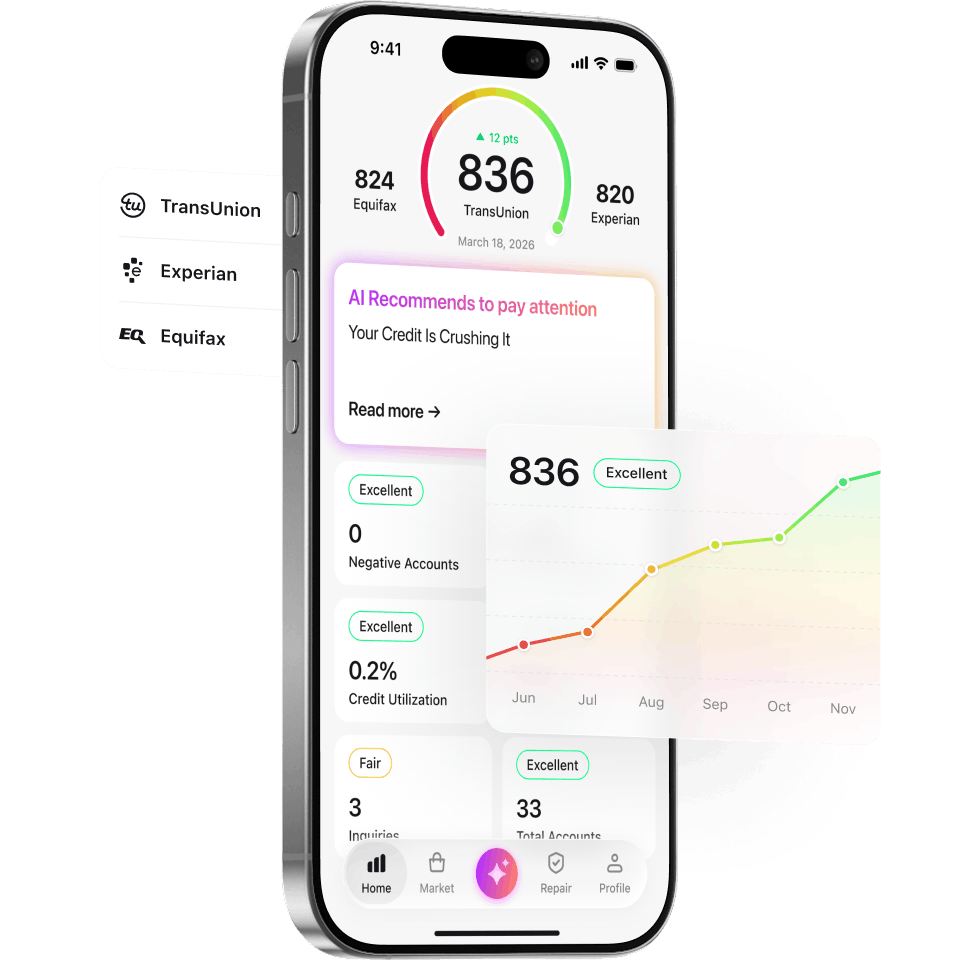
Download Credit Booster AI, free on iOS and Android, to monitor your credit utilization, track hard inquiries, and get personalized insights into what’s actually affecting your score. The app analyzes your credit report and identifies the biggest opportunities to improve.
How Often Should You Check Your Credit?
There’s no downside to checking frequently. Many experts recommend checking your score at least monthly, and some suggest weekly.[1][2] The more you monitor, the faster you’ll catch errors or fraudulent activity.
Set up alerts with the credit bureaus for suspicious activity. If you spot something wrong on your report, dispute it directly with the bureau or the creditor that reported it.[2][6] Fixing inaccuracies can boost your score faster than any other action you can take.
The Bottom Line
Checking your own credit score is completely safe and genuinely smart financial hygiene. Soft inquiries, whether from you, your bank, or a pre-qualification offer, have zero impact on your scores. Hard inquiries from credit applications do sting a bit, but the damage is temporary and minimal compared to other factors like payment history and utilization.
The only reason not to check your score regularly is if you’re avoiding the truth about your credit. And if that’s the case, Download Credit Booster AI to get a clear, judgment-free breakdown of where you stand and what you can actually improve. The app uses AI to analyze your report, generate dispute letters for errors, and track your progress over time.
Stop worrying about soft inquiries. Start worrying about the stuff that actually matters.
Frequently Asked Questions
Will checking my credit score on Credit Karma or other free apps hurt my score?
No. Free credit monitoring apps like Credit Karma, Experian, and your bank’s portal all use soft inquiries, which have zero impact on your score.[3][4] You can check as often as you want without any downside.
How much does a hard inquiry lower your credit score?
A single hard inquiry can lower your score by up to 5 points, according to FICO.[1] Multiple hard inquiries in a short period can compound the effect, but the damage is temporary, typically lasting a few months with recovery within 12 months.[5]
If I apply for multiple credit cards, will each one hurt my score?
Yes, each credit card application typically generates a separate hard inquiry with its own scoring impact.[6] Unlike mortgages or auto loans, card applications don’t get bundled into a single inquiry even if you apply within a short timeframe. This is why it’s worth being selective about card applications.
Can I check my credit report for free without hurting my score?
Absolutely. You can request one free credit report from each of the three major bureaus every 12 months via AnnualCreditReport.com, and the CFPB allows weekly free reports.[6][8] All of these generate soft inquiries only, with zero score impact.
What’s more damaging to my credit, a hard inquiry or high credit card utilization?
High utilization is far more damaging. Credit utilization accounts for 30% of your FICO score, while new credit (hard inquiries) accounts for only 10%.[1] Keeping utilization below 30% is one of the fastest ways to improve your score.
How long does a hard inquiry stay on my credit report?
Hard inquiries remain on your credit report for about two years, but the scoring impact typically fades within a few months.[5] Most lenders only care about recent inquiries anyway, so older ones matter less over time.
Related research: For a deeper analysis of the difference between hard and soft inquiries, see our research library at JoinCreditClub.com.
Need professional help? CreditBooster.com has been helping clients rebuild their credit since 2009.
Frequently Asked Questions
Will checking my credit score on Credit Karma or other free apps hurt my score?
No. Free credit monitoring apps like Credit Karma, Experian, and your bank's portal all use soft inquiries, which have zero impact on your score. You can check as often as you want without any downside.
How much does a hard inquiry lower your credit score?
A single hard inquiry can lower your score by up to 5 points, according to FICO. Multiple hard inquiries in a short period can compound the effect, but the damage is temporary, typically lasting a few months with recovery within 12 months.
If I apply for multiple credit cards, will each one hurt my score?
Yes, each credit card application typically generates a separate hard inquiry with its own scoring impact. Unlike mortgages or auto loans, card applications don't get bundled into a single inquiry even if you apply within a short timeframe. This is why it's worth being selective about card applications.
Can I check my credit report for free without hurting my score?
Absolutely. You can request one free credit report from each of the three major bureaus every 12 months via AnnualCreditReport.com, and the CFPB allows weekly free reports. All of these generate soft inquiries only, with zero score impact.
What's more damaging to my credit, a hard inquiry or high credit card utilization?
High utilization is far more damaging. Credit utilization accounts for 30% of your FICO score, while new credit (hard inquiries) accounts for only 10%. Keeping utilization below 30% is one of the fastest ways to improve your score.
How long does a hard inquiry stay on my credit report?
Hard inquiries remain on your credit report for about two years, but the scoring impact typically fades within a few months. Most lenders only care about recent inquiries anyway, so older ones matter less over time.