Credit Washing: It Is Fraud, Not Repair
Credit washing is lying to the credit bureaus to erase accurate debts, usually by falsely claiming they came from identity theft. It is a crime. And in 2026 it is more likely to be caught than at any point before.
Here is the honest version, because the pitch sounds tempting. Credit washing promises to wipe real charge-offs, collections, and late payments off your report fast, by disputing them as fraud you never committed. The information being erased is true. The method is a false statement. That combination is not credit repair, it is fraud, and the person making the false claim, you, is the one exposed.
So the only honest thing this page can do is steer you away from it, and show you the legal version that actually works.
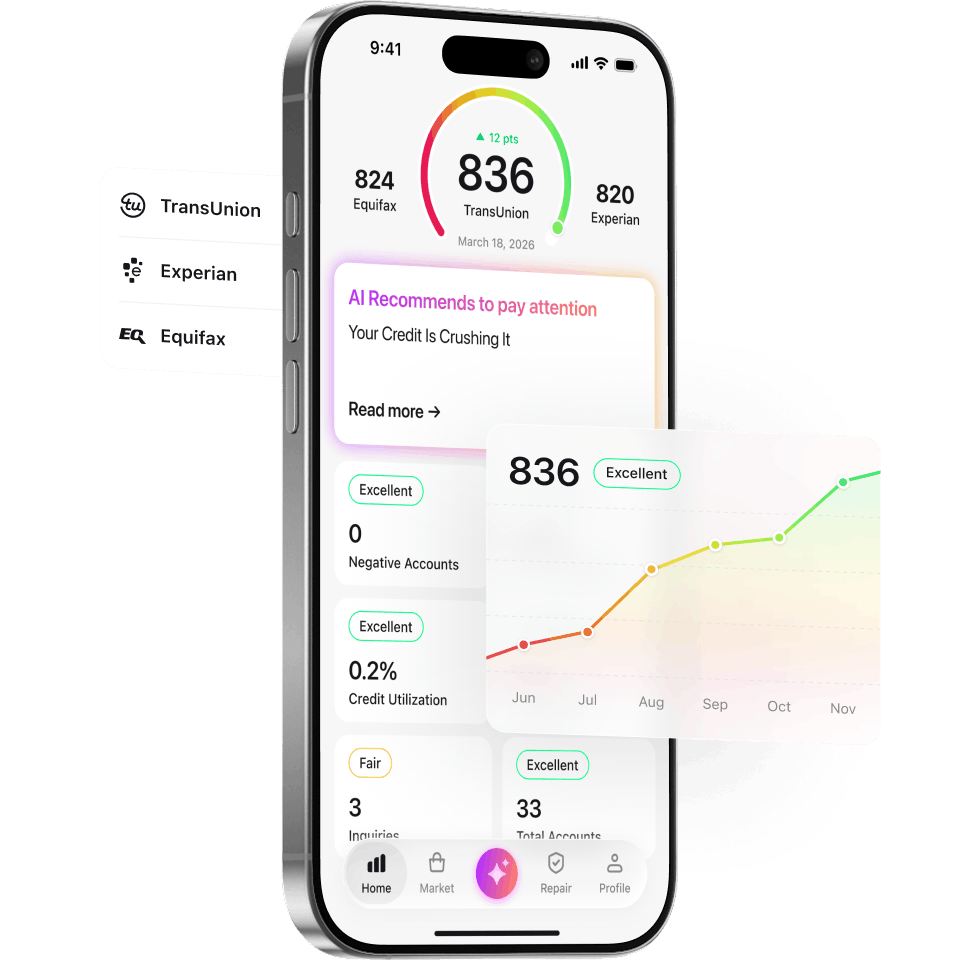
Want to know which items on your report are genuinely wrong and challengeable, and which are accurate? Download Credit Booster AI, free on iOS and Android, and read all three reports in one place.
Why It Is a Crime, Not a Loophole
The line between legal challenge and credit washing is simple, and it is the whole thing.
Challenging an inaccurate item is your right. Claiming an accurate account was identity theft, when it was not, is a false statement to a credit bureau, and often a false police report or affidavit on top of it. The FTC warns directly against any company that tells you to file a false identity-theft report or create a new credit identity, and it names those promises as marks of an illegal scam. You do not get a pass because a company told you to do it; you made the claim.
The concession that matters here: yes, an accurate collection is genuinely painful, and yes, it would be nice to make it vanish. But it is true, so the honest answer is that you cannot lie it away without committing fraud, and pretending otherwise is what gets people charged.
The Bureaus Are Watching for It Now
The old assumption behind credit washing was that a flood of disputes would slip through. That assumption is failing.
In January 2026, Equifax launched a Credit Abuse Risk model designed to catch this specific behavior: a sudden surge of disputes on unpaid accounts that sits outside normal patterns. TransUnion has rolled out its own credit-washing detection. So a sweep of false disputes now risks being flagged, reversed after verification, and marked to lenders as suspicious. You can end up worse off than when you started, with the accurate items back and a fraud flag attached.
The Legal Way to Clean a Report
There is real, enforceable cleanup available, and it is the opposite of a lie.
Challenge only what is actually wrong: an inaccurate balance, a duplicate, an account that is not yours, a paid item still showing as owed, a wrong date, or a mark past its seven-year window. The bureau must investigate and delete what it cannot verify. For accurate negatives, the legitimate levers are paying or settling, asking for a goodwill removal on a paid late, and letting the seven-year clock run. That is slower than a sweep. It is also real, and it does not put your name on a false statement.
What This Means For Your File
The genuine work is separating the wrong items from the accurate ones and going after the wrong ones hard. That is where the points are, and it is completely legal.
Credit Booster AI reads all three bureau reports, flags the items that are actually inaccurate, duplicated, or not yours, and drafts the challenge letters for those, without ever asking you to claim a real debt is fraud. Clearing genuine errors typically moves a score 30 to 60 points, over one to a few months, when there is a real error to clear.


Plans start at $9.99 a month with a 7-day free trial. It will not help you erase an accurate debt, because nothing legal can, and any tool that promises to is the scam.
The Verdict
Is credit washing worth it? No. It means lying to the bureaus to erase true debts, it is a crime you commit in your own name, and Equifax and TransUnion now actively detect it. The accurate items come back, and you are left with the fraud exposure.
Two things to remember. One, challenging a wrong item is legal and powerful; claiming a real debt is identity theft is fraud. Two, time removes accurate negatives for free in seven years, so you never need to lie to clean your report.
For a related fraud pitch to avoid, see credit sweep scams and what a CPN really is.
Frequently Asked Questions
What is credit washing?
Credit washing is trying to remove accurate, negative information from a credit report by lying, usually by falsely claiming that real accounts were the result of identity theft. It is marketed as a fast way to erase charge-offs, collections, and late payments before they age off. It is not credit repair; it is fraud, because the information being erased is true and the method is a false statement to the bureaus.
Is credit washing illegal?
Yes. Filing a false identity-theft report or lying to a credit bureau to remove accurate debts is a crime, and the FTC warns explicitly against companies that tell you to do it. It can be prosecuted as fraud, and a false police report or false identity-theft affidavit carries its own penalties. You can be the one charged, not just the company you paid, because you are the one making the false claim.
Can the bureaus tell if you are credit washing?
Increasingly, yes. In January 2026, Equifax launched a Credit Abuse Risk model built to flag exactly this pattern: a sudden flood of disputes on unpaid accounts that falls outside normal ranges. TransUnion has its own credit-washing detection. So a sweep of false disputes is more likely than ever to be caught, reversed, and flagged to lenders as suspicious activity on your file.
What is the legal way to remove negative items?
Challenge only what is actually wrong. If an item is inaccurate, not yours, duplicated, already paid, or past its seven-year window, you have a real, legal right to challenge it, and the bureau must correct or delete what it cannot verify. For accurate negatives, the legitimate paths are paying or settling, asking for a goodwill removal, and letting time age them off. None of that requires a lie.
What happens if a company offers to wash my credit?
Walk away. Any company promising to erase accurate debts, create a new credit identity, or dispute everything as identity theft is describing a crime, and the FTC lists those promises as defining marks of a credit-repair scam. You will likely lose the fee, the accurate items will come back after verification, and you will have made false statements in your own name. The offer is the red flag.
Related reading: Compare the credit sweep scam, the primary tradelines warning, and whether Credit One is predatory. For the full rundown, read credit repair scams to avoid.
Sources
Every claim on this page traces to one of these, checked on July 20, 2026.
By the numbers
Equifax launched credit-washing detection
Jan 2026
Its Credit Abuse Risk model flags sudden dispute spikes on unpaid accounts.
Equifax, Credit Abuse Risk Model press release, July 20, 2026
Filing a false identity-theft claim
A crime
Lying to a bureau or filing a false report to erase real debt is fraud, not repair.
FTC, Looking to fix your credit? An illegal credit repair scam isn't the answer, July 20, 2026
How long an accurate negative legitimately stays
7 years
It falls off on its own. You do not need to lie to make it disappear.
CFPB, How long negative information stays on your report, July 20, 2026
Source: Equifax, Credit Abuse Risk Model press release. Pulled July 20, 2026.
Loving This Info? You'll Love Our App.
Everything you just read, plus AI-powered tools to understand and master your credit. 7 day free trial.
Get the AppFrequently Asked Questions
What is credit washing?
Credit washing is trying to remove accurate, negative information from a credit report by lying, usually by falsely claiming that real accounts were the result of identity theft. It is marketed as a fast way to erase charge-offs, collections, and late payments before they age off. It is not credit repair; it is fraud, because the information being erased is true and the method is a false statement to the bureaus.
Is credit washing illegal?
Yes. Filing a false identity-theft report or lying to a credit bureau to remove accurate debts is a crime, and the FTC warns explicitly against companies that tell you to do it. It can be prosecuted as fraud, and a false police report or false identity-theft affidavit carries its own penalties. You can be the one charged, not just the company you paid, because you are the one making the false claim.
Can the bureaus tell if you are credit washing?
Increasingly, yes. In January 2026, Equifax launched a Credit Abuse Risk model built to flag exactly this pattern: a sudden flood of disputes on unpaid accounts that falls outside normal ranges. TransUnion has its own credit-washing detection. So a sweep of false disputes is more likely than ever to be caught, reversed, and flagged to lenders as suspicious activity on your file.
What is the legal way to remove negative items?
Challenge only what is actually wrong. If an item is inaccurate, not yours, duplicated, already paid, or past its seven-year window, you have a real, legal right to challenge it, and the bureau must correct or delete what it cannot verify. For accurate negatives, the legitimate paths are paying or settling, asking for a goodwill removal, and letting time age them off. None of that requires a lie.
What happens if a company offers to wash my credit?
Walk away. Any company promising to erase accurate debts, create a new credit identity, or dispute everything as identity theft is describing a crime, and the FTC lists those promises as defining marks of a credit-repair scam. You will likely lose the fee, the accurate items will come back after verification, and you will have made false statements in your own name. The offer is the red flag.