Why Did Your Credit Score Drop? 12 Common Reasons
Your credit score dropped likely due to one of these top triggers: missed payments (35% of your FICO score), high credit utilization (30%), or even paying off a loan that hurt your credit mix. These credit score drop reasons hit hard, a single 30-day late payment can tank an excellent score (800+) by 63-83 points, but most are fixable fast with smart moves.[1][3][4]
Sudden drops feel random, but they’re tied to monthly reporting from Equifax, Experian, and TransUnion. FICO scores (used by 90% of top lenders) weigh payment history heaviest at 35%, followed by amounts owed at 30%, length of history (15%), new credit (10%), and mix (10%).[1][3][4] Ever wonder why your score tanks right after paying bills on time? It’s often statement-date balances or sneaky changes. Let’s break down the 12 common reasons your credit score went down, with fixes. Aim to check your free weekly reports at AnnualCreditReport.com to pinpoint yours.[1]
1. Missed or Late Payments
This tops the list,payment history is 35% of your score. A 30-day late drops fair scores (580-669) by 17-37 points; excellent ones by 63-83. Ninety days? Up to 113-133 points off a top score. It lingers 7 years.[1][3][4]
Fix it: Set up auto-pay today. If it’s your first slip, call for goodwill removal, 60% succeed. Rebuild with 6-12 months of perfect payments.[1][6]
2. High Credit Utilization
Carrying balances spikes your ratio,$4,000 on a $5,000 limit? That’s 80%, even if you pay later. Over 30% hurts; this factor is 30% of your score. Pros say aim under 10%.[1][2][3]
Fix it: Pay down before your statement closes (not due date). Request limit hikes, they’re often soft pulls.[1][2]
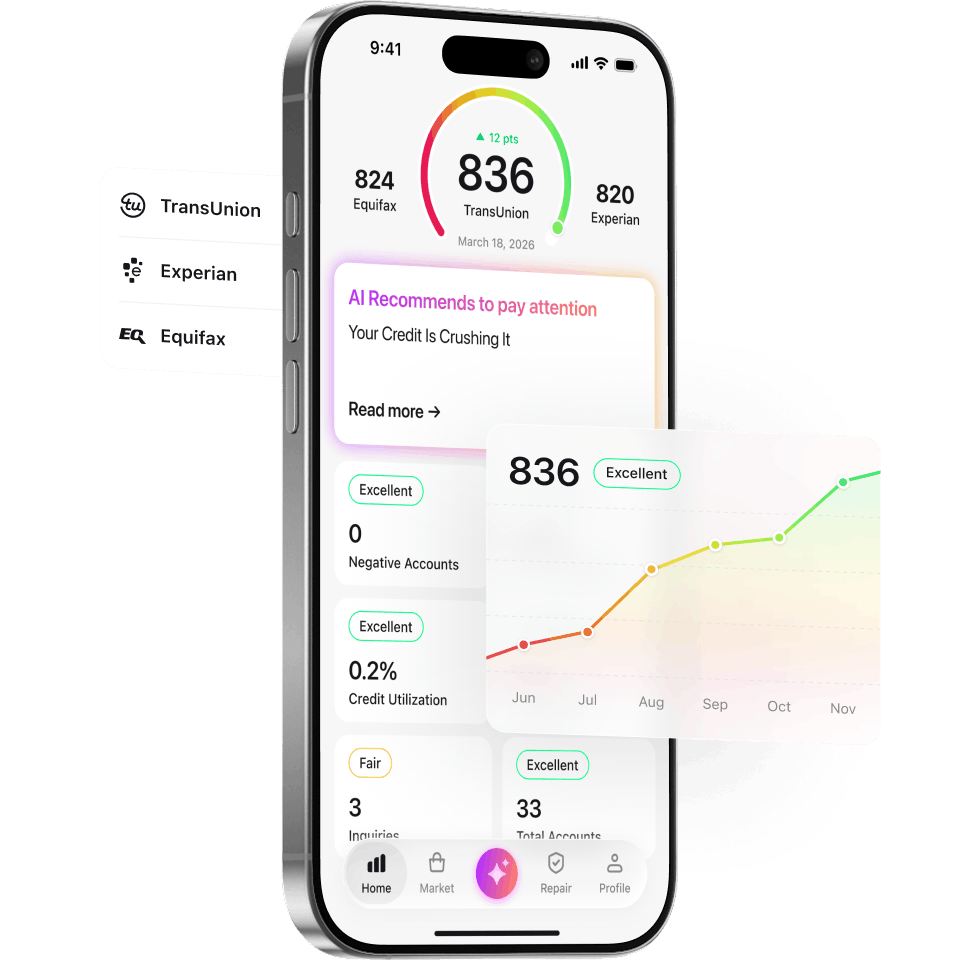
Download Credit Booster AI, free on iOS and Android. It scans reports, spots high utilization, and crafts dispute letters to boost you faster.
3. Credit Limit Decreased
Issuers slash limits unannounced, jacking utilization without you spending more.[1][3]
Fix it: Ask to reverse it. Shop around for better cards to spread limits.[3]
4. Closed a Credit Card Account
Shutting old cards shrinks total limits, hikes utilization, and shortens history average.[3]
Fix it: Reopen if fees allow, or grab a secured card. Keep olds open, use lightly.[3]
5. Paid Off an Installment Loan
Myth busted: Paying off your car loan drops your score by killing credit mix (10% factor). FICO wants revolving (cards) and installment variety.[1][3][4][6]
Fix it: Don’t rush new debt. Add a tiny personal loan later if needed.[4]
6. New Credit Applications or Hard Inquiries
Each app triggers a hard pull, 3-5 points off, 10% of score. Five in months scream risk. Rate-shop mortgages/autos in 45 days (one hit via FICO).[1][3][5]
Fix it: Pre-qualify (soft pulls). Space apps 6+ months.[5]
7. Account Sent to Collections
Unpaid debts land here, sticking 7 years. Drops 50-100+ points.[3][4]
Fix it: Negotiate pay-for-delete (works in some states). Dispute inaccuracies under FCRA.[3]
8. Derogatory Marks Like Charge-Offs, Bankruptcy, or Foreclosure
These crush scores, bankruptcy lasts 7-10 years. Initial hit stings most.[4][6]
Fix it: Time them out. Build positives elsewhere.[4]
9. Co-Signer Issues
Their lates or balances ding you too.[3]
Fix it: Monitor joint accounts. Cover their share if desperate.[3]
10. Identity Theft or Fraud
Fraud accounts pop up, CFPB’s top complaint. Causes sudden credit score decreases.[1][3]
Fix it: Freeze credit free at all bureaus. Report to FTC at identitytheft.gov; dispute via certified mail.[1]
11. Short Credit History or Poor Mix
New profiles or one account type score low (15% + 10% factors).[2][6]
Fix it: Piggyback as authorized user on an old card. Start with secured options.[2]
12. Credit Report Errors
26% of folks find mistakes like wrong balances, affecting millions.[1][3]
Fix it: Dispute free online or by phone (30-day response). 2025 real-time portals speed it up.[3]
Recent Scoring Changes You Need to Know
By 2026, FICO 10 T and VantageScore 4.0 use 12-24 months of trends, softening one-off lates if you recover. Medical collections under $500? Gone since 2023. All medical debts delay 1 year now. VantageScore’s inquiry window is 14 days for everything.[1][3]
Eighty percent of drops fix in 1-3 months, utilization tweaks show next cycle. Lates? They fade slowest.[2][4] Bust myths: Self-checks don’t hurt (soft pulls). Closing cards tanks you. No true “no reason” drops, check reporting lags.[3]
Target 700+ FICO: Zero lates, <30% utilization (ideally 10%), 3+ accounts diverse. Tools like Credit Booster AI analyze all three bureaus, flag errors, generate letters, and track wins, making repair effortless.
| FICO Score Impact Examples | Fair Score Drop | Excellent Score Drop |
|---|---|---|
| 30-Day Late Payment | 17-37 points | 63-83 points |
| 90-Day Late Payment | Higher | 113-133 points |
| Single Hard Inquiry | ~5 points | ~5 points |
| High Utilization (>30%) | 20-100+ points | Varies by profile |
Frequently Asked Questions
Why did my credit score drop with no late payments?
High utilization from statement balances or limit cuts often sneaks in, even perfect payers see 20-100 point hits. Pay early in the cycle and monitor reports weekly.[1][2][3]
How long does a credit score drop last after a late payment?
The mark stays 7 years, but impact shrinks after 2 years of on-time payments. New models like FICO 10 T weigh trends more.[1][4]
Can paying off debt lower my credit score?
Yes, closing installment loans hurts mix (10% factor). Keep variety without new debt.[1][3][6]
Why did my credit score go down after a hard inquiry?
Each drops 3-5 points temporarily (10% factor). Multiple signal risk, space them out.[3][5]
How to fix a sudden credit score decrease from errors?
Dispute free under FCRA, bureaus fix in 30 days. Use 2025 real-time portals for speed; provide proof.[3]
Does checking my own credit score hurt it?
No, soft inquiries have zero impact. Only lender hard pulls ding you.[3][5]
(Word count: 1028)
Related research: For a deeper analysis of why credit scores drop unexpectedly, see our research library at JoinCreditClub.com.
Need professional help? CreditBooster.com has been helping clients rebuild their credit since 2009.
Frequently Asked Questions
Why did my credit score drop with no late payments?
High utilization from statement balances or limit cuts often sneaks in, even perfect payers see 20-100 point hits. Pay early in the cycle and monitor reports weekly.
How long does a credit score drop last after a late payment?
The mark stays 7 years, but impact shrinks after 2 years of on-time payments. New models like FICO 10 T weigh trends more.
Can paying off debt lower my credit score?
Yes, closing installment loans hurts mix (10% factor). Keep variety without new debt.
Why did my credit score go down after a hard inquiry?
Each drops 3-5 points temporarily (10% factor). Multiple signal risk, space them out.
How to fix a sudden credit score decrease from errors?
Dispute free under FCRA, bureaus fix in 30 days. Use 2025 real-time portals for speed; provide proof.
Does checking my own credit score hurt it?
No, soft inquiries have zero impact. Only lender hard pulls ding you. (Word count: 1028)