After Filing a Credit Dispute: Your Step-by-Step Timeline
You’ve just hit send on that credit dispute. Great move. Now, expect the credit bureau, Equifax, Experian, or TransUnion, to kick off a credit dispute investigation within days, wrapping it up in about 30 days under the Fair Credit Reporting Act (FCRA)[1][2][4]. They’ll notify you of the credit dispute results within 5 business days after that, often with an updated report[1][3]. Most wrap faster, especially simple fixes like a misspelled name[2].
This guide breaks it down: the exact process, timelines, outcomes, and what to do next, especially if your dispute gets denied. You’ll get numbered steps, real examples, and tips to boost your odds.
The Credit Dispute Investigation Process Explained
Don’t picture a team of detectives poring over files. It’s mostly automated. Agents spend just 5-10 minutes per case, forwarding your dispute to the data furnisher (your bank or lender) within 5 days[2][3][4]. The furnisher verifies, or deletes, the info to hit the 30-day mark[3].
Here’s the flow in 5 simple steps:
- Bureau receives your dispute (online, mail, phone). Clock starts[1][5].
- Forwards to furnisher (Day 1-5). They check records[3][4].
- Furnisher responds (must be quick; no reply means deletion)[3].
- Bureau decides (correct, verify, or delete)[1][2].
- Notifies you (within 5 days post-investigation, with free updated report)[1][3].
Simple errors? Fixed in a week. Say your address is wrong, bam, updated fast since you can prove it yourself[2]. Fraud or payment disputes? Longer, needing furnisher proof[3].
Key Timelines: What to Expect After Filing Credit Dispute
Mark your calendar. The FCRA mandates 30 days from receipt for the credit dispute investigation[1][2][4][5]. Add docs later? Up to 45 days total[2][3][4][5]. High-volume times stretch it, but most finish in weeks[2][3].
| Timeline Milestone | Duration | Notes[1][2][3] |
|---|---|---|
| Bureau receives dispute | Day 0 | Starts the clock, get proof of delivery. |
| Notify furnisher | Within 5 days | Automated handoff. |
| Full investigation | 30 days (max 45) | Furnisher must reply in time. |
| Results to you | Within 5 business days after | Free updated report included. |
| Credit score update | Up to 60 more days | Waits for lender’s next cycle[2][4]. |
Total from filing to score bump? 90-105 days worst case. That’s why experts say dispute 3-6 months before big loans like a mortgage[2][3].
Ever waited on a package? This is similar, track it, but know the law forces speed[5].
Possible Credit Dispute Results and What They Mean
Three main credit dispute results:
- Item corrected/removed: Report updates. Example: Old debt from identity theft vanishes. You get the new report free, check it immediately[1][2].
- Verified accurate: Stays put. Furnisher says it’s right[1][3]. It could reappear later if they update[3].
- Frivolous/irrelevant: They explain why and stop. Provide more proof to restart[5].
You’ll get written notice either way, electronically or mail[1][3]. Review every bureau’s report,they don’t share info[2][4]. Spot the same error on all three? Dispute each separately.
Credit Score Changes: Why They Take So Long
Winning a dispute doesn’t mean instant FICO magic. Scores update after furnishers report next, often 60 days post-investigation[2][4]. Varies by bureau.
Real example: Dispute a late payment in January. Fixed by February. Score jumps in April after your creditor’s March report. Patience pays, your score could rise 20-50 points on big fixes[2].
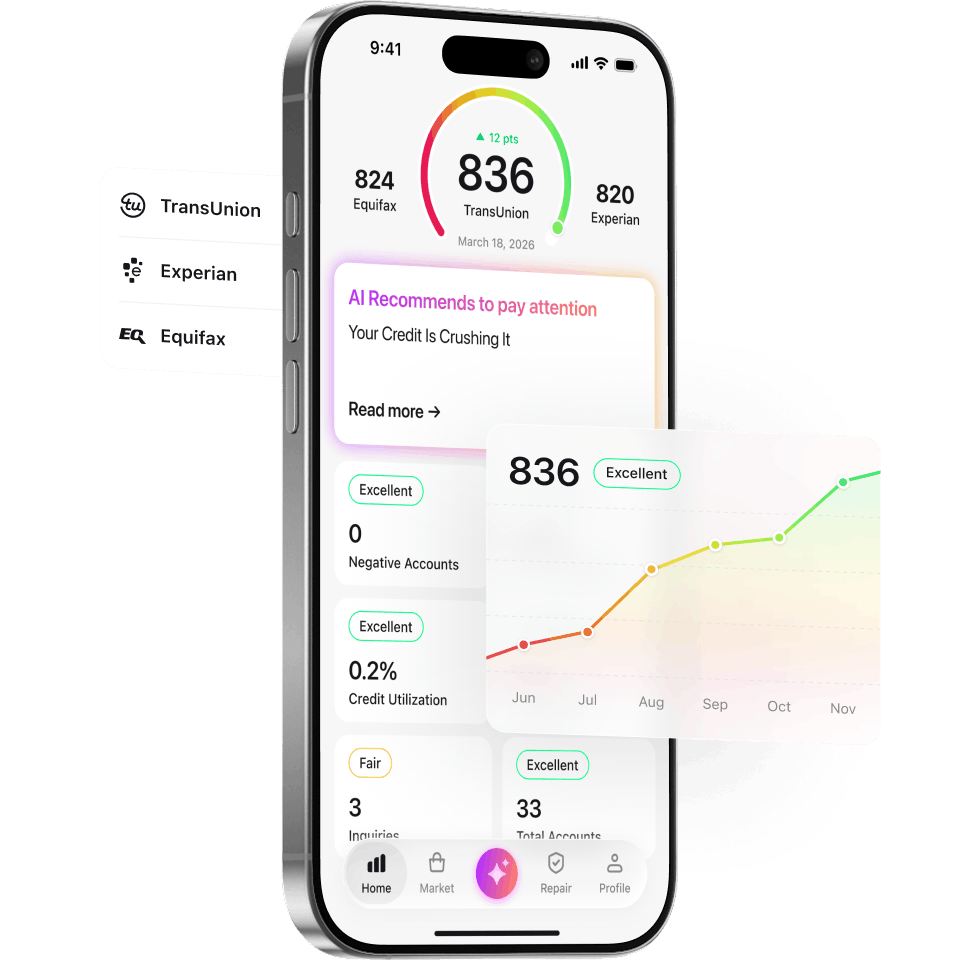
Quick tip: Use Credit Booster AI to track this. The app scans reports, spots errors, and monitors score shifts automatically. Download Credit Booster AI,free on iOS and Android.
Dispute Denied? What to Do Next (Step-by-Step)
Dispute denied what to do starts here. Don’t panic, 40% of disputes succeed on round two with better docs[2]. You’ve got solid options.
Follow these 6 actionable steps:
- Gather new evidence: Bank statements, payment proofs you missed first time. Refile, it restarts the 30 days[2][4].
- Add a 100-word statement: Explain your side on the report. Lenders see it[1].
- Contact furnisher directly: Call the bank. Example: “I paid on time, here’s the receipt.” Often faster than bureaus[1][3].
- Escalate internally: Ask the bureau for reconsideration[2].
- File with CFPB/FTC: For FCRA violations like missed deadlines[5].
- Get pro help: Attorney or service if it’s big money. Past 45 days with no word? Lawyer up[2].
Example: Denied medical debt? Prove insurance covered it, add statement, call collector. Fixed in 45 days.
Disputing all three bureaus? Do it simultaneously, saves time[2][4].
Practical Tips to Speed Up and Win Your Credit Dispute Investigation
Want results faster? Act smart.
- Document like a pro: Attach proofs upfront. Cuts frivolous risk[1].
- Target disputable items: Wrong info, old debts (7 years max), ID theft[2][4].
- Monitor weekly: Free weekly reports at AnnualCreditReport.com. Post-dispute, confirm fixes[1].
- Time it right: 3-6 months pre-loan[2][3].
- Avoid myths: No deep dives (5-10 min reviews)[2]. Scores lag[2]. Bureaus independent[2].
Rhetorical question: Why wait for a loan denial when you can fix this now?
Credit Booster AI shines here, AI analyzes your report, crafts dispute letters, tracks timelines. No guesswork.
Common Mistakes and How to Dodge Them
- Myth: Instant scores. Nope, 60+ days[2][4].
- Myth: One dispute fixes all. Hit each bureau[2].
- Mistake: Weak docs. Include specifics, not “it’s wrong.”[1]
- Pitfall: Ignoring denial. Follow steps above.
Real story: Sarah disputed a typo across bureaus with proofs. Fixed in 2 weeks, score up 35 points by month three.
Plan for Success: Your Credit Repair Roadmap
- File with docs.
- Track 30-45 days.
- Review results.
- Act on denial.
- Recheck scores in 60-90 days.
You’re in control. This process works, millions fix errors yearly.
Download Credit Booster AI today. Let AI handle analysis and letters while you focus on results, available free on iOS and Android.
(Word count: 1523)
Frequently Asked Questions
How long after filing a credit dispute do I get results?
Credit bureaus must complete the credit dispute investigation in 30 days (up to 45 with extra docs), notifying you within 5 business days after[1][2][3]. Most finish quicker.
What if my credit dispute is denied?
Refile with new evidence, add a statement to your report, contact the furnisher directly, or escalate to CFPB/FTC[1][2][5]. Steps restart the process.
Do credit scores update right after a successful dispute?
No, wait up to 60 days for the furnisher’s next report cycle[2][4]. Total timeline: 90+ days from filing.
Should I dispute with all three credit bureaus?
Yes, if the error’s on Equifax, Experian, and TransUnion, they don’t share data[2][4]. Target only affected ones otherwise.
Can I extend the dispute timeline?
Submit more docs within 30 days for a 15-day extension to 45 days total[2][3][5]. Helps complex cases.
What makes a dispute frivolous?
Bureaus flag repeats without new info or irrelevant claims, but must explain and let you respond[5].
Related research: For a deeper analysis of handling round two disputes, see our research library at JoinCreditClub.com.
Need professional help? CreditBooster.com has been helping clients rebuild their credit since 2009.
Frequently Asked Questions
How long after filing a credit dispute do I get results?
Credit bureaus must complete the credit dispute investigation in 30 days (up to 45 with extra docs), notifying you within 5 business days after. Most finish quicker.
What if my credit dispute is denied?
Refile with new evidence, add a statement to your report, contact the furnisher directly, or escalate to CFPB/FTC. Steps restart the process.
Do credit scores update right after a successful dispute?
No, wait up to 60 days for the furnisher's next report cycle. Total timeline: 90+ days from filing.
Should I dispute with all three credit bureaus?
Yes, if the error's on Equifax, Experian, and TransUnion, they don't share data. Target only affected ones otherwise.
Can I extend the dispute timeline?
Submit more docs within 30 days for a 15-day extension to 45 days total. Helps complex cases.
What makes a dispute frivolous?
Bureaus flag repeats without new info or irrelevant claims, but must explain and let you respond.