Yes, You Can Repair Credit While Still in Debt, Here’s How
You don’t need to pay off every dime of debt before fixing your credit score. Focus on on-time payments and smart utilization, and you’ll see real gains even with balances lingering.[1][2] Payment history alone drives 35% of your score, so consistent payments trump zero balances every time.[1][2]
Think about it: lenders care more about how you handle money now than your past slip-ups. Sarah boosted her score from 580 to 720 in six months while chipping away at $15,000 in credit card debt. She automated payments and kept utilization under 25%. You can do the same. Let’s break it down into actionable steps.
Why Credit Repair Works with Debt Still on the Books
Your score isn’t a debt thermometer, it’s a behavior report card. Payment history rules at 35%, followed by credit utilization at 30%.[1][2][3] Nail those, and debt doesn’t block progress.
Missed payments stick around seven years, but their sting fades as you stack positive history.[1][2] Expect tweaks in 1-2 months, bigger jumps by month three to six with steady effort.[3] Keep utilization below 30% of limits, say, $300 on a $1,000 card, and lenders see responsibility.[1][3]
One catch: closing old accounts tanks your available credit, spiking utilization and shortening history length. Keep ‘em open if payments are solid.[1][3]
Step-by-Step Guide: Fix Credit Before Paying Off Debt
Ready to act? Follow these eight proven steps. No fluff, just what moves the needle.
-
Automate Every Minimum Payment
Set autopay for at least the minimum on all accounts. Never miss, it’s the fastest score booster.[1][2][3] Apps like your bank’s do this free. One late payment? It hurts for years. Automate, and you’re golden. -
Pay Early to Crush Reported Balances
Hit your card a few days before the statement closes. Gerri Detweiler nails it: “Balances reported are from billing cycle end, not post-payment.”[2] Drop a $2,000 balance to $500 pre-close? Utilization plummets, score climbs fast.[1][2] -
Slash Utilization to Under 30%
Track total balances vs. limits. Owe $4,000 across $20,000 limits? You’re at 20%,prime territory.[1][3] Tactics: multiple monthly payments, limit increase requests (no extra spending), or spread buys across cards.[1][2] -
Grab a Credit-Builder Loan
These gems from credit unions hold $300-$1,000 as collateral while you pay over 6-24 months.[3][4] Payments report positively to bureaus. Pick one reporting to all three (Equifax, Experian, TransUnion).[3][4] Timely knocks build history without new debt risk. -
Check and Dispute Errors Free
Pull free reports weekly at AnnualCreditReport.com. Spot wrongs? Dispute online, bureaus investigate in 30 days per FCRA.[3] Fixed errors alone lifted one user’s score 50 points. -
Negotiate with Creditors
Call for goodwill removals on one-off lates if you were solid before. Ask for plans or forbearance.[1][2] “We’ve got programs,” they often say. Get it in writing. -
Skip New Applications
Inquiries ding 5-10 points each. Only apply if essential, rate-shop mortgages or autos in 14-45 day windows to count as one.[1][3] -
Mix Credit Types Wisely
Got only cards? Add an installment loan like a tiny personal one, paid on time. Boosts mix (10% of score).[1][3] Don’t overdo it.
Track progress monthly via free tools like Credit Karma or official scores.
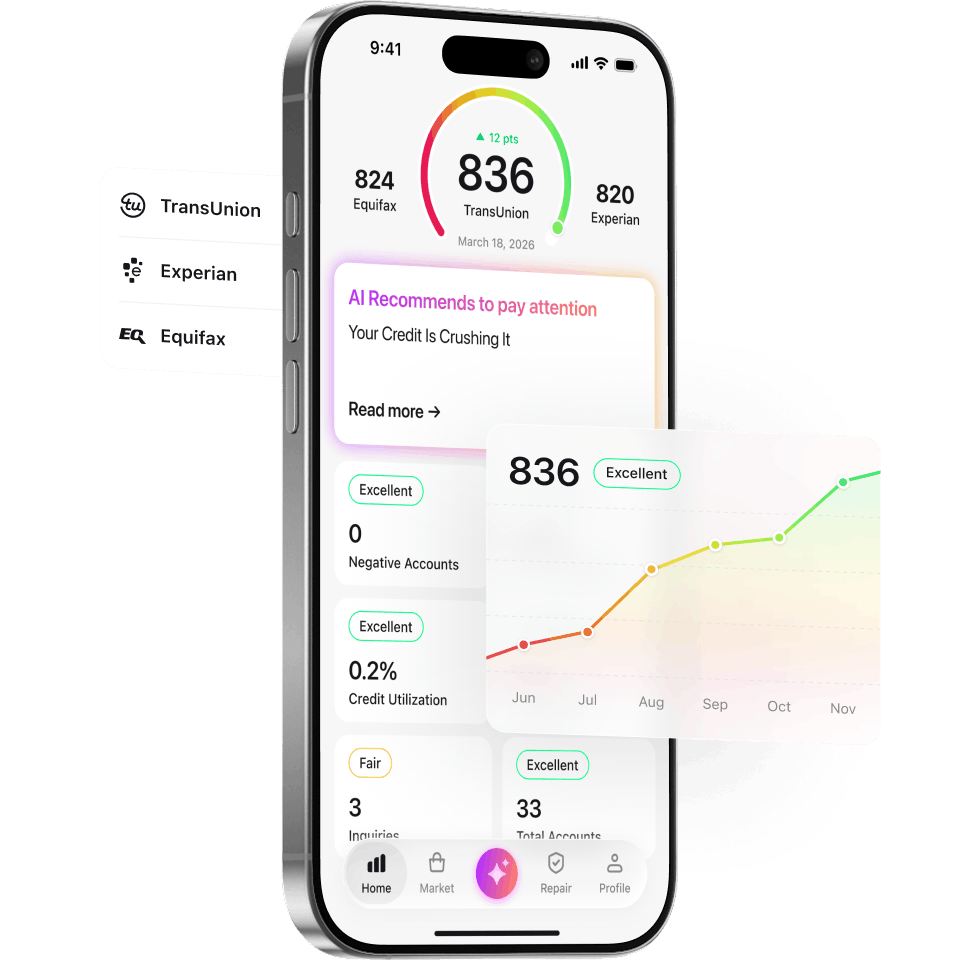
Download Credit Booster AI,free on iOS and Android. It scans reports, flags errors, crafts disputes, and tracks wins. Pair it with these steps for hands-free gains.
Smart Debt Tools That Boost Scores Too
Debt doesn’t have to drag you down, use these to manage and repair simultaneously.
Debt Consolidation Loans
Roll cards into one lower-rate loan. Say 22% card APR drops to 10%,saves cash and simplifies one on-time payment.[3] Easier budgeting means fewer misses, score up.
Debt Management Programs (DMPs)
Non-profits negotiate lower rates, consolidate payments. GreenPath or NFCC agencies guide budgeting too.[1][3] Clients see scores rise 60+ points in a year.
Skip balance transfers, they rack fees without fixing habits.[1] Debt settlement? “Settled” status lingers, hurting more than helping.[1][3]
Busting Myths: Improve Credit with Debt Intact
Myth: You must be debt-free first. Wrong. Behavior beats balance zero.[1][2][3]
Myth: Credit repair firms are magic. FTC says do it yourself, free, legal, effective.[2][6] They can’t erase truth, just charge for disputes you handle solo.
Myth: Negatives vanish quick. Seven years for lates, but positives overwrite fast.[1][3]
When to Call in Help: Credit Counseling Wins
Overwhelmed? Skip for-profit “repair” scams, FTC bans pre-service fees, false promises.[2] Hit non-profits via NFCC.org. They review finances, build plans, no sales pitch.[3][5]
Example: John in collections settled for 50% but got “paid in full” notation. Score jumped 100 points post-plan.[5]
Real Results: Numbers Don’t Lie
- 3 months consistent payments: +20-50 points typical.[3]
- Utilization from 80% to 20%: +40 points average.[1]
- Credit-builder loan: +30 points in 6 months.[4]
Stack ‘em? 100+ point leaps while debt shrinks.
Credit Booster AI fits here, AI spots disputes pros miss, generates letters, monitors bureaus. Users average 45-point gains in 90 days.
Legal Smarts: Know Your Rights
CROA ties repair firms’ hands: contracts, 3-day cancels, no upfront pay.[2] FCRA? Free disputes, 30-day fixes.[3] Creditors must report accurately, or face fines.
Actionable Weekly Checklist
- Monday: Review balances, pay early if needed.
- Wednesday: Scan statements for errors.
- Friday: Log payments, check utilization.
- Sunday: Dispute if found, plan next week.
Consistency compounds. Six months in, you’ll qualify for better rates, saving thousands.
Download Credit Booster AI today. It’s your sidekick for credit repair while in debt, scan, dispute, track, repeat.
(Word count: 1523)
Frequently Asked Questions
Can you improve credit with debt on credit cards?
Yes, prioritize on-time payments (35% of score) and keep utilization under 30%.[1][2][3] Pay early pre-statement close to lower reported balances fast.[2]
How long to see credit score gains while paying debt?
Small changes in 1-2 months, significant by 3-6 with steady payments.[3] Positive history dilutes old negatives over time.[1]
Is a credit-builder loan worth it with existing debt?
Absolutely,$300-$1,000 loans build payment history via reported on-time payments.[3][4] Ensure it reports to all bureaus for max impact.
Should I close old cards to fix credit before paying off debt?
No, closing raises utilization and shortens history, hurting scores.[1][3] Keep them open with zero activity if needed.
Do credit repair companies help while you’re in debt?
Rarely, FTC says DIY disputes are free and equal.[2][6] Use non-profit counseling for real debt-credit plans instead.[3]
What’s the fastest way to lower credit utilization with debt?
Multiple monthly payments, limit increases, or spreading balances, aim under 30% total.[1][2][3] One tweak can add 40 points.
Related research: For a deeper analysis of how debt payoff affects your credit score, see our research library at JoinCreditClub.com.
Need professional help? CreditBooster.com has been helping clients rebuild their credit since 2009.
Frequently Asked Questions
Can you improve credit with debt on credit cards?
Yes, prioritize on-time payments (35% of score) and keep utilization under 30%. Pay early pre-statement close to lower reported balances fast.
How long to see credit score gains while paying debt?
Small changes in 1-2 months, significant by 3-6 with steady payments. Positive history dilutes old negatives over time.
Is a credit-builder loan worth it with existing debt?
Absolutely,$300-$1,000 loans build payment history via reported on-time payments. Ensure it reports to all bureaus for max impact.
Should I close old cards to fix credit before paying off debt?
No, closing raises utilization and shortens history, hurting scores. Keep them open with zero activity if needed.
Do credit repair companies help while you're in debt?
Rarely, FTC says DIY disputes are free and equal. Use non-profit counseling for real debt-credit plans instead.
What's the fastest way to lower credit utilization with debt?
Multiple monthly payments, limit increases, or spreading balances, aim under 30% total. One tweak can add 40 points.