Ready to Start Your Credit Repair Journey?
Grab your free weekly credit reports from AnnualCreditReport.com today, that’s step one in the credit repair process for beginners. You’ll spot errors, fix them yourself, and watch your FICO score climb from 300-850 range without paying a dime to shady companies.[1][2][4] DIY credit repair works because it’s free, legal under FCRA, and leverages the same tools pros use.[1][7]
Think you’re stuck with bad credit forever? Wrong. One late payment can drop your score by 100 points, but disputing errors and paying on time reverses that fast.[4] In 2025, weekly reports make monitoring easier than ever amid identity theft spikes.[2] Let’s dive into the credit repair steps that deliver real results.
Step 1: Pull Your Free Credit Reports and Score the Situation
Head to AnnualCreditReport.com right now. You get free weekly credit reports from Equifax, Experian, and TransUnion, no more once-a-year limit since the pandemic shift.[1][2][3] Why weekly? Errors pop up anytime, and catching them early boosts scores quickest.
Download all three. Compare them side-by-side. Look for:
- Wrong personal info (name, address, SSN typos).
- Accounts you don’t recognize, could be fraud.
- Duplicate debts or outdated negatives (most drop off after 7 years).[2][4]
- Late payments marked wrong; one can tank your score 100 points.[4]
Example: Sarah found a $500 collection from a gym she closed in 2018, listed twice. Deleting the duplicate freed up 25 points instantly.[1] Your payment history is 35% of FICO; utilization 30%. Keep balances under 30% of limits.[3][4][6]
Score check? Use free tools from Credit Karma or bank apps for VantageScore estimates. Don’t freak if it’s low, action beats panic.
Step 2: Dispute Every Error Like a Pro
Found mistakes? Dispute them. Bureaus have 30 days to verify or delete under FCRA, no extensions.[1][2][7] DIY works as well as paid services; companies can’t magically erase accurate info.[3][7]
How to file:
- Online portals at each bureau (fastest, 2025 digital upgrades speed responses).[2][3]
- Mail certified letters with proof: payment stubs, bank statements. FTC says include copies, not originals.[8]
- Phone for quickies, but follow up in writing.
Template: “Item on page X is inaccurate because [reason]. Proof attached. Remove it.” Send to all three bureaus and the creditor.[1][6]
Real win: A guy disputed a bogus $200 medical bill. Bureau couldn’t verify, gone in 35 days, score up 40 points.[3] Track disputes; follow up if silent. Repeat monthly for new errors.
Step 3: Tackle Delinquent Debts Head-On
Past-due accounts scream “risky” to lenders. Pay them off ASAP, the longer they linger, the worse the hit.[1][2] Negotiate:
- Payment plans: Ask creditors for hardship options.
- Pay for delete: Offer partial payment (say, 50% on $1,000 collection); they remove it post-pay. Not guaranteed, but 40-60% success with collectors.[1]
Example: John owed $800 in collections. Settled for $400 with pay-for-delete, poof, gone from reports.[1] Settle “paid” if delete fails; it stops accruing damage.
Automate everything next. Set autopay for minimums (or full balances) to nail that 35% payment history factor. One missed payment? 100-point drop possible.[3][4]
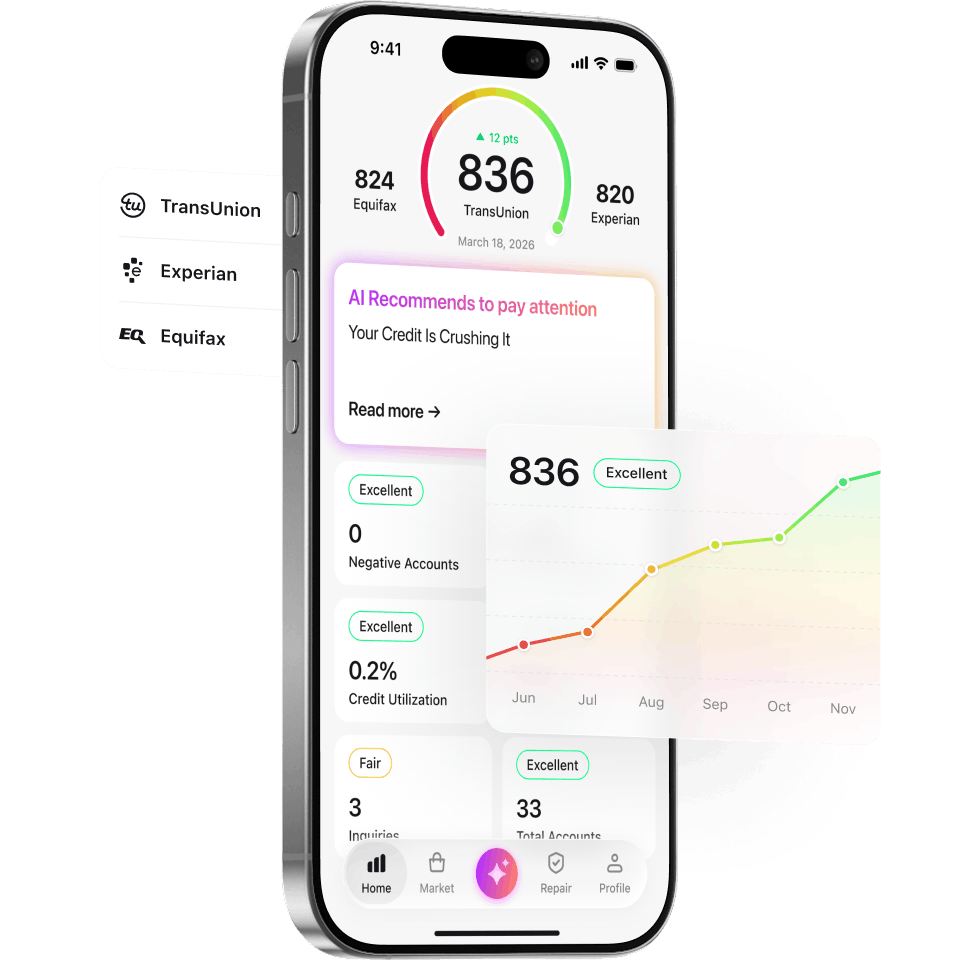
Download Credit Booster AI,free on iOS and Android. It scans reports, flags errors, generates dispute letters, and tracks wins. Perfect sidekick for DIY credit repair without the hassle.
Step 4: Slash Utilization and Build Killer Habits
Your balances vs. limits? Keep under 30%,ideally 10%,for max score gains.[3][6] Owe $3,000 on a $10,000 limit? Utilization at 30%. Pay to $2,000? Boom, better score.
Pay cards in full monthly. Myth busted: Carrying a balance doesn’t “build credit”,it racks interest and spikes utilization.[6] Budget time: Track income minus expenses. Apps like Mint help.
| Quick Habit | Impact on Score | How-To |
|---|---|---|
| Autopay bills | +35% payment history boost[3] | Set via bank or creditor app. |
| Utilization <30% | +30% factor win[4][6] | Pay mid-cycle if needed. |
| No new apps | Avoid hard inquiry dings (5-10 points each)[2][6] | Wait 6 months. |
Step 5: Pick Your Debt Payoff Strategy
Overwhelmed by cards? Choose snowball or avalanche, both crush debt.
Debt Snowball: Pay smallest first for wins. $500 card done? Momentum surges. Best for beginners needing motivation, saves less interest but keeps you going.[4][5]
Debt Avalanche: Hit highest interest first. 24% APR $2,000 card? Nuke it. Saves hundreds long-term.[4]
Example: Lisa had three cards: $300@18%, $1,200@22%, $800@15%. Snowball cleared $300 fast, psych boost led to 700 score in 9 months.
| Strategy | Pros | Cons | Best For |
|---|---|---|---|
| Debt Snowball | Momentum wins[4][5] | More interest | Beginners |
| Debt Avalanche | Saves cash[4] | Slower starts | Math whizzes |
| DMP Counseling | One payment, lower rates[7][8] | Small fees | 5+ creditors |
Budget strictly: 50/30/20 rule, 50% needs, 30% wants, 20% debt/savings.
Step 6: Add Positive Credit, Secured Cards and More
No history? Build it. Secured credit card: Deposit $200-500 as your limit. Use lightly, pay full, reports like gold.[4]
Other moves:
- Authorized user on a family card with perfect history.
- Credit builder loan: Pay into savings account; lender reports on-time payments.[4]
After 6 months good behavior, request limit increases (soft inquiry, no ding).[1] Fastest boosts: Disputes + habits + secured card.[1]
Step 7: Monitor and Maintain, Don’t Stop Now
Check scores weekly via free apps. Celebrate wins: Errors gone? +50 points possible.[3] Negatives fade over 7 years, but positives compound.
If debt tops $10K or 10+ accounts, hit nfcc.org for nonprofit counseling. They negotiate DMPs, lower rates, one payment. Skip for-profits promising miracles; CROA gives 3-day cancel but many flop.[7][8]
Patience pays: 30-45 days per dispute, months for full rebuild. Consistent? 100-point jumps happen.[1][4]
Ever wonder why DIY beats companies? You’re in control, it’s free, and results match, CFPB backs it.[6] Credit Booster AI speeds the grind by spotting issues pros miss.
Busting Credit Repair Myths for Beginners
Myth: Companies remove anything fast. Nope, accurate negatives stay 7 years. FTC bans upfront fees; DIY equals their power.[7]
Myth: Small balances build credit. False, full pay keeps utilization low, scores higher.[6]
Myth: Instant fixes exist. Reality: Gradual, like one dispute netting 40 points in 30 days.[1][2]
Myth: Multiple inquiries harmless. Each hard pull dings 5-10 points, space apps.[6]
You’re set with these credit repair steps. Act now, results compound.
Download Credit Booster AI today. Let AI handle disputes while you build habits.
Frequently Asked Questions
How long does credit repair take for beginners?
Expect 30-45 days per dispute round, with full rebuilds in 3-12 months via habits like low utilization. Negatives age off in 7 years, but scores rise faster with on-time payments.[1][2][4]
Can I do DIY credit repair without paying anything?
Yes, free weekly reports and disputes work identically to paid services under FCRA. Tools like Credit Booster AI make it even easier.[1][3][7]
What’s the fastest way to boost my credit score?
Dispute errors, pay down to <30% utilization, and set autopay, up to 100 points from fixing one late payment alone.[1][3][4]
Do secured credit cards really help credit repair?
Absolutely, they report positive history fast for no-credit folks. Deposit matches limit; pay on time for quick gains.[4]
Is pay for delete legal in credit repair?
Yes, but voluntary, creditors might remove paid collections. Negotiate partial pay; 40-60% success rate.[1]
When should I get credit counseling instead of DIY?
If debt exceeds $10K or multiple creditors overwhelm you, nonprofits offer DMPs with lower rates, one payment.[7][8]
Related research: For a deeper analysis of a structured approach to credit repair, see our research library at JoinCreditClub.com.
Need professional help? CreditBooster.com has been helping clients rebuild their credit since 2009.
Frequently Asked Questions
How long does credit repair take for beginners?
Expect 30-45 days per dispute round, with full rebuilds in 3-12 months via habits like low utilization. Negatives age off in 7 years, but scores rise faster with on-time payments.
Can I do DIY credit repair without paying anything?
Yes, free weekly reports and disputes work identically to paid services under FCRA. Tools like Credit Booster AI make it even easier.
What's the fastest way to boost my credit score?
Dispute errors, pay down to <30% utilization, and set autopay, up to 100 points from fixing one late payment alone.
Do secured credit cards really help credit repair?
Absolutely, they report positive history fast for no-credit folks. Deposit matches limit; pay on time for quick gains.
Is pay for delete legal in credit repair?
Yes, but voluntary, creditors might remove paid collections. Negotiate partial pay; 40-60% success rate.
When should I get credit counseling instead of DIY?
If debt exceeds $10K or multiple creditors overwhelm you, nonprofits offer DMPs with lower rates, one payment.