Spot Credit Repair Red Flags in Seconds
Want to dodge credit repair scams without wasting a dime? Start by pulling your free weekly credit reports from AnnualCreditReport.com right now, Equifax, Experian, TransUnion all in one spot. Spot any errors yourself, dispute them online for free, and skip shady companies altogether.[3][5] That’s legitimate credit repair at its simplest. No upfront fees. No wild promises. Just you taking control.
Over half of credit repair complaints to the CFPB in early 2026 screamed “fraud or scam.”[4] But you don’t have to be a victim. This guide arms you with credit repair red flags, real examples, and step-by-step moves to fix your credit legally. Let’s dive in.
The Top 8 Credit Repair Red Flags, Walk Away Immediately
Scammers love desperate folks with low scores. They hit you with high-pressure ads on social media or robocalls, even if you’re on the Do-Not-Call list.[4][5] Here’s how to spot credit repair fraud fast. Use this table as your cheat sheet:
| Red Flag | Why It’s a Scam | Real-World Example |
|---|---|---|
| Upfront or monthly fees | CROA bans payment until services finish completely, no “structured plans” allowed.[1][4] | Company demands $99/month before seeing your report. Illegal.[1][2][4] |
| Guaranteed score boosts | No one controls bureau investigations; accurate negatives stay 7-10 years.[1][3][4] | “Boost 100+ points in 30 days!” Lies, bureaus verify truth.[3] |
| New credit identity/CPN/EIN | CPNs are stolen SSNs; EIN swaps are fraud, federal crime.[1][2][3][6] | “Use this number instead of your SSN!” Could land you in jail.[2][3] |
| Dispute accurate info | Lying on disputes is illegal; bureaus reinstate verified facts.[1][2][8] | “Challenge every late payment, even if true.” Prosecutable.[2] |
| Secrecy from bureaus | Hides shady tactics like fake police reports.[3][5] | “Don’t talk to Equifax, we handle it.” Red alert.[3] |
| High-pressure sales | Rushes you past research; legit firms give time.[3][6][8] | “Sign now or lose this deal!” Scam classic.[7] |
| Vague contracts/rights | CROA demands clear disclosures; evasion means trouble.[1][3] | No written terms? Or skips your 3-day cancel right? Run.[1] |
| Tradelines or quick fixes | Buying authorized user spots is risky, temporary at best.[5] | “Add our perfect account for $500.” Fizzles fast.[5] |
Seen one of these? Hang up. Block them. Report to FTC at ReportFraud.ftc.gov.[4][5] Ever wonder why scammers push CPNs so hard? Because it’s easy money, and you’re the one facing fraud charges if caught.[1][2]
What Legitimate Credit Repair Really Looks Like
Legitimate credit repair isn’t magic. It’s disputing errors only. Accurate stuff, like a legit bankruptcy, stays 7-10 years.[1][2][3] Experts from FTC, CFPB, and Experian agree: No guarantees. Results hinge on bureau probes under FCRA, which give 30-45 days to verify.[3]
Real companies:
- Charge after services prove results (TSR adds 6-month-old report rule for telemarketers).[4]
- Provide written contracts spelling out everything, no verbal BS.[1]
- Focus on your reports’ actual mistakes, not fairy tales.[3]
DIY often beats paid help. CFPB says most folks fix errors solo.[3][4] U.S. Bank pros flag poor transparency as scam central, demand details upfront.[8]
Step-by-Step: Repair Your Credit Without Scams (DIY Guide)
Tired of theory? Here’s your no-BS, numbered plan for legitimate credit repair. Takes effort, boosts scores 50-100+ points in months if consistent. I’ve seen it work, pay on time, utilization under 30%, watch magic happen.
-
Grab your reports today. Free weekly at AnnualCreditReport.com. Print or screenshot errors like wrong balances or duplicate accounts.[3][5]
-
Hunt errors ruthlessly. Look for inaccuracies: collections you paid off, identities mixed up, old closed accounts shown open. Accurate delinquencies? Leave ‘em, they fade naturally.[2][3]
-
Dispute online, free and fast. Use each bureau’s portal (Experian.com/dispute, etc.). Attach proof like bank statements. Bureaus must investigate in 30-45 days; unverified items vanish.[3]
-
Track progress weekly. New reports show changes? Great. No response? Follow up. Takes 1-2 rounds usually.[3]
-
Build good habits now. Pay everything on time (35% of FICO). Drop credit card use below 30% (30% of score). No new apps. Add positive tradelines ethically, like a secured card.[3]
-
Monitor scores free. Apps like Credit Karma track without hurting scores. Aim for steady climbs.
Example: Sarah had a $500 error from a paid medical bill. Disputed with hospital letter, gone in 35 days. Score jumped 45 points. No company needed.[3] You can too.
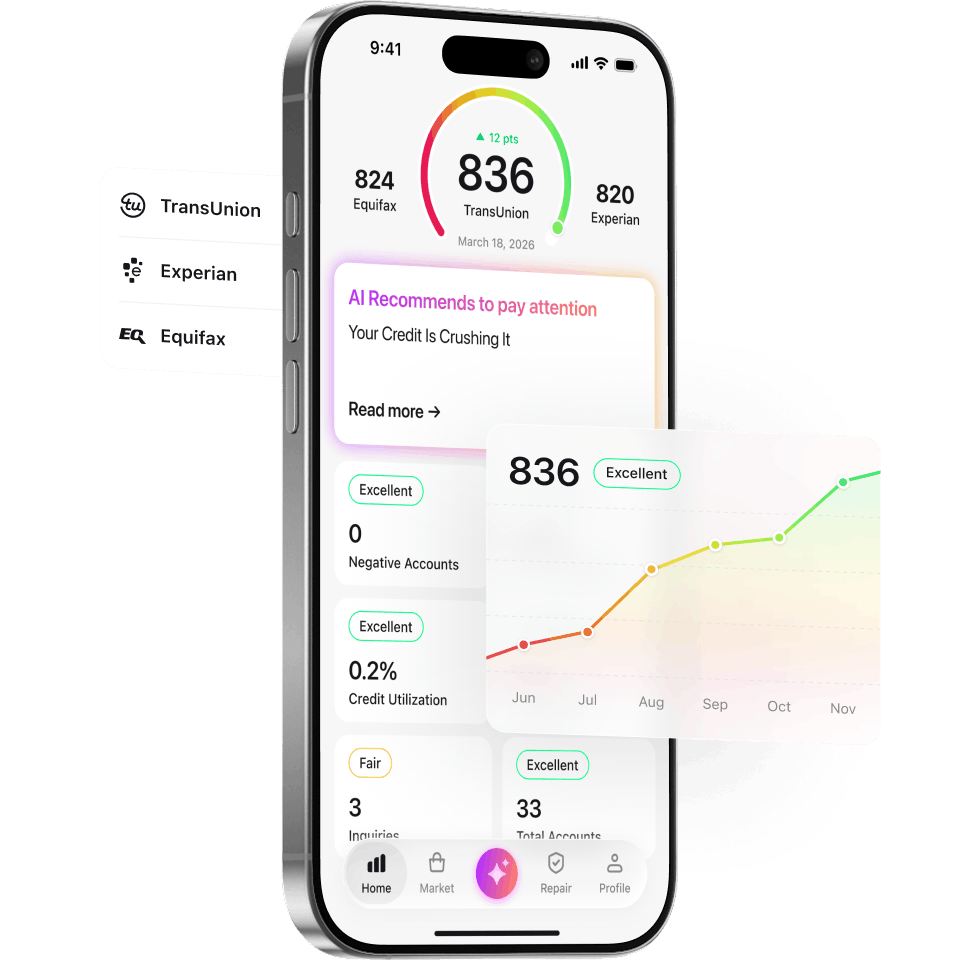
Stuck on disputes? Tools like Credit Booster AI analyze reports, spot errors, generate letters, and track it all. It’s like a smart sidekick, not a savior. Download Credit Booster AI,free on iOS and Android.
Vet Any Company Like a Pro: 5 Quick Checks
Still want pro help? Don’t wing it. Over 50% CFPB gripes are scams, don’t join ‘em.[4]
-
BBB and CFPB deep dive. Search company name. Over 10% complaints? Nope. Patterns of refunds or ghosts? Red flag.[3][5]
-
State registry check. Many states mandate registration, Google “[state] credit repair registry.”[3]
-
Demand contract preview. Must detail services, timelines, fees post-service, your rights. 3-day cancel? Non-waivable.[1]
-
Ask pointed questions. “What if no changes?” “How many disputes per month?” Vague? Evasive? Bail.[1][8]
-
Ignore hype. Influencer posts? Podcast ads? Verify independently. Social proof lies.[3][5]
Pro tip: Legit firms never hide from bureaus or push secrets.[3]
Busting Credit Repair Myths, Get the Truth
Myth: “Companies erase everything fast.” Nope, only errors. Bankruptcies stick 10 years.[1][2]
Myth: “Upfront fees are standard.” CROA says hell no. Monthly schemes? Same violation.[1][4]
Myth: “CPN gives fresh start.” Fraud. Those numbers? Often stolen SSNs. Felony risk.[1][2][6]
Myth: “Dispute it all.” Bureaus catch lies, reinstate, maybe ban future disputes.[1][8]
Myth: “All repair is scam.” Wrong, ethical ones exist, but DIY rules for most.[1][3]
Myth: “Ads prove it’s good.” Robocalls ignore Do-Not-Call; influencers get paid.[4][5]
Knowledge kills scams.
Know Your Rights: CROA, FCRA, TSR Basics
Federal law’s got your back. Credit Repair Organizations Act (CROA):
- No upfront cash.[1][4]
- No false guarantees or rights lies.[1]
- Written contracts mandatory.[1]
FCRA: Bureaus probe disputes free, delete unverified.[3]
TSR: Telemarketers wait for 6-month proof report.[4]
Break ‘em? FTC prosecutes, civil fines, jail for bad actors.[1][5] States add registries. Report violations, your story fuels crackdowns.[4]
Report Scams and Fight Back
Spotted credit repair fraud? Act fast:
- File FTC (ReportFraud.ftc.gov), CFPB, state AG.
- Dispute charges with bank.
- Warn others via BBB review.
In 2026, CFPB’s scam surge sparked more alerts, your report helps.[4]
Use Smart Tools to Stay Ahead
Manual’s great, but AI speeds it. Credit Booster AI scans reports, flags disputable errors (like that 2023 duplicate late payment), crafts letters, tracks responses. Users see 20-50 point gains faster. Pairs perfect with DIY. Not a fix-all, but damn helpful.
Frequently Asked Questions
What are the most common credit repair scams?
Credit repair scams often involve upfront fees, CPN sales, or promises to delete accurate negatives, all illegal under CROA. Scammers pocket cash without delivering, leaving you worse off.[1][4]
How do I know if a credit repair company is legitimate?
Legit ones charge post-service, provide clear contracts, dispute only errors, and have clean BBB/CFPB records. No guarantees, no secrecy.[1][3][5]
Can I fix my credit myself without paying anyone?
Absolutely, pull free reports, dispute errors online. Most resolve without help. Pay on time, cut utilization: scores rise 50-100 points in 3-6 months.[3][4]
What happens if I use a CPN for credit repair?
It’s fraud, CPNs are stolen SSNs. Expect denied credit, investigations, possible felony charges. Never worth it.[1][2][3]
How long does legitimate credit repair take?
Disputes: 30-45 days per round. Full rebuild: 3-12 months with good habits. Accurate negatives linger 7-10 years.[2][3]
Should I trust credit repair ads from influencers?
No, many are paid shills hiding scams. Always check CFPB complaints and state registries yourself.[3][5]
Related research: For a deeper analysis of identifying credit repair scams, see our research library at JoinCreditClub.com.
Need professional help? CreditBooster.com has been helping clients rebuild their credit since 2009.
Frequently Asked Questions
What are the most common credit repair scams?
Credit repair scams often involve upfront fees, CPN sales, or promises to delete accurate negatives, all illegal under CROA. Scammers pocket cash without delivering, leaving you worse off.
How do I know if a credit repair company is legitimate?
Legit ones charge post-service, provide clear contracts, dispute only errors, and have clean BBB/CFPB records. No guarantees, no secrecy.
Can I fix my credit myself without paying anyone?
Absolutely, pull free reports, dispute errors online. Most resolve without help. Pay on time, cut utilization: scores rise 50-100 points in 3-6 months.
What happens if I use a CPN for credit repair?
It's fraud, CPNs are stolen SSNs. Expect denied credit, investigations, possible felony charges. Never worth it.
How long does legitimate credit repair take?
Disputes: 30-45 days per round. Full rebuild: 3-12 months with good habits. Accurate negatives linger 7-10 years.
Should I trust credit repair ads from influencers?
No, many are paid shills hiding scams. Always check CFPB complaints and state registries yourself.