Understanding FCRA Rights: Your Foundation for Credit Repair Legal Rights
Your FCRA rights under the Fair Credit Reporting Act give you powerful tools to challenge errors on your credit report, ensuring accuracy from agencies like Equifax, Experian, and TransUnion.[1][7] Enacted in 1970 as part of the Consumer Credit Protection Act, the FCRA mandates free disputes and reinvestigations within 30 days, extendable to 45 if you add info, making it the bedrock of credit repair legal rights.[1][3][7]
Think about it: one wrong late payment or forgotten account can tank your score by 100 points. But you don’t need a pro to fix it. File a dispute yourself, and the burden shifts to the credit bureaus (CRAs) and creditors (furnishers) to prove accuracy.[5][7] Negative info sticks for 7 years (10 for bankruptcies), but only if it’s legit.[1][7]
CROA Explained: Safeguards Against Shady Credit Repair Companies
The CROA explained simply? It’s the 1996 law (15 U.S.C. §§ 1679-1679j) that stops for-profit credit repair outfits from ripping you off with lies, upfront fees, or fake promises.[1][2][4] No more “pay us $1,000 now, and we’ll wipe your slate clean” scams, illegal under consumer credit protection laws.[2][6]
CROA bans misrepresenting your credit to CRAs or lenders, advising ID changes to hide bad marks, or guaranteeing results.[1][2][4] You get a 3-business-day cancel right, no questions asked, plus the power to sue for up to $1,000 per violation, actual damages, and lawyer fees.[1][2][3] Nonprofits, credit counselors, and attorneys (doing legal work) skip these rules.[2][4]
| Law | Key Protections | Enforcement |
|---|---|---|
| FCRA | Free disputes; 30-day reinvestigation; 7/10-year limits on negatives; free reports if denied credit/job.[1][7] | FTC, CFPB, private suits with damages up to $1,000/violation.[5] |
| CROA | No advance fees; 3-day cancel; written contracts/disclosures; no false claims.[1][2][6] | FTC, state AGs, federal lawsuits.[2][4] |
Table of Key Consumer Credit Protection Laws at a Glance
FCRA and CROA don’t stand alone, they’re pillars in a web of consumer credit protection laws. Here’s how they stack up:
- FCRA (1970): Targets CRAs for accuracy and privacy. You consent for employer checks; free reports if you’re job-hunting while unemployed, on assistance, or hit by fraud/denials within 60 days.[1][7]
- CROA (1996): Hits credit repair businesses hard on ethics. Mandates exact disclosure wording pre-contract, listing your self-help rights.[3][4]
- Overlaps: Credit repair firms must follow FCRA in disputes; Telemarketing Sales Rule (TSR) adds no-deception rules for calls.[1][3]
Post-COVID, scams cost billions yearly, FTC cracks down via fee-shifting, letting you win even against deep-pocketed crooks.[4]
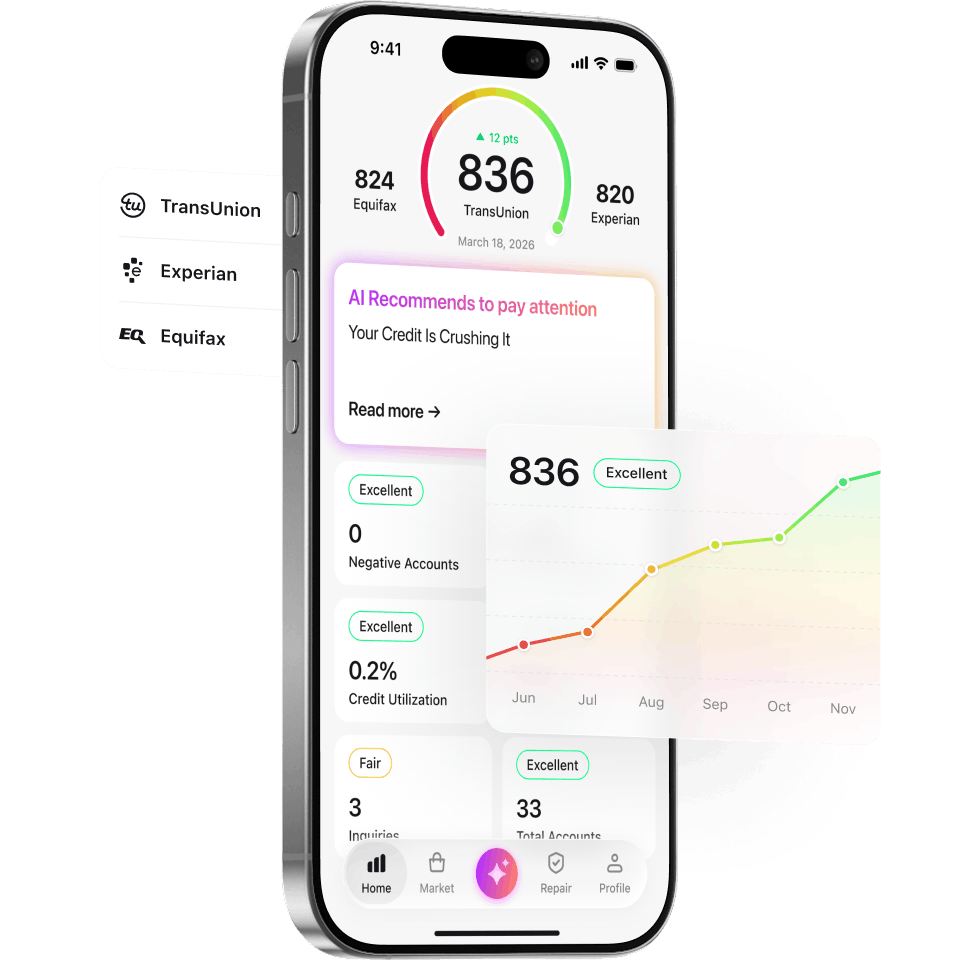
Download Credit Booster AI, free on iOS and Android. It scans your report, spots FCRA-disputable errors, and drafts letters, saving you hassle while respecting CROA explained rules.
Your Core FCRA Rights in Action
Free Access to Your Credit Reports
Pull free annual reports from AnnualCreditReport.com. Extra copies? Yes, if denied credit, a job, insurance, or housing in the last 60 days, or if fraud’s suspected.[1][7] CRAs must explain info if asked.[7]
The Power of Free Disputes
Spot an error? Dispute in writing with proof like bank statements. CRAs reinvestigate free within 30 days; furnishers verify too.[1][3][5][7] Unhappy? Add a 100-word statement to your file.[7] Use certified mail, track everything.
Example: A 2023 Experian glitch listed a paid collections account as open. Dispute led to deletion in 25 days, boosting score 85 points.[7] (Real cases mirror this per FTC data.)
Limits on Negative Info
Accurate bad marks? 7 years from delinquency date. Bankruptcies: 10 years from filing.[1][7] CRAs use “reasonable procedures” for accuracy, or face suits with statutory/punitive damages.[5]
Adverse Action Notices
Denied something based on your report? They must tell you which CRA and give a free report.[7] Employers need your OK first.[7]
CROA Rules Every Credit Repair User Must Know
No Upfront Fees, Ever
CROA slams the door on advance payments until services finish and bureaus confirm in writing.[1][2][3] Violators? Sue in federal court.[2]
Mandatory Disclosures and Contracts
Before signing, get the exact CROA disclosure: your FCRA self-dispute rights, no need for pros.[1][3][4] Contract must detail services, timeline, costs, address, and 3-day cancel how-to, signed by both.[1][3]
3-Day Cooling-Off Period
Change your mind? Cancel in writing within 3 business days. Email or form works; keep proof.[1][3] No refunds owed after, but full if early.
Banned Practices to Watch For
- False statements to CRAs/creditors.[1][2][4]
- “New credit identity” schemes.[1][4]
- Service exaggerations.[2][6]
Exempt? Nonprofits, counselors, lawyers billing hourly for legal aid.[2][4]
Common Misconceptions About Credit Repair Legal Rights
Ever heard “Credit repair can erase anything”? Wrong. Accurate, timely negatives stay put, no magic wand.[1][2][5] Companies can’t lie or suggest ID tweaks.[1][4]
“Disputes cost money”? Nope, FCRA says free.[1][3][7] “All services need CROA”? Skip for nonprofits or attorneys.[2][4]
“FCRA’s just credit”? Covers jobs, insurance, rentals too.[7] “No fix for bad companies”? CROA suits deliver damages and fees.[2][4][6]
In high-inflation times, scams surge, billions lost post-COVID. Stick to legit FCRA disputes.[4]
How to Exercise Your Rights: Step-by-Step Guide
Step 1: Get and Review Reports
Hit AnnualCreditReport.com. Check personal info, accounts, inquiries. Errors? Note dates, amounts.[1][7]
Step 2: DIY FCRA Dispute
Write CRAs (all three, plus furnisher). Include ID, error details, proof. Sample: “This $500 debt paid 2018, see statement.”[1][3][7] Expect results in 30-45 days.
Step 3: Pick a CROA-Compliant Pro
Demand disclosure/contract first. No upfront pay, no guarantees. Verify via FTC complaints.[2][3][4]
Step 4: Cancel or Sue if Needed
3 days? Bail easy. Violations? File in federal court,$1,000+ per breach.[1][2]
Step 5: Track and Escalate
Post-dispute reports free. Stuck? CFPB/FTC complaint, then suit.[2][6][7]
Pro Tip: Document obsessively. Certified mail, screenshots, your lawsuit ammo.[3]
For businesses: 10-step checklist, contracts, proofs, FCRA data security, dodges FTC fines.[1][3]
Recent Updates and Enforcement Trends (2025-2026)
No big FCRA/CROA overhauls in 2025-2026, but FTC/CFPB ramp up on privacy amid ID theft spikes.[1][3][7] Compliance now stresses digital disclosures, encryption for FCRA data.[1][3]
FTC targets post-COVID scams with arbitration scrutiny; CROA’s fee-shifting crushes fraudsters.[4] Avoid dispute rejections: beef up docs.[4] TSR ties in for telemarketing no-nos.[1][3]
Experts say CROA nails “mere promises”,even lawyers beware.[1][4]
Intersections with Other Consumer Credit Protection Laws
CROA + FCRA = dispute powerhouse. Add TSR: no deceptive ads/calls.[1][3] CFPB enforces FCRA furnishers; FTC hits CROA.[2][6][7]
State laws layer on, but feds preempt conflicts. Private suits? Willful FCRA violations snag punitive damages.[5]
Practical Tools and Resources for Credit Repair Success
DIY shines for most, 80% of disputes resolve free.[7] Complex? Use apps like Credit Booster AI, which analyzes reports, flags FCRA rights errors, generates letters, and tracks, all CROA-safe.[1][3]
FTC site for CROA text; CFPB’s FCRA summary PDF.[2][7] Avoid “new TIN” scams, pure CROA bait.[1][4]
Advanced Strategies: Suing Under FCRA and CROA
FCRA Lawsuits
Prove willful violation? Up to $1,000 statutory + punitives + lost wages from bad job denial.[5][7] Actuals cover higher rates paid.
CROA Class Actions
Join for mass scams, damages stack.[2][4] Fee-shifting covers lawyers.
Consult pros, but know: you hold the power.
Building and Maintaining Great Credit Beyond Disputes
Disputes fix errors; habits build scores. Pay on time (35% factor), keep utilization <30%.[7] Rights enable this, use ‘em.
Frequently Asked Questions
What are my main FCRA rights?
You can dispute inaccuracies for free, get reinvestigation in 30 days, and access free reports under conditions like denials or fraud. CRAs must ensure accuracy and limit old negatives.[1][7]
Does CROA apply to all credit repair companies?
No, nonprofits, credit counselors, and licensed attorneys providing legal services are exempt. It targets for-profits promising improvements.[2][4]
Can I cancel a credit repair contract anytime?
Within 3 business days, yes, no reason needed, in writing. After, only per contract terms.[1][3]
What if a credit bureau ignores my dispute?
Escalate to CFPB/FTC, add a statement to your file, or sue for violations with potential $1,000+ damages.[5][7]
Are upfront fees legal for credit repair?
No, CROA bans them until services complete and confirmed. Demand proof before paying.[2][6]
How do I sue under CROA or FCRA?
File in federal court for actual/statutory damages ($1,000/violation), fees. Fee-shifting helps even small cases.[2][4][5]
Related research: For a deeper analysis of your rights under the FCRA, see our research library at JoinCreditClub.com.
Need professional help? CreditBooster.com has been helping clients rebuild their credit since 2009.
Frequently Asked Questions
What are my main FCRA rights?
You can dispute inaccuracies for free, get reinvestigation in 30 days, and access free reports under conditions like denials or fraud. CRAs must ensure accuracy and limit old negatives.
Does CROA apply to all credit repair companies?
No, nonprofits, credit counselors, and licensed attorneys providing legal services are exempt. It targets for-profits promising improvements.
Can I cancel a credit repair contract anytime?
Within 3 business days, yes, no reason needed, in writing. After, only per contract terms.
What if a credit bureau ignores my dispute?
Escalate to CFPB/FTC, add a statement to your file, or sue for violations with potential $1,000+ damages.
Are upfront fees legal for credit repair?
No, CROA bans them until services complete and confirmed. Demand proof before paying.
How do I sue under CROA or FCRA?
File in federal court for actual/statutory damages ($1,000/violation), fees. Fee-shifting helps even small cases.