Why Young Adults Have the Edge in Credit Repair
You’ve just turned 18, or maybe you’re wrapping up college at 25. Time is your superpower for credit repair young adults dream about. Start now, and those early habits compound into a 700+ FICO score by your late 20s, saving you thousands on apartments, cars, and jobs that check credit.[4] Forget the myth that no history means no options. Secured cards, student loans, and even piggybacking on a parent’s account get you building credit at 18 today.[2][3]
By 25, most Americans already juggle a credit card and student loan.[1] Mistakes? They fade faster when you act early. Pull your free reports, fix errors, and layer in positive accounts. You’ll see boosts in months, not years.[1][4]
Step-by-Step: Build Credit at 18 Like a Pro
Turning 18 unlocks real credit tools. No more kid stuff,build credit at 18 with these numbered steps. Experts like Experian and Fidelity swear by them.[2][4]
-
Check your credit reports weekly, for free. Head to AnnualCreditReport.com. Pull Equifax, TransUnion, Experian. Flag errors: fake accounts, wrong balances, late marks you never earned. One in five reports has mistakes; disputing them can spike your score fast.[1] Do this first. Takes 20 minutes.
-
Become an authorized user on a parent’s card. As young as 13, actually, but 18 is prime time. You get their history instantly: on-time payments, low utilization. No liability for their charges, per the CARD Act.[2][3] Pick a parent with a spotless 10-year history. Boom, instant length of credit (15% of your FICO).[4]
-
Grab a secured credit card. Deposit $200-500; that’s your limit. Charge gas ($30) or Netflix ($15), pay full before due date. Keep utilization under 30%,so max $60 on a $200 limit.[2][6] After 6-12 months? Upgrade to unsecured, get deposit back.[4] Sallie Mae calls this budgeting bootcamp.[6]
-
Set autopay and track everything. Payments are 35% of your score. Autopay the full balance, not minimums, minimums balloon interest and utilization.[1][6] Apps like Credit Booster AI scan reports, spot errors, and generate dispute letters. Free weekly checks become effortless.[1]
Example: Jake, 19, deposited $300 on a Discover secured card. Charged $50/month for streaming, paid off. Six months in: score from 550 to 680. Unsecured upgrade followed.[4]
First Credit Card Tips for Newbies
Your first credit card tips boil down to treat it like debit, not free cash. That’s the big misconception, cards aren’t loans.[6] Here’s how to nail it.
-
Student cards if you’re in college. Easier approvals, perks like dorm WiFi credits. Under 21? Prove part-time income ($500/month from gigs) or snag a cosigner.[4] Discover it Student Cash Back approves college kids fast.[4]
-
Utilization rule: Under 30%, ideally 10%. $200 limit? Charge $20-60 max. Pay full monthly. Exceed it? Score tanks.[6]
-
Small, recurring buys only. Gas, subscriptions. Never cash advances, they kill scores.[2] Pay twice monthly if needed to drop utilization mid-cycle.
-
Request limit bumps after 6 months. Responsible use gets you $500+ limits, slashing utilization without new apps (new apps ding 10% of score).[4]
Rhetorical question: Why risk a 50-point drop for one impulse buy? One late payment haunts 7 years. Autopay fixes that forever.[1]
| Strategy | Pros | Cons | Best For |
|---|---|---|---|
| Secured Card | Easy approval, low risk, upgrades in 6-12 months[4] | Deposit tied up[3] | No history, 18+ |
| Authorized User | Instant history, no liability[3] | Relies on primary holder[6] | Pre-18 or no income |
| Student Card | Low limits, student perks[4] | Needs income/cosigner under 21[4] | College student credit |
| Credit-Builder Loan | Forced savings, positive reports[5] | Funds inaccessible initially[5] | Rebuilders |
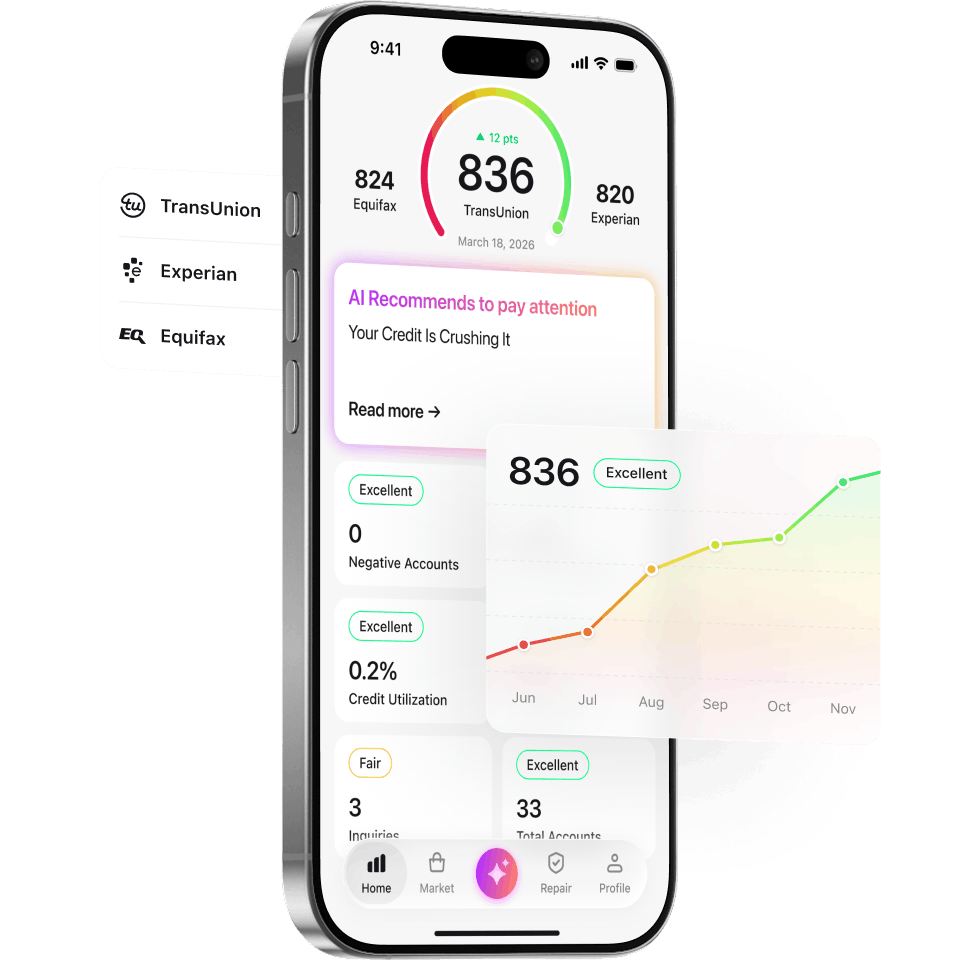
Download Credit Booster AI,free on iOS and Android. It analyzes your report, flags disputes, and tracks progress so you focus on building.
College Student Credit: Loans, Rent, and Smarts
College student credit isn’t just cards. You’ve got built-in boosters.
Student loans, federal or private, report automatically. Deferred? Still builds history. Start repayments on time post-grad: massive positive impact.[3][4] Don’t fear them; judicious borrowing (e.g., $5K/year for tuition) proves responsibility.
Rent reporting? Services like RentTrack add 12 months of on-time history. Free for many complexes.[3] Pairs perfect with a secured card.
Credit-builder loans: “Forced savings.” Borrow $500; lender holds it. Repay over 12 months at low interest, payments report positive. Get $500 bonus at end. Ideal if cards scare you.[5] Community banks offer them; rates under 5%.[3]
Avoid: Maxing cards for textbooks. One semester of 80% utilization? 100-point drop.[6]
Credit Repair if You Slip Up
Made a mistake? Credit repair young adults fix it DIY. No pros needed, scams prey on 18-year-olds promising “700 overnight.”[1]
-
Pull reports again. Dispute errors online, bureaus investigate in 30 days per FCRA.[1] Wrong late payment? Gone in 45 days.
-
Slash utilization. Pay down to <10%. Call issuers for limit increases post-6 months good behavior.[4]
-
Freeze the fun. No new apps for 6 months, each inquiry costs 5-10 points.[4]
-
Add positives. Layer a credit-builder loan atop your secured card. Diverse mix (10% of score) accelerates.[4]
Real story: Sarah, 22, missed payments on a $1K store card. Score: 520. Disputed error (one late was wrong), paid full, added secured card. 18 months: 720. Landed apartment sans cosigner.[1]
Negative marks fade: Lates lighten yearly, bankruptcies take 7-10 years.[1] Patience + habits = prime scores before homebuying.
Long-Term Habits for Lifelong Wins
Mix it up: 1-2 cards + loan + rent reports. Average age of accounts (15% FICO) loves variety.[4]
Parents: Guide till 18. Edelman says “training wheels”,low-limit cards under supervision.[5] Teach: Pay full, not minimum.
Dodge scams: No “repair” fees upfront. DIY rules 2026.[1] Track via apps.
By 25, early starters rent easy, insure cheap, borrow low-rate. Refinance those 15% student loans to 5% with 700+ scores.[4]
You’ve got time. Use it.
Frequently Asked Questions
How do I build credit at 18 with no income?
Become an authorized user on a parent’s card for instant history, or deposit $200 on a secured card, no income needed.[2][3] Pay small charges full monthly.
Can college students get credit cards easily?
Yes, student cards approve faster with proof of enrollment and $500/month income (gigs count) or a cosigner under 21.[4] Start with low limits like $500.
Do student loans hurt credit if deferred?
No, they build positive history once repayments start on time, even during deferment.[3][4] On-time payments boost scores big.
What’s the fastest way to repair credit as a young adult?
Pull free weekly reports, dispute errors (boost in 30-45 days), and add a secured card or credit-builder loan with <30% utilization.[1][4] See 100+ points in 12 months.
Are secured cards worth the deposit?
Absolutely,$200-500 deposit matches your limit, upgrades in 6-12 months return it, and you build real history.[4][6] Better than nothing.
Can I fix credit errors myself without paying services?
Yes, 100%. Use AnnualCreditReport.com for free pulls and online disputes, bureaus fix in 30 days. Apps like Credit Booster AI make it even simpler.[1]
Download Credit Booster AI,your sidekick for reports, disputes, and tracking. Free on iOS and Android.
Related research: For a deeper analysis of credit building timelines for those starting out, see our research library at JoinCreditClub.com.
Need professional help? CreditBooster.com has been helping clients rebuild their credit since 2009.
Frequently Asked Questions
How do I build credit at 18 with no income?
Become an authorized user on a parent's card for instant history, or deposit $200 on a secured card, no income needed. Pay small charges full monthly.
Can college students get credit cards easily?
Yes, student cards approve faster with proof of enrollment and $500/month income (gigs count) or a cosigner under 21. Start with low limits like $500.
Do student loans hurt credit if deferred?
No, they build positive history once repayments start on time, even during deferment. On-time payments boost scores big.
What's the fastest way to repair credit as a young adult?
Pull free weekly reports, dispute errors (boost in 30-45 days), and add a secured card or credit-builder loan with <30% utilization. See 100+ points in 12 months.
Are secured cards worth the deposit?
Absolutely,$200-500 deposit matches your limit, upgrades in 6-12 months return it, and you build real history. Better than nothing.
Can I fix credit errors myself without paying services?
Yes, 100%. Use AnnualCreditReport.com for free pulls and online disputes, bureaus fix in 30 days. Apps like Credit Booster AI make it even simpler. [Download Credit Booster AI](https://creditbooster.ai/download),your sidekick for reports, disputes, and tracking. Free on iOS and Android.