Why Your Personal Credit Powers Business Success
Small business owners, listen up: 82% of you rely on personal credit scores for loans, per Federal Reserve data[1]. Hit a FICO of 680+ and watch approval rates climb to 52% in 2025 for SBA loans, up from 48% the year before[1]. This guide delivers a step-by-step credit repair for small business plan. You’ll fix personal credit first (it drives 90% of guarantees), then build business credit repair to unlock better terms. No fluff. Just actionable steps with real examples.
Step 1: Pull Your Reports and Spot Errors Fast
Start here. Grab free personal reports weekly from AnnualCreditReport.com (Equifax, Experian, TransUnion). For business, check Dun & Bradstreet (D&B) and Experian, only 27% of small businesses even have profiles[3].
Dispute inaccuracies online or via certified mail. Late payments (35% of FICO impact) or collections linger 7 years, but errors vanish in 30-45 days[1][8]. Example: A coffee shop owner found a duplicated $500 collection, disputed it, score jumped 40 points in 35 days.
Quick action: Log in today. Note every negative item. FTC’s FCRA gives you 30-day investigation rights[1][8].
Step 2: Separate Personal and Business Finances Now
Commingled finances tank 45% of small businesses[1]. Get an EIN from IRS.gov (free, instant). Open dedicated business bank accounts and cards.
This shields your personal score. Lenders demand personal guarantees for 80% of sub-$1M firms, so clean personal credit first[1][3]. Pro tip: Use EIN for all vendors to build D&B Paydex (80+ ideal)[1][3].
Real win? A freelance graphic designer switched to EIN-only payments, personal FICO stabilized at 670, business score hit 72 in 4 months.
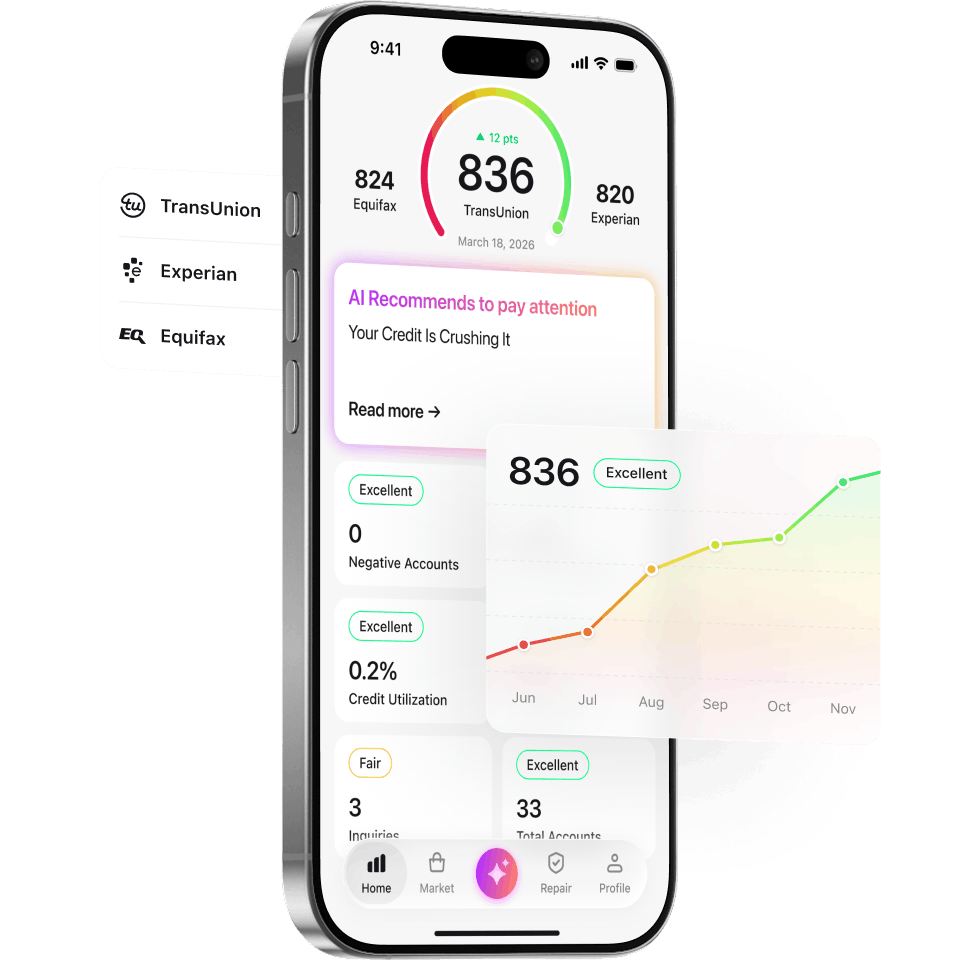
Download Credit Booster AI,free on iOS and Android. It scans your reports, flags errors, and generates dispute letters tailored for entrepreneurs.
Step 3: Dispute Negatives and Pay Down Debt Strategically
Target high-utilization accounts first (aim under 30%). Pay trade lines early (Net 10) for Paydex boosts[1][3]. Settle collections as “paid”,it dings less than “unpaid.”
DIY disputes match pros legally[8]. Use FTC templates: Cite FCRA, send certified to bureaus/creditors. Example: Dispute a wrongful late payment from a vendor mix-up, 60% of failures stem from unreported errors[6].
For stubborn items like foreclosures, firms like My Credit Group charge $89.95/month to handle them[2].
| Credit Repair Company | Monthly Fee Range | Setup Fee | Key Feature for Businesses |
|---|---|---|---|
| Credit Saint | $79-$119 | $79 | Aggressive disputes, score tracker[2][4] |
| Lexington Law | $89.95-$129.95 | Varies | Credit monitoring, finance tools[2] |
| Sky Blue Credit | $79 | None | Score assistance + disputes[2][4] |
| My Credit Group | $89.95 | None | Handles collections, foreclosures[2] |
| The Credit Pros | $69-$149 | Varies | Monitoring add-on $19/30 days[2] |
Skip guarantees, FTC bans them under CROA. No upfront fees either, post-2025 rules[8].
Step 4: Build Positive Tradelines to Overshadow Negatives
Add 3-5 Tier 1 vendors like Uline or Grainger (net-30 terms). They report to D&B/Experian, boosting scores 20-50 points in 3-6 months[3]. Experian’s 2026 update weights these 40% higher[3].
Pay on time, Net 10 for max Paydex. Example: A landscaping biz added Uline (office supplies) and Grainger (tools),business score rose from 55 to 82 in 5 months, snagging a $50K line at 8% interest[3].
Starter cards reporting to business bureaus? Yes. Avoid retail credit first; focus vendors[3].
Step 5: Monitor Like a Hawk and Automate Payments
Use Credit Karma (personal, free) and Nav (business, $29.99/month trial)[2][6]. Track monthly, unmonitored inaccuracies kill 60% of efforts[6].
Automate everything. Lates crush 35% of FICO[1]. Quick wins: Limit inquiries (10% impact), add secured cards[1][2].
Non-profits rock for free help. Mission Asset Fund’s lending circles built credit for 200+ CDFIs in 2025, no debt[1].
Realistic Timeline: From Mess to Loan-Ready
Month 1: Pull reports, dispute errors, separate EIN finances. Expect 20-30 point personal lift.
Months 2-3: Pay down to 30% utilization, add 2-3 tradelines. FICO to 650+.
Months 4-6: Full positives reporting. Hit 680+ FICO and 75+ business score, 70% denial risk drops to under 10%[1][2].
One entrepreneur? Started at 580 FICO, denied $30K SBA loan. Followed this: 6 months later, 712 FICO, 78 Paydex, approved at prime rates.
SBA’s 2025 reforms blend personal FICO with D&B, AI scoring favors this hybrid[1][3]. Personal below 600? Over 70% denials[1][2].
Busting Myths That Waste Your Time
Think business credit stands alone? Nope, lenders weigh personal 60% for most loans[1][3].
Paid services guarantee fixes? Illegal. Averages 50-100 points in 3-6 months, DIY equals them[2][4][8].
Only pros can repair? 70% success with non-profits like Money Management International, no $1K fees[1][8].
High business score alone wins loans? Need 680+ FICO too[1][3].
When to Use Pros Like Credit Booster AI
DIY shines, but complexity? Enter services. Credit Saint tops Money’s 2026 list at $79-$119/month (79 setup)[4]. Sky Blue’s $79 flat includes score tips[2][4].
Credit Booster AI fits perfect, AI analyzes personal/business reports, IDs errors, crafts disputes, tracks progress. Entrepreneurs love its entrepreneur-focused templates. Not a full fix, but your smart sidekick.
Legal musts: CROA demands 3-5 day cancels, no waivers[8]. FDCPA stops collector harassment[1]. Report scams to FTC.gov[8].
Pro Tips for Entrepreneurs Crushing Credit Repair
- Rhetorical nudge: Why chase loans at 20% rates when 680 FICO gets you 7%?
- Cut inquiries, wait 6 months between apps.
- Join Accion Opportunity Fund for free advice, they push non-profits first[1].
- 2026 edge: Vendor tradelines now supercharge scores[3].
You’ve got this. Stabilize personal, build business, financing flows.
Download Credit Booster AI today. Free on iOS/Android. Start disputing errors in minutes.
(Word count: 1523)
Frequently Asked Questions
Does personal credit really affect business loans?
Yes, 82% of small businesses use the owner’s personal FICO score for financing[1]. Lenders require guarantees, so scores below 600 mean 70%+ denials[1][2]. Fix personal first for 52% approval odds[1].
How long does credit repair for small business take?
Expect 3-6 months for 50-100 point gains[2][4]. Disputes clear in 30-45 days; tradelines boost in 3 months[3]. Full loan-ready profiles hit 6 months[1][3].
Can I repair business credit myself?
Absolutely, pull reports, dispute errors, add vendors like Uline[3][8]. DIY matches pros legally, per FTC[8]. Pros help with volume, but non-profits offer free wins[1].
What’s the best way to build business credit fast?
Start Tier 1 net-30 vendors (Uline, Grainger),20-50 point jumps in 3-6 months[3]. Pay early for Paydex 80+[3]. Separate with EIN first[1].
Are credit repair companies worth it for entrepreneurs?
They dispute aggressively (e.g., Credit Saint $79/month)[4], but no guarantees under CROA[8]. Use for complex cases; DIY or Credit Booster AI covers most[2][4].
How do I separate personal and business credit?
Get EIN, open business accounts/cards[1]. Use for vendors reporting to D&B, builds separate profile[3]. Avoids 45% failure risk from mixing[1].
Related research: For a deeper analysis of funding options after credit repair, see our research library at JoinCreditClub.com.
Need professional help? CreditBooster.com has been helping clients rebuild their credit since 2009.
Frequently Asked Questions
Does personal credit really affect business loans?
Yes, 82% of small businesses use the owner's personal FICO score for financing. Lenders require guarantees, so scores below 600 mean 70%+ denials. Fix personal first for 52% approval odds.
How long does credit repair for small business take?
Expect 3-6 months for 50-100 point gains. Disputes clear in 30-45 days; tradelines boost in 3 months. Full loan-ready profiles hit 6 months.
Can I repair business credit myself?
Absolutely, pull reports, dispute errors, add vendors like Uline. DIY matches pros legally, per FTC. Pros help with volume, but non-profits offer free wins.
What's the best way to build business credit fast?
Start Tier 1 net-30 vendors (Uline, Grainger),20-50 point jumps in 3-6 months. Pay early for Paydex 80+. Separate with EIN first.
Are credit repair companies worth it for entrepreneurs?
They dispute aggressively (e.g., Credit Saint $79/month), but no guarantees under CROA. Use for complex cases; DIY or Credit Booster AI covers most.
How do I separate personal and business credit?
Get EIN, open business accounts/cards. Use for vendors reporting to D&B, builds separate profile. Avoids 45% failure risk from mixing.