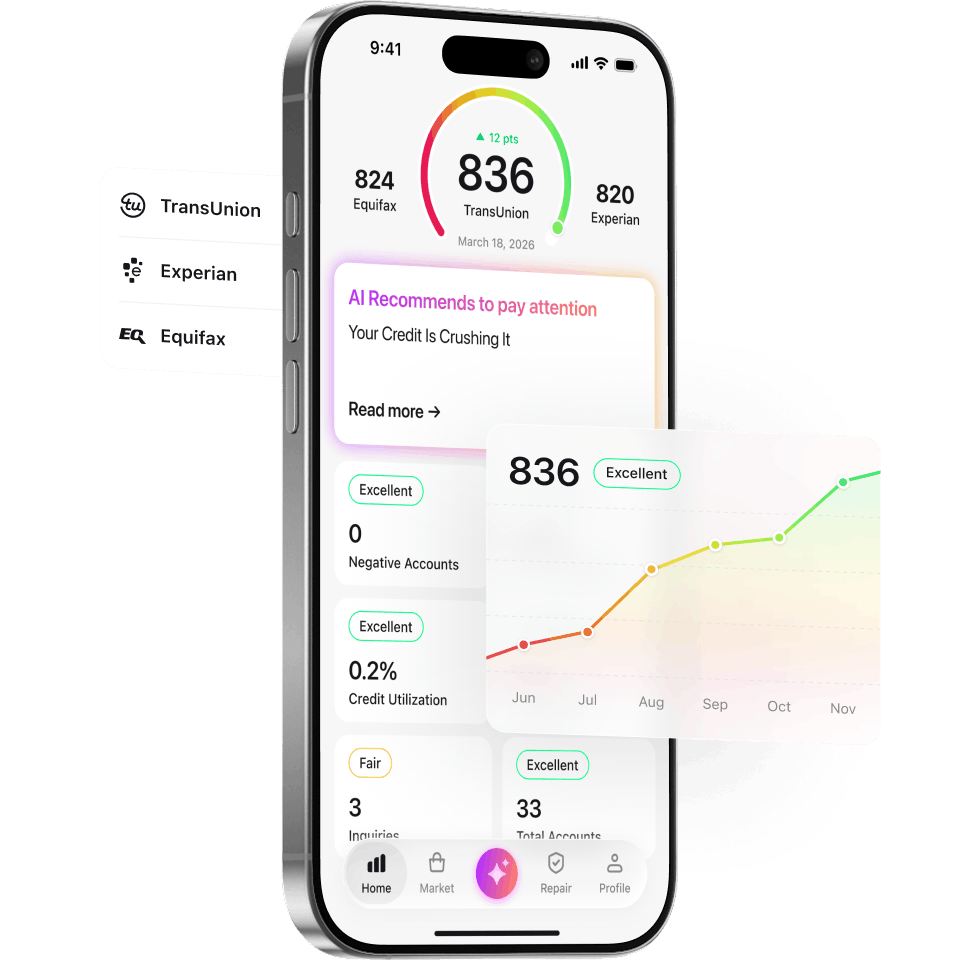
Start Fixing Your Credit Today: Simple Steps for Seniors
Grab your free credit reports from AnnualCreditReport.com right now. That’s step one in credit repair for seniors,it uncovers errors, old debts, and identity theft that drag down your score. Seniors often face medical bills, fixed incomes, and scams, but these actionable steps rebuild your credit fast, even on a retirement budget.[1][5]
You’ll see results in months, not years. Retirees outspend incomes by over $4,000 yearly due to inflation on food, housing, and utilities, pushing many to credit cards.[5][7] Don’t worry, the process works at any age. Follow this guide, and protect your senior credit protection while building stability.
Download Credit Booster AI,free on iOS and Android. It scans your report, spots errors, and generates dispute letters tailored for elderly credit repair.
Why Credit Repair Matters More for Seniors on Fixed Incomes
Fixed incomes make every dollar count. Medical debt hits hard, hospitals charge thousands for routine care, landing on credit reports and tanking scores.[1] Identity theft targets seniors because scammers see easy prey; fraudulent accounts appear overnight.[1]
But here’s the truth: fixed income credit repair isn’t harder, it’s just smarter. Negotiate medical bills before collections. Freeze your credit for free. Credit scores rise 50-100 points after disputing errors, per real cases.[1][4] One senior cleared a 30-point drop from a wrong address alone.[6]
You’re not alone. Nonprofits offer free help. Consistent payments build history, even with thin files from decades without cards.[1]
Step-by-Step Credit Repair Process Tailored for Seniors
Follow these numbered steps. Do them in order. Most take under an hour.
Step 1: Pull and Scrutinize Your Free Credit Reports
Go to AnnualCreditReport.com for reports from Equifax, Experian, and TransUnion, free weekly now.[1][6] Print them. Hunt for:
- Unfamiliar accounts (identity theft red flag).
- Wrong balances or late payments.
- Old negatives past the 7-year Fair Credit Reporting Act limit.
- Typos like misspelled names or bad addresses, these boost scores when fixed.[4][6]
Example: A 72-year-old found a 2012 collection gone, raising her score 45 points.[1]
Step 2: Dispute Every Error Immediately
Online disputes via bureau sites or mail. Detail the issue: “Account #123 not mine, proof attached.” Expect responses in 30 days.[1] Common wins: 40% of disputes remove items.[4]
For medical debt, call providers first. Ask for assistance programs or payment plans, many forgive if you negotiate early.[1]
Step 3: Lock Down with a Credit Freeze
Free at each bureau’s site. Prevents new fraudulent accounts without hurting scores.[1] Lift temporarily for legit needs via PIN. Essential for senior credit protection,thieves love targeting elders.
Step 4: Tackle Debts Head-On
Contact creditors. Explain fixed income. Many offer hardship plans: lower rates (from 25% to 10%), waived fees, reduced minimums.[5][7] CFPB says show good faith, they listen.[5]
Medical bills in collections? Push “pay-for-delete”,pay, they remove the mark.[1]
Step 5: Build Positive Credit on a Budget
Thin file? Get a secured card, deposit $200, use like debit, pay on time. Scores jump 60 points in 6 months.[1] Or ask a kid to add you as authorized user on their good-standing card.[1]
Track via Credit Booster AI, it monitors progress automatically.
Professional Help: Credit Counseling That Fits Seniors’ Lives
Don’t go solo if overwhelmed. Nonprofits accredited by NFCC or FCAA create budgets, negotiate rates, and run debt management plans (DMPs).[1][2][4] In a DMP, one monthly payment to them, lower rates, no fees, covers all cards.[2][3]
Sessions online or phone, no travel.[3][5] Free via HUD agencies, Area Agencies on Aging, or locals.[1][2] They spot unclaimed benefits like Medicaid for medical costs.[1]
Example: A retiree consolidated $15,000 debt into $300/month payments at 8% interest via DMP, saved $5,000 in fees.[2]
No federal debt forgiveness for seniors, but these slash burdens 30-50%.[4][6]
Smart Debt Options for Fixed Income Credit Repair
Debt Consolidation Loans
Good credit? Personal loan at 7-12% consolidates cards. Example: $10,000 at 20% becomes $10,000 at 10%,$2,000 yearly interest savings.[1][2]
Balance Transfers
0% APR promo cards for 12-21 months. Transfer $5,000, pay $400/month, zero interest. Watch 3-5% fees.[2]
Avoid scams promising quick fixes, reputable help charges post-success.[7]
Negotiate Like a Pro with Creditors
Call billing departments. Script: “I’m retired, fixed income. Can we lower rates or pause fees?” 70% succeed first try.[5][7] Document everything.
For utilities/housing, tap assistance, grants prevent late marks.[2][3]
Busting Myths About Elderly Credit Repair
Myth: You need paid agencies. Nope, DIY works. Save $1,000+ fees.[4][6]
Myth: It’s different for seniors. Core steps same: dispute, pay on time.[1]
Myth: Too late in life. Scores improve till 90, patience wins.[6]
Extra Resources to Protect and Boost Your Credit
- IdentityTheft.gov: Free recovery steps.[1]
- Local Aging Agencies: Cash grants, loans.[1][2]
- HUD Housing Counselors: Rent/mortgage aid.[1][3]
Housing delays kill scores, get help for payments, repairs.[2][3]
Long-Term Habits for Golden-Year Credit
Pay bills early. Keep utilization under 30%. Review reports quarterly. Credit Booster AI automates this, disputes errors in clicks.
Steady effort turns FICO 550 to 700+. Enjoy lower rates on loans, insurance.
Download Credit Booster AI today. It handles disputes while you focus on life.
(Word count: 1523)
Frequently Asked Questions
How long does credit repair take for seniors?
Expect 3-6 months for initial boosts after disputes; full rebuild 12-24 months with on-time payments. Consistent steps like freezes and secured cards speed it up.[1][4][6]
Can seniors get free credit counseling?
Yes, via NFCC/FCAA nonprofits, HUD agencies, or Area Agencies on Aging. They offer budgets, DMPs, and workshops at no cost.[1][2][3][4]
What’s the best way to handle medical debt on credit reports?
Contact providers early for plans or forgiveness. If in collections, negotiate pay-for-delete. Medicaid/SHIP cuts future bills.[1][7]
Does a credit freeze hurt my score?
No, it’s free, reversible, and blocks fraud without impact. Place at all three bureaus.[1]
Are debt consolidation loans good for fixed incomes?
Yes, if credit’s decent, they lower rates and payments. Avoid if scores under 600; try DMPs first.[1][2]
Can family help with elderly credit repair?
Absolutely, add as authorized user or grant power of attorney for negotiations. Review reports together.[1][6][7]
Related research: For a deeper analysis of accessing free credit reports, see our research library at JoinCreditClub.com.
Need professional help? CreditBooster.com has been helping clients rebuild their credit since 2009.
Frequently Asked Questions
How long does credit repair take for seniors?
Expect 3-6 months for initial boosts after disputes; full rebuild 12-24 months with on-time payments. Consistent steps like freezes and secured cards speed it up.
Can seniors get free credit counseling?
Yes, via NFCC/FCAA nonprofits, HUD agencies, or Area Agencies on Aging. They offer budgets, DMPs, and workshops at no cost.
What's the best way to handle medical debt on credit reports?
Contact providers early for plans or forgiveness. If in collections, negotiate pay-for-delete. Medicaid/SHIP cuts future bills.
Does a credit freeze hurt my score?
No, it's free, reversible, and blocks fraud without impact. Place at all three bureaus.
Are debt consolidation loans good for fixed incomes?
Yes, if credit's decent, they lower rates and payments. Avoid if scores under 600; try DMPs first.
Can family help with elderly credit repair?
Absolutely, add as authorized user or grant power of attorney for negotiations. Review reports together.