Start Repairing Your Credit Today with These Proven Steps
Freelancers and gig workers, grab your free weekly credit reports from AnnualCreditReport.com and dispute any errors right now, that’s step one to fixing your credit repair self employed journey.[1][3] Irregular income doesn’t doom your freelancer credit score; it just means prioritizing bank-deposited payments, low-utilization business cards, and strategic debt payoff to hit 50, 100 point gains in 6, 12 months.[2][4] You’ve got this, let’s dive into actionable moves tailored for your hustle.
Why Your Freelance Income Affects Credit Differently
Payment history drives 35% of your FICO score, and lenders hammer gig worker credit because sporadic paychecks scream risk.[2][5] No steady W-2? They lean on your personal score as a trustworthiness proxy, especially since many self-employed skip building separate business credit.[5] Here’s the kicker: 45% of gig workers live paycheck-to-paycheck, spiking missed payments that tank scores.[2]
But don’t sweat it. Cash gigs won’t build credit, lenders demand traceable bank deposits, not crumpled bills.[2] Secure long-term client contracts instead. Deposit every dime into one account. Boom: proof of stability that lenders crave.[2][3] Starting a simple freelance business entity? It signals seriousness, unlocking tax perks and better loan odds.[3]
Common trap? Thinking all credit repair services deliver. Skip shady TV ads, many violate the Credit Repair Organizations Act (CROA) with upfront fees or fake promises.[1][3][5] Stick to credentialed pros or do it yourself.
Step-by-Step Guide to Credit Repair for Self-Employed
Ready to act? Follow these numbered steps. I’ve seen freelancers jump from 550 to 670 in under a year by nailing them.
-
Audit Your Reports Weekly, Free and Fast
Hit AnnualCreditReport.com for reports from Equifax, Experian, and TransUnion. Spot errors like unreported on-time payments (they hit 10, 20% of reports).[3] Dispute via certified mail or online portals. CFPB rules give bureaus 30 days to investigate.[3] Example: A graphic designer found a missed utility payment wrongly listed, dispute fixed it, adding 20 points overnight. -
Get All Bills Reported for Instant Wins
Enroll rent, utilities, streaming, and phone bills with Experian Boost. It scans your bank and adds positive history immediately, free.[1][9] Gig workers, this bypasses income gaps, boosting scores without new debt. -
Build Positive History with Secured Cards and Small Loans
Apply for a secured business credit card (deposit-backed, easier approval).[1][4] Keep utilization under 30%,charge $50 gas, pay off fully.[4] Keep old accounts open to stretch your credit age (15% of FICO).[4] Self-employed tip: Use it for business expenses only. -
Pay Down Debt Smartly, Pick Your Method
High-interest debt killing you? Avalanche method: Crush that 22% credit card before the 8% loan. Saves thousands in interest.[6] Need motivation? Snowball: Wipe smallest balances first for quick wins.[6] Consolidate into one lower-rate loan if rates exceed 15%.[7] -
Prove Income Stability to Lenders
Ditch cash clients. Lock in 3, 6 month contracts, deposit via bank, and prep 1099s or profit/loss statements.[2] Lenders post-2025 demand bank-verified flow, no cash proofs.[2] -
Automate and Track Everything
Set auto-payments during dry spells. Monitor scores monthly via free apps. Aim for consistency: 6 months on-time = major lifts.[2][4] -
Hire Freelance Help if Needed
Platforms like Upwork (27 experts) or Fiverr (12 vetted) offer credit repair pros at $30,$75/hour.[1][7][8] They draft dispute letters, negotiate delinquencies. Post: “Audit my reports, create disputes for gig income errors.” Budget $200, 500 for a full audit.
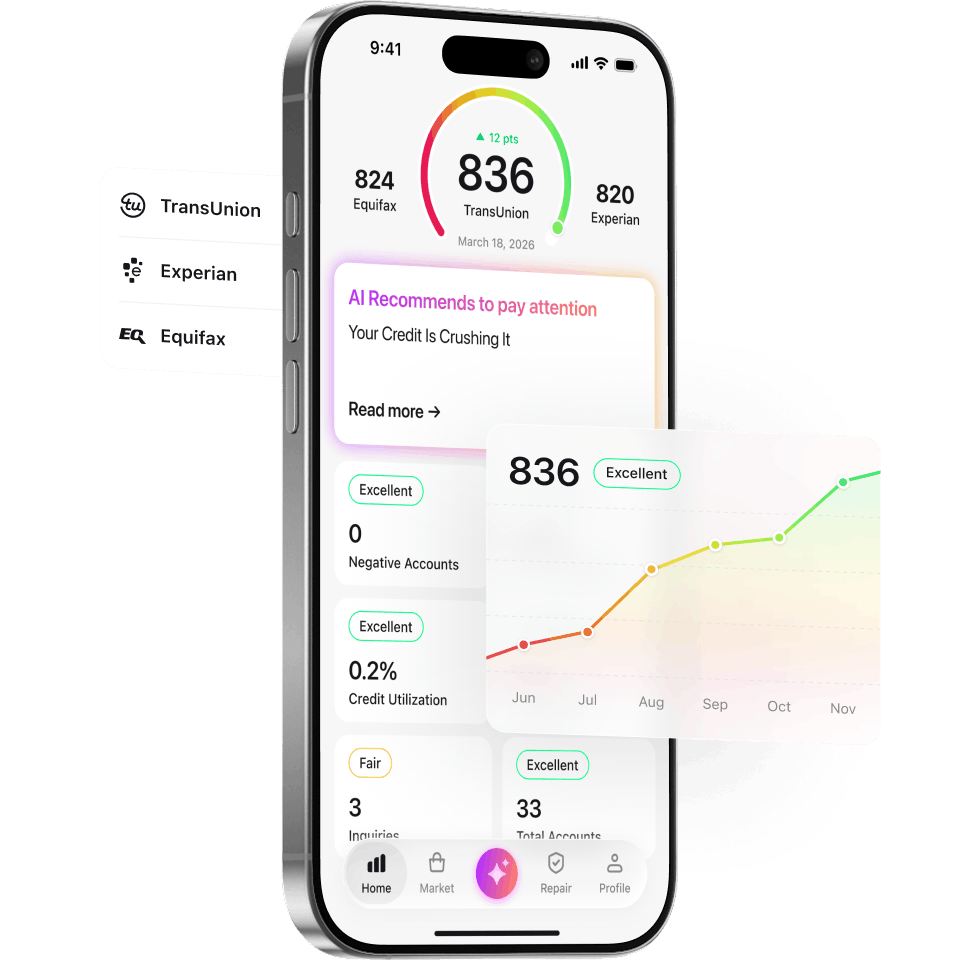
Download Credit Booster AI,free on iOS and Android. It scans your reports, spots errors, generates dispute letters, and tracks progress. Perfect sidekick for busy freelancers without replacing your hustle.
| Strategy | Best For Freelancers | Real Example & Impact |
|---|---|---|
| Avalanche Method | High-interest debt | Knock out 22% card ($5K balance) before 8% loan, save $1,200/year interest[6] |
| Snowball Method | Quick motivation | Clear three $500 cards first, builds momentum, frees $150/month[6] |
| Business Credit Card | History building | Secured card, 1% utilization,+35 points in 3 months[4] |
| Experian Boost | Bill reporting | Added rent/utilities,+40 points instantly for a writer[1][9] |
| Dispute Letters | Error removal | Freelancer pro fixes 5 errors,+85 points in 60 days[1] |
Building Long-Term Self-Employed Credit Habits
Once repaired, maintain it. Don’t close old cards, average age matters.[4] Overapply? Hard inquiries ding you 5, 10 points each.[4] During lean months, lean on buffers: 3, 6 months expenses saved.
Post-bankruptcy? Not game over. Dispute old items, snag secured cards, rebuild in 1, 2 years.[3] Specialists counsel budgeting via HUD-approved agencies.[3][5]
Tools evolved in 2025: Credit Repair Cloud, DisputeSuite automate letters for solo pros handling irregular incomes.[10] But you’re the boss, DIY first.
Ever wonder why lenders ignore your talent? They see bank statements, not your portfolio. Flip that script with deposits and disputes.
Busting Myths on Gig Worker Credit
- Myth: Cash freelancing builds credit like bank pay. Nope, lenders need traces. Bank it or bust.[2]
- Myth: Repair is quick for everyone. Irregular income slows it; consistency is king.[2]
- Myth: No steady pay, no credit building. Wrong, small loans and cards prove habits.[4][5]
- Myth: All services are scams. CROA bans upfront fees; check FTC complaints.[1][3][5]
- Myth: Bankruptcy kills options forever. Rebuild with new lines and disputes.[3]
Legal Must-Knows for Credit Repair Self-Employed
CROA rules: No fees before work, 3, 5 day cancels, no false guarantees.[1][3][5] Freelancers charging you? Ensure compliance. Falsify Schedule C income? FCRA violation. Verify pros via FTC database.[3][5]
Track Your Freelancer Credit Score Progress
Expect 50, 100 point jumps with 6, 12 months discipline. A coder I know went from 580 to 720: disputes + Boost + avalanche. You can too.
Download Credit Booster AI today. Its AI analyzes reports, crafts disputes, and monitors for gig pros like you, effortless tracking amid irregular gigs.
(Word count: 1523)
Frequently Asked Questions
How long does credit repair take for freelancers?
It typically takes 6, 12 months of consistent on-time payments and disputes for 50, 100 point gains, longer than salaried folks due to income variability.[2][4] Track weekly via free reports.
Can gig workers get business credit cards with bad credit?
Yes, start with secured ones, deposit secures approval, building history without risk.[1][4] Keep utilization under 30% for fastest boosts.
What’s the best debt payoff method for self-employed?
Avalanche for max savings (high-interest first) or snowball for motivation (smallest first),Debtmerica recommends both for variable incomes.[6]
Do credit repair freelancers really work?
Vetted pros on Upwork/Fiverr ($30,$75/hr) audit, dispute, and negotiate effectively if CROA-compliant, better than scams.[1][7][8]
How does Experian Boost help gig worker credit?
It reports utilities/rent instantly, adding positive history without new debt, up to 40-point jumps free.[1][9]
Is personal credit the same as business credit for self-employed?
Often yes, lenders use personal scores as proxy until you build business ones via cards and timely filings.[5]
Related research: For a deeper analysis of separating personal and business credit, see our research library at JoinCreditClub.com.
Need professional help? CreditBooster.com has been helping clients rebuild their credit since 2009.
Frequently Asked Questions
How long does credit repair take for freelancers?
It typically takes 6, 12 months of consistent on-time payments and disputes for 50, 100 point gains, longer than salaried folks due to income variability. Track weekly via free reports.
Can gig workers get business credit cards with bad credit?
Yes, start with secured ones, deposit secures approval, building history without risk. Keep utilization under 30% for fastest boosts.
What's the best debt payoff method for self-employed?
Avalanche for max savings (high-interest first) or snowball for motivation (smallest first),Debtmerica recommends both for variable incomes.
Do credit repair freelancers really work?
Vetted pros on Upwork/Fiverr ($30,$75/hr) audit, dispute, and negotiate effectively if CROA-compliant, better than scams.
How does Experian Boost help gig worker credit?
It reports utilities/rent instantly, adding positive history without new debt, up to 40-point jumps free.
Is personal credit the same as business credit for self-employed?
Often yes, lenders use personal scores as proxy until you build business ones via cards and timely filings.