Unlock Your Credit Factor Breakdown
Ever wondered why your credit score hovers at 680 when you’re paying bills on time? A credit factor breakdown reveals the culprits, like sky-high utilization or a short history, dragging it down, plus boosters you can leverage right now. Credit Booster AI’s interactive tool delivers this credit score analysis instantly, showing personalized impacts across all five FICO factors with tailored fixes.[1][2][3]
The Five Credit Score Factors, And Their Exact Weights
FICO scores, ranging 300-850, break into five factors with unchanging weights: payment history (35%), amounts owed/credit utilization (30%), length of credit history (15%), new credit (10%), and credit mix (10%).[1][2][3][4][5][6] These drive 100% of your score. Average U.S. FICO sits around 717 today, fair is 650+, good 700+, excellent 750+.[5][9]
Payment history rules as the top predictor of reliability. Miss a payment by 30 days? Expect a 60-110 point drop, lingering up to 7 years. One late can cost 100-150 points, with recovery taking 1-2 years.[1][3][9]
Utilization checks debt against limits. Aim under 30%,say, $2,000 owed on $10,000 limits (20%). Maxing out screams risk, tanking scores fast.[2][4][6]
Longer histories shine. A 10-year-old card used responsibly boosts this 15% slice.[1][3]
New credit flags risk from inquiries or fresh accounts, multiple in months? Dinged.[2][6]
Credit mix rewards variety: cards plus loans show skills, but don’t force it.[3][5]
Why Credit Factor Breakdown Matters for You
Lenders obsess over these. Payments and utilization alone explain 65% of score swings.[3][9] Bust myths: Closing old cards spikes utilization and shortens history, double whammy.[3][4] High debt isn’t fatal if ratios stay low; $50K at 10% beats $5K at 90%.[2][6] Self-checks? Zero harm, only hard inquiries bite.[6]
Recent tweaks? FICO 10T eyes 24-month trends, but weights hold steady into 2026. Medical debt under $500 vanished years ago.[9] Thin files (under 2 years) cap upside, patience pays.[3][6]
How Credit Booster AI’s Tool Delivers Your Credit Score Analysis
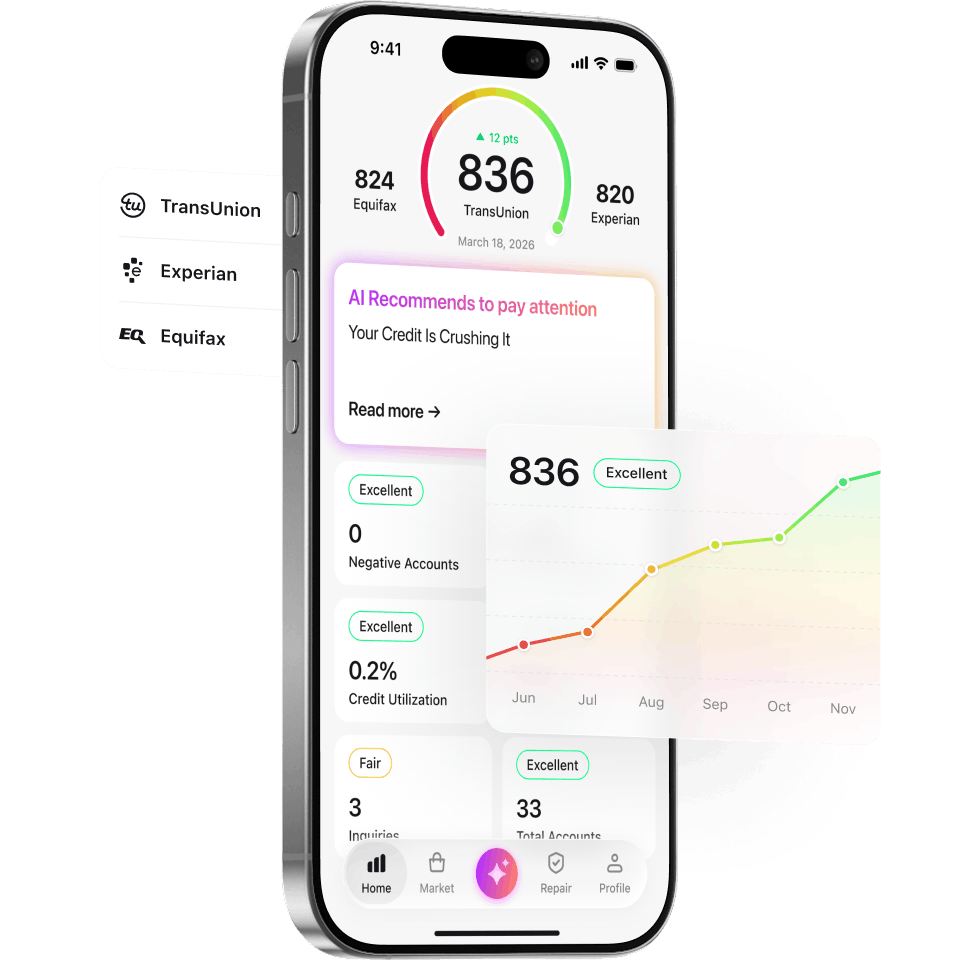
Pull your report in the app. Boom,credit factor breakdown pops up: bars showing each factor’s weight, your score contribution (green for boosters, red for drags), and exact point impacts. See payment history at 35% dragging 90 points from two lates? Or utilization at 45% costing 50 points?
Example output for “Alex” (score 692):
- Payment history (35%): +120 points (solid, but one 60-day late in 2023 hurts).
- Utilization (30%): -75 points (42%,pay down $1,200 on cards).
- Length (15%): +25 points (7-year average, keep that old card active).
- New credit (10%): -10 points (three inquiries last year).
- Mix (10%): +15 points (cards + auto loan).
Personalized recs follow: “Dispute that late via AI letter” or “Request limit increase for 10-point utilization bump.” Track monthly, watch scores climb 20-50 points from utilization tweaks alone.[4][9]
Download Credit Booster AI, free on iOS and Android. It analyzes reports, spots errors, generates disputes, and monitors progress. Pair it with free weekly reports from AnnualCreditReport.com (FCRA right).[9]
Quick Wins: Boost Helping Factors, Fix the Hurting Ones
Target these for fastest gains:
| Factor | What’s Helping | What’s Hurting | Quick Fix | Point Potential |
|---|---|---|---|---|
| Payment History (35%) | On-time streak | Lates/collections | Autopay everything | +60-150 recovery[1][3] |
| Utilization (30%) | <30% ratios | Maxed cards | Pay to $0 pre-statement | +20-100[2][4][6] |
| Length (15%) | 10+ year average | Newbie status | Use old accounts yearly | Gradual +10-30[1][3] |
| New Credit (10%) | Few inquiries | Application spree | Space apps 6 months | Avoid 5-10 dings[6] |
| Mix (10%) | Cards + loans | Single type | Add naturally (if needed) | Minor +5-20[3][5] |
Pay revolving debt first, 30% factor lifts quick. Retain old accounts; request limit hikes (no hard pull).[2][4] Dispute errors weekly, FCRA demands 30-day fixes.[9]
Northwestern Mutual nails it: Don’t chase mix with junk debt.[5] Freddie Mac? Low debt = higher scores, period.[5]
Bust Common Myths in Your Credit Score Factors
Think rent builds credit? Base FICO ignores it, use Experian Boost add-ons.[9] Few lates “ignored”? Nope, 30+ days stick 7 years.[2][3] One tool ends guesswork.
Ready for your credit score analysis? Credit Booster AI makes it dead simple.
Download Credit Booster AI today, see what’s helping and hurting in minutes.
Frequently Asked Questions
What is a credit factor breakdown?
It’s a detailed credit score analysis splitting your FICO into five weighted factors, revealing exact point boosters and drags with fix suggestions.[1][2]
How much does payment history affect my credit score?
At 35%, it’s king, one 30-day late drops 60-110 points, lasting 7 years, but consistent on-time builds it back in 1-2 years.[1][3][9]
Can I improve utilization quickly?
Yes, drop below 30% by paying cards before statements close, gains of 20-100 points hit fast, no new credit needed.[2][4][6]
Does closing old accounts help my score?
No, it shortens history (15% factor) and spikes utilization if limits fall, keep ‘em open and use lightly.[3][4]
What’s the average credit score in 2026?
Around 717 for U.S. FICO, aim for 700+ (good) via strong payments and low utilization.[5][9]
How does Credit Booster AI help with credit score factors?
The app’s tool gives instant breakdowns, AI dispute letters for errors, and progress tracking, users see 20-50 point jumps from targeted fixes.[9]
Related research: For a deeper analysis of the five factors that determine your credit score, see our research library at JoinCreditClub.com.
Need professional help? CreditBooster.com has been helping clients rebuild their credit since 2009.
Frequently Asked Questions
What is a credit factor breakdown?
It's a detailed credit score analysis splitting your FICO into five weighted factors, revealing exact point boosters and drags with fix suggestions.
How much does payment history affect my credit score?
At 35%, it's king, one 30-day late drops 60-110 points, lasting 7 years, but consistent on-time builds it back in 1-2 years.
Can I improve utilization quickly?
Yes, drop below 30% by paying cards before statements close, gains of 20-100 points hit fast, no new credit needed.
Does closing old accounts help my score?
No, it shortens history (15% factor) and spikes utilization if limits fall, keep 'em open and use lightly.
What's the average credit score in 2026?
Around 717 for U.S. FICO, aim for 700+ (good) via strong payments and low utilization.
How does Credit Booster AI help with credit score factors?
The app's tool gives instant breakdowns, AI dispute letters for errors, and progress tracking, users see 20-50 point jumps from targeted fixes.