Credit Dispute Letter Templates That Actually Work
Your credit report probably has errors on it. Not maybe, probably. Studies show that roughly one in four credit reports contain mistakes significant enough to impact your credit score[1]. The good news? You don’t need a lawyer or a credit repair company to fix them. A well-written dispute letter sent to the right place at the right time can get inaccurate items removed from your credit report.
The key is knowing which type of dispute letter to use, how to write it correctly, and exactly where to send it. Some dispute strategies have a 35-50% success rate, while others barely work at all. Let’s break down the templates and tactics that actually get results.
The Two Most Effective Dispute Letter Types
Before you write anything, you need to understand which dispute strategy matches your situation. There are several types of disputes, but two dominate in terms of actual results.
Verification disputes are your most powerful weapon. These letters have a 35-50% success rate[1]. Here’s why they work: You’re asking the credit bureau to verify the account with the original creditor within 30 days. If that creditor doesn’t respond (which happens constantly, especially for old debts), the bureau is legally required to delete the item from your report[1]. You’re essentially forcing the bureau to prove the debt is yours, and if they can’t, it disappears.
Inaccuracy disputes come in second with a 40-60% success rate[1]. These target specific factual errors: wrong amounts, incorrect dates, misspelled names, or other verifiable mistakes. If you can prove something is factually wrong, the bureau has to investigate and correct it[1].
The difference matters. Verification disputes work best for accounts you’re unsure about or debts older than 5 years[1]. Inaccuracy disputes work best when you have specific proof that something’s wrong[1].
There’s also the “not mine” dispute (for genuinely fraudulent accounts) and the outdated removal request (after 7 years from delinquency), but these are more specialized[1].
How to Structure a Dispute Letter That Gets Results
An effective dispute letter isn’t complicated, but it does need specific components. The Consumer Finance Protection Bureau and Federal Trade Commission have published official templates, and they’re surprisingly consistent about what works[2][5].
Your letter must include[2][5]:
- Your name and address
- The specific account being disputed (creditor name and account number)
- Your clear reason for disputing
- Your request for specific action (deletion or correction)
- A reference to the Fair Credit Reporting Act
That’s it. Keep the whole thing under 200 words[1]. Seriously, more words don’t help. In fact, they hurt. Longer letters confuse the investigation process and dilute your message[1].
One critical rule: one account per letter[1]. Don’t try to dispute five items in a single letter. It seems efficient, but it actually reduces your success rate. Each account gets its own letter.
Here’s what a basic verification dispute looks like:
[Your Name] [Your Address] [City, State, Zip Code]
[Date]
Complaint Department [Credit Bureau Name: Equifax, Experian, or TransUnion] [Address] [City, State, Zip Code]
Dear Sir or Madam:
I am writing to dispute an account on my credit report and request verification.
Account: [Creditor Name] Account Number: [Number] Balance: [Amount Shown]
I am requesting that you verify this account with the original creditor. I cannot confirm this account is accurate. Please provide written documentation confirming I am responsible for this debt.
Please investigate this matter and send me a free corrected copy of my credit report within 30 days.
Sincerely, [Your Signature]
For an inaccuracy dispute, you’d modify it like this:
I am writing to dispute inaccurate information on my credit report.
Account: [Creditor Name] Account Number: [Number]
This account is inaccurate because [specific reason: the balance is wrong, the dates are incorrect, the account was closed, etc.]. Please correct or remove this item.
See the difference? Verification disputes ask them to prove it. Inaccuracy disputes point out what’s wrong.
The Step-by-Step Process
Step 1: Get your actual credit report
Go to annualcreditreport.com, that’s the only official, free source[1]. You get one free copy per year from each of the three major bureaus: Equifax, Experian, and TransUnion[1]. Don’t use third-party sites offering “free” reports; they’re usually trying to sell you something.
Step 2: Find your errors
Look for late payments that aren’t yours, collections accounts you don’t recognize, wrong balances, incorrect dates, or accounts you’ve already paid off that still show as open[1]. Start with the oldest negative mark or the most obvious error[1]. Prioritize items that’ll have the biggest impact on your credit score.
Step 3: Choose your dispute type
Is this an account you’re unsure about? Use a verification dispute. Can you prove specific information is wrong? Use an inaccuracy dispute[1].
Step 4: Write your letter
Use the templates above. Keep it professional, factual, and concise. Don’t get emotional or angry, just state the facts.
Step 5: Prepare your supporting documents
This is crucial. Include a copy of your credit report with the disputed item circled or highlighted[2][4][5]. If you have additional documentation, attach it: receipts showing on-time payments, letters from creditors confirming account closures, bank statements, court documents for satisfied liens[4].
Step 6: Send via certified mail
This is non-negotiable. Use certified mail with return receipt requested[1][2][5]. Regular mail or email doesn’t create proof of delivery. Certified mail does. You need that receipt to prove the bureau actually got your letter.
Step 7: Wait for the investigation
The bureau has 30 days to investigate and respond[1][9]. You should receive a free corrected copy of your credit report with the investigation results[9]. If you don’t hear back within 35-40 days, follow up.
The “Round 1” Strategy for Multiple Disputes
If you have several errors on your report, the Round 1 Letter is a game-changer. This template has been used thousands of times with documented success[3]. It lets you dispute multiple items in a single letter while listing reasons for removal and providing clear instructions to the credit bureau[3].
The beauty of Round 1 is that it leverages the 30-day verification window. The bureau contacts the furnishers on your behalf. If furnishers don’t respond within 30 days (common for older accounts or smaller collection agencies), automatic deletion occurs[3].
You can adapt the Round 1 Letter for different recipients too, just edit the recipient name and address if you’re disputing directly with a creditor instead of a bureau[3].
Should You Dispute with the Bureau or the Creditor?
Here’s something most people don’t know: you should send dispute letters to both the credit bureau and the information furnisher (the company that reported the information)[5][8]. This dual approach significantly increases your chances of success[5][8].
When you dispute with the bureau, you’re asking them to investigate and correct their records[2][5]. When you dispute with the information furnisher, you’re asking the company that reported the information to contact the bureaus and have it corrected or deleted[5].
Both approaches matter. Some creditors respond faster to direct disputes. Some bureaus are more responsive. By doing both, you’re covering your bases.
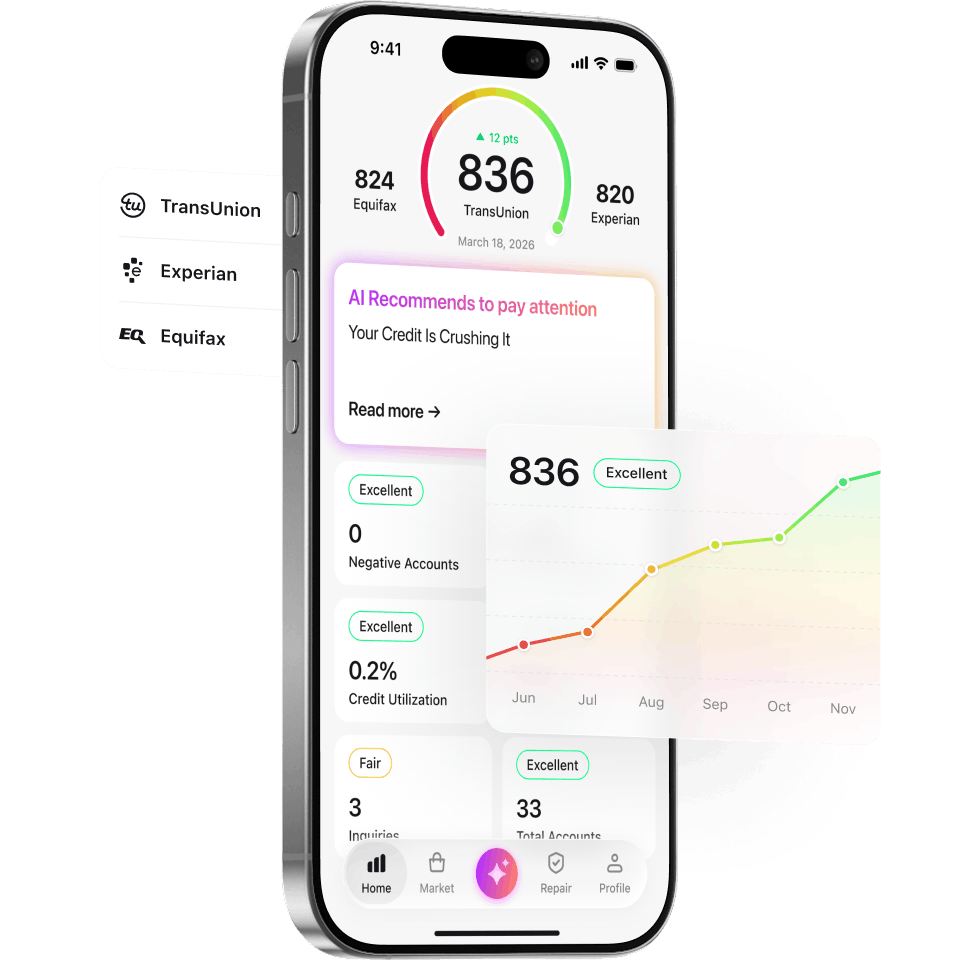
Download Credit Booster AI, free on iOS and Android, can help you track which disputes you’ve sent and when responses are due. The app analyzes your credit report, identifies errors, generates dispute letters, and tracks your progress automatically.
Common Mistakes That Kill Your Disputes
Mistake 1: Disputing multiple items in one letter
You think you’re being efficient. You’re actually reducing your success rate[1]. One account per letter, every time.
Mistake 2: Writing a novel
More detail doesn’t help. Excessive information confuses the investigation and weakens your case[1]. Under 200 words. That’s the sweet spot.
Mistake 3: Using “not mine” for debts you disagree with
“Not mine” disputes are only for genuinely fraudulent accounts[1]. Using them for debts you’re disputing owing is fraud. Don’t do it.
Mistake 4: Sending via email or regular mail
No proof of delivery means no proof you sent it. Certified mail with return receipt is the only acceptable method[1][2][5].
Mistake 5: Skipping supporting documentation
Including your credit report with items circled and supporting documents dramatically strengthens your case[2][4][5][6]. Don’t skip this step.
Mistake 6: Only disputing with the bureau
Send to both the bureau and the information furnisher[5][8]. One without the other leaves money on the table.
The Legal Framework Behind Dispute Letters
The Fair Credit Reporting Act (FCRA) is the law that makes all of this work[1][3]. It requires credit bureaus to investigate disputes within 30 days and delete unverifiable items[1][3]. It also gives you the right to dispute inaccurate or incomplete information[1][3].
The FCRA Identity Theft Supplement provides additional protections if you’re dealing with fraud[1]. The Consumer Finance Protection Bureau (CFPB) and Federal Trade Commission (FTC) enforce these rules and provide official sample letters and guidance[5][8]. These government resources are your authoritative reference for proper dispute procedures.
Understanding the FCRA helps you understand why certain tactics work. Verification disputes work because the FCRA requires verification. Inaccuracy disputes work because the FCRA requires correction. You’re not asking nicely, you’re citing the law.
Practical Tips for Maximum Results
-
Start with verification disputes for older accounts (5+ years), since creditors are less likely to respond[1]
-
Use inaccuracy disputes when you have proof of specific errors[1]
-
Prioritize strategically by addressing the oldest negative marks first[1]
-
Keep meticulous records of all correspondence, certified mail receipts, and copies of letters[1][2][5]
-
Follow up after 30 days if you haven’t received investigation results[9]
-
Request a corrected credit report as part of your dispute resolution[9]
-
Consider the Round 1 approach for multiple disputes, as it efficiently leverages the 30-day verification window[3]
-
Attach supporting documentation that clearly demonstrates inaccuracies[4][5][6]
-
Circle or highlight disputed items on your attached credit report copy[2][4][5]
-
Send to both the bureau and the information furnisher for maximum impact[5][8]
Taking Action Today
Success rates of 35-60% mean that dispute letters work, but they work best when you follow the process precisely[1]. Verification disputes hit hardest for older accounts. Inaccuracy disputes work when you have proof. The Round 1 strategy handles multiple items efficiently[3].
The fundamentals haven’t changed: certified mail, one account per letter, supporting documentation, and sending to both the bureau and the furnisher[1][2][5]. These aren’t just best practices, they’re the foundation of successful credit repair.
Download Credit Booster AI to streamline your dispute process. The app generates dispute letters automatically, tracks deadlines, and monitors your credit report for changes. It’s free on iOS and Android.
Your credit report is too important to ignore. Errors aren’t going to fix themselves. A well-written dispute letter takes maybe 30 minutes to prepare and send. The payoff, removing negative items that are dragging down your score, is worth the effort.
Frequently Asked Questions
What’s the difference between a verification dispute and an inaccuracy dispute?
A verification dispute asks the bureau to prove the debt is yours, if they can’t verify it within 30 days, it gets deleted[1]. An inaccuracy dispute targets specific factual errors like wrong amounts or dates[1]. Verification disputes work best for older accounts; inaccuracy disputes work when you have proof of errors[1].
How long does it take to get a response to my dispute letter?
Credit bureaus have 30 days to investigate and respond to your dispute[1][9]. You should receive a free corrected copy of your credit report with the investigation results within this timeframe[9]. If you don’t hear back within 35-40 days, follow up with a second letter.
Do I need to send my dispute letter to the credit bureau, the creditor, or both?
You should send dispute letters to both the credit bureau and the information furnisher (the company that reported the information)[5][8]. This dual approach significantly increases your chances of success[5][8]. They handle disputes differently, so both matter.
Can I dispute multiple items in one letter to save time?
No. Disputing one account per letter is more effective[1]. Multiple disputes in a single letter dilute the impact and reduce your success rate[1]. It takes more time upfront, but you’ll see better results.
What happens if the credit bureau doesn’t respond to my dispute?
If you don’t receive a response within 35-40 days, send a follow-up letter via certified mail[9]. Document everything. If the bureau still doesn’t respond, you can file a complaint with the Consumer Finance Protection Bureau or the Federal Trade Commission.
Is it legal to dispute a debt I actually owe?
You can dispute inaccuracies on a debt you owe, like wrong amounts or dates[1]. But using a “not mine” dispute for a debt you actually owe is fraud[1]. Only use “not mine” disputes for genuinely fraudulent accounts.
Related research: For a deeper analysis of effective dispute letter strategies, see our research library at JoinCreditClub.com.
Need professional help? CreditBooster.com has been helping clients rebuild their credit since 2009.
Frequently Asked Questions
What's the difference between a verification dispute and an inaccuracy dispute?
A verification dispute asks the bureau to prove the debt is yours, if they can't verify it within 30 days, it gets deleted. An inaccuracy dispute targets specific factual errors like wrong amounts or dates. Verification disputes work best for older accounts; inaccuracy disputes work when you have proof of errors.
How long does it take to get a response to my dispute letter?
Credit bureaus have 30 days to investigate and respond to your dispute. You should receive a free corrected copy of your credit report with the investigation results within this timeframe. If you don't hear back within 35-40 days, follow up with a second letter.
Do I need to send my dispute letter to the credit bureau, the creditor, or both?
You should send dispute letters to both the credit bureau and the information furnisher (the company that reported the information). This dual approach significantly increases your chances of success. They handle disputes differently, so both matter.
Can I dispute multiple items in one letter to save time?
No. Disputing one account per letter is more effective. Multiple disputes in a single letter dilute the impact and reduce your success rate. It takes more time upfront, but you'll see better results.
What happens if the credit bureau doesn't respond to my dispute?
If you don't receive a response within 35-40 days, send a follow-up letter via certified mail. Document everything. If the bureau still doesn't respond, you can file a complaint with the Consumer Finance Protection Bureau or the Federal Trade Commission.
Is it legal to dispute a debt I actually owe?
You can dispute inaccuracies on a debt you owe, like wrong amounts or dates. But using a 'not mine' dispute for a debt you actually owe is fraud. Only use 'not mine' disputes for genuinely fraudulent accounts.