Proven Credit Card Debt Strategies to Pay Off Faster
Tired of watching your credit card debt pile up? Start with these credit card debt strategies that actually work: pick a credit card debt payoff plan like the snowball or avalanche method, pay more than the minimum, and layer on balance transfers or consolidation for quicker wins. You’ll slash interest, protect your credit score, and regain control, often in months, not years[1][2][3][4][6].
The average American juggles over $6,500 in credit card debt, but proven plans turn that around. Paying just $20-200 extra monthly on top of minimums chips away at principal, saving thousands in interest across cards[1][2][4]. Combine that with smart moves, and you’re not just surviving, you’re thriving.
Debt Snowball Method: Build Momentum with Quick Wins
Want to feel progress right away? The debt snowball is your go-to pay off credit card debt strategy when motivation matters more than math.
Here’s how to do it in 4 steps:
- List debts smallest to largest. Ignore interest rates, focus on balances. Say you’ve got a $500 Visa, $2,000 Mastercard, and $4,000 Amex.
- Pay minimums on all but the smallest. Throw every extra dollar at that $500 card.
- Roll over payments. Once the $500 is gone, add its full payment (minimum + extra) to the $2,000 card.
- Repeat until zero. That momentum snowballs, wiping out debts fast[1][2][3][4][5][6].
Experts like Bank of America swear by it for the psychological boost. Paying off that first card? Pure adrenaline. One user knocked out five small cards in six months, freeing up $150 monthly for the big ones[3]. Downside: it might cost more in interest than avalanche. But if you’ve stalled before, snowball gets you moving[1][2].
Debt Avalanche Method: Slash Interest and Save Big
Pure math fan? Go avalanche,the top credit card debt payoff plan for minimizing costs on high-rate cards averaging 20%+ APR.
Steps are simple:
- Rank by interest rate highest to lowest. That 24% APR Discover? Target it first.
- Minimums everywhere else. Blast extras at the highest rate.
- Cascade down. Paid off? Add its payment to the next highest.
- Finish strong. Automate to never miss[1][2][4][5].
Navy Federal and UMCU pros recommend this for long-term savings. Example: $10,000 across three cards at 18%, 22%, and 25%. Avalanche shaves $1,200+ in interest versus snowball[1][4]. It’s slower on visible wins, but your wallet thanks you. Pair with extras: $100/month extra? Debt gone 18 months sooner[2].
| Strategy | Best For | Pros | Cons |
|---|---|---|---|
| Snowball | Motivation, multiple small debts | Quick wins, psychological boost[1][3] | Higher total interest[2] |
| Avalanche | Saving money, high-rate cards | Minimizes interest[1][4] | Slower visible progress[3] |
| Balance Transfer | High balances, good credit | 0% intro APR[1][4] | Fees, time limit[2] |
| Consolidation Loan | Simplification, fair credit | Lower rate, one payment[2][7] | New debt inquiry[2] |
Balance Transfers: 0% APR Hack to Accelerate Payoff
Got good credit (670+ FICO)? Transfer balances to a 0% intro APR card, 12-21 months of no interest on reduce credit card debt[1][2][4].
Action plan:
- Find offers. Chase Slate or Citi Simplicity often lead with 15-21 months promo.
- Calculate fees. 3-5% upfront,$30-50 on $1,000 transferred. Worth it if you beat 20% APR.
- Pay aggressively. Divide balance by promo months. $5,000 over 15 months? $333/month.
- Avoid new charges. Use it only for transfers[1][4].
Baird Wealth loves combining this with snowball/avalanche. Real win: Transfer $3,000 at 22% to 0%,save $600 in year one, minus $120 fee[1][2]. Warning: Promo ends? Backdated interest hits hard. Plan payoffs religiously[4].
Debt Consolidation Loans: Simplify and Lower Rates
Juggling five cards? A personal loan consolidates into one fixed payment at 10-15% APR, often half your cards’ rates[2][7].
Why it works:
- Recharacterizes debt. Revolving to installment boosts scores by dropping utilization under 30%[2].
- One bill. No more statement overload.
- Fixed terms. Say $15,000 at 12% over 36 months: $500/month, done[2][7].
Equifax and Navy Federal push this for fair credit folks. Example: Consolidated $20,000 cards to a 9% loan, monthly payment dropped $200, score jumped 50 points post-payoff[2][7]. Temp inquiry ding? Minor, lasts months. Skip home equity unless you’re risk-tolerant, rescission rules apply, but it’s riskier[7].
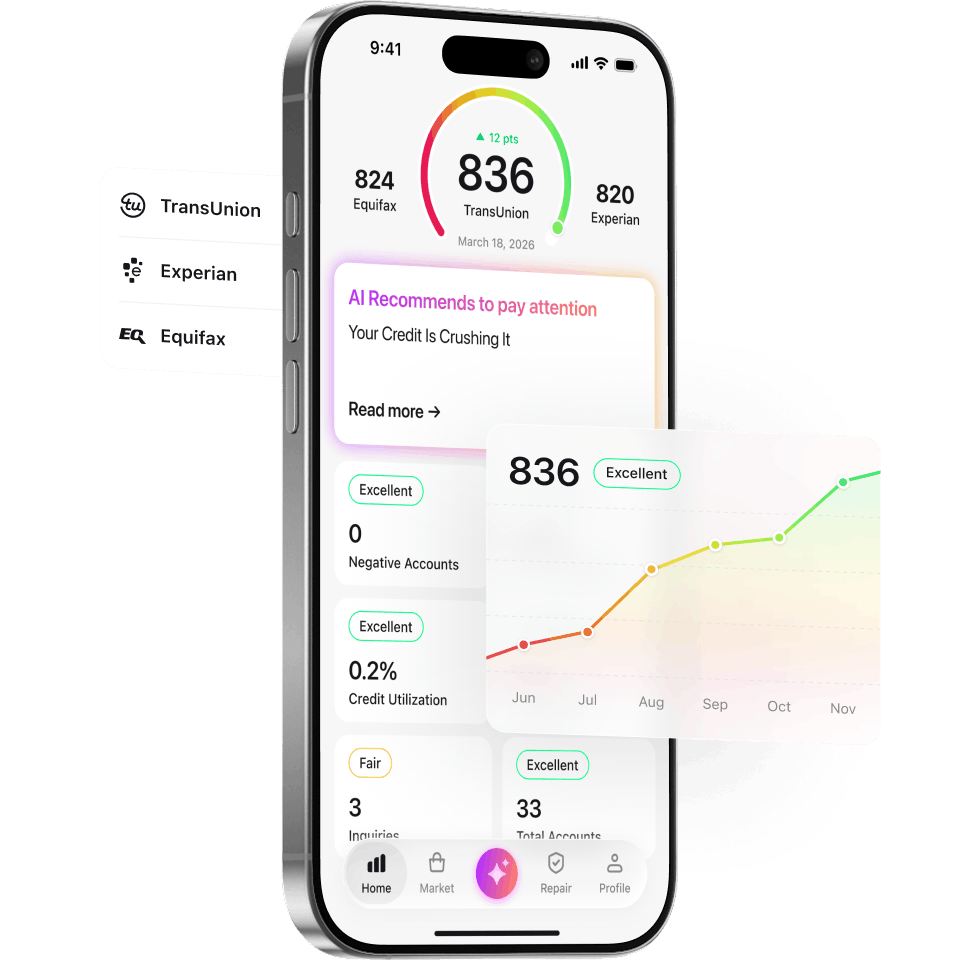
Download Credit Booster AI, free on iOS and Android. It scans your credit report, spots errors dragging your score, and generates dispute letters to qualify for better transfers or loans faster.
Pay More Than Minimums: The Game-Changer for Any Plan
No matter your credit card debt payoff plan, supercharge it: add $20-200+ monthly to principal. Automate it.
- $50 extra on $5,000 at 20%? Saves $1,000 interest, pays off 2 years early[1][2][4].
- Track via apps. Cut cable ($100/month)? Boom, extra debt killer.
UMCU says consistency trumps all. Got a windfall? Lump-sum it. Celebrate zeros[4].
Budgeting Hacks to Free Up Cash for Debt
Strategies flop without cash flow. Reduce credit card debt starts here:
- Track everything. Apps like Mint: income minus expenses = debt fund[4].
- Slash non-essentials. Ditch subscriptions (average $200/year saved). Cash/debit only. Disable one-click Amazon[3].
- Negotiate rates. Loyal? Call issuers, many drop 2%[4].
- Windfall rule. Tax refund? 100% to debt.
One case: Cut insurance 50%, consolidated five loans to three, debt halved in a year.
Protect Your Credit Score While Paying Off
Credit card debt strategies shine when scores rise, not fall.
- Utilization under 30%. Paydowns drop it fast[2].
- On-time payments. 35% of FICO, automate[2].
- No new apps. Inquiries hurt short-term.
- TILA ensures clear terms; dispute errors under Fair Credit Billing Act within 60 days[relevant to 1,2,4].
Post-consolidation? Scores often climb 40-60 points[2].
Busting Myths That Stall Your Progress
Think minimums work? Nope, they’re 90% interest[1][4]. Snowball always costlier? Math says avalanche wins, but 80% finish snowball due to wins[1][3]. Transfers free? 3-5% fees bite[1][4]. Anyone can win, budget beats income.
Pick your plan. Start today. Credit Booster AI helps by analyzing reports and tracking disputes, pair it with these for max speed.
(Word count: 1523)
Frequently Asked Questions
What’s the fastest way to pay off credit card debt?
The debt avalanche method targets highest rates first, saving most on interest, pair with $100+ extra monthly payments for results in 12-24 months on average balances[1][2][4].
Debt snowball vs. avalanche: Which is better for credit card debt payoff?
Avalanche saves money mathematically, but snowball wins for motivation with quick small-debt victories. Choose snowball if you’ve quit plans before; otherwise, avalanche[1][3][4].
Are balance transfers worth the fees to reduce credit card debt?
Yes, if you pay off within 12-21 months, save hundreds versus 20%+ APR, despite 3-5% fees. Plan payments strictly to dodge retroactive interest[1][4].
Can debt consolidation improve my credit score?
Often yes, lowers utilization below 30% and shifts to installment debt. Expect a small inquiry dip, then 30-60 point gains post-payoff[2][7].
How much extra should I pay monthly on credit cards?
Start with $20-50 if tight; aim $100-200. On $6,500 average debt, $100 extra saves $1,500+ interest and cuts payoff time by years[1][2][4].
Is it okay to use home equity for credit card debt consolidation?
Possible for low rates, but risky, your home’s collateral. Stick to personal loans first; TILA gives 3-day rescission[2][7].
Related research: For a deeper analysis of why paying off debt can temporarily lower your score, see our research library at JoinCreditClub.com.
Need professional help? CreditBooster.com has been helping clients rebuild their credit since 2009.
Frequently Asked Questions
What's the fastest way to pay off credit card debt?
The debt avalanche method targets highest rates first, saving most on interest, pair with $100+ extra monthly payments for results in 12-24 months on average balances.
Debt snowball vs. avalanche: Which is better for credit card debt payoff?
Avalanche saves money mathematically, but snowball wins for motivation with quick small-debt victories. Choose snowball if you've quit plans before; otherwise, avalanche.
Are balance transfers worth the fees to reduce credit card debt?
Yes, if you pay off within 12-21 months, save hundreds versus 20%+ APR, despite 3-5% fees. Plan payments strictly to dodge retroactive interest.
Can debt consolidation improve my credit score?
Often yes, lowers utilization below 30% and shifts to installment debt. Expect a small inquiry dip, then 30-60 point gains post-payoff.
How much extra should I pay monthly on credit cards?
Start with $20-50 if tight; aim $100-200. On $6,500 average debt, $100 extra saves $1,500+ interest and cuts payoff time by years.
Is it okay to use home equity for credit card debt consolidation?
Possible for low rates, but risky, your home's collateral. Stick to personal loans first; TILA gives 3-day rescission.