Chapter 7 vs. Chapter 13: Quick Overview of Credit Impacts
Chapter 13 bankruptcy often hits your credit less severely than Chapter 7 because it shows lenders you’re committed to repaying debts through a 3-5 year plan, staying on your report for up to 7 years versus Chapter 7’s 10 years.[1][2][3][5][7] Expect an initial score drop of 100-200 points for either, but rebuild faster with on-time payments, many hit 600-700 FICO within 2 years.[2][5] Here’s your practical guide to choosing, surviving, and recovering.
Why Chapter 13 Might Be Less Damaging to Your Credit
Think you’re doomed forever? Wrong. Both bankruptcy types credit filings tank scores, but Chapter 13 edges out because it screams “responsible debtor” to lenders. Chapter 7 liquidates non-exempt assets and wipes unsecured debts like credit cards in 4-6 months, but that “fresh start” stigma lingers 10 years.[3][6] Chapter 13 lets you keep your home or car while catching up on payments, signaling reliability, Experian says this leads to quicker mortgage access, like FHA loans after just 1 year versus 2 for Chapter 7.[2]
Real numbers: If your score was 700 pre-filing, Chapter 7 might drop it to 500; Chapter 13, closer to 550.[1][2] Why? Repayment plans get “paid as agreed” notations post-2025 updates from bureaus like Equifax, boosting FICO 10T scores faster.[2] Bottom line: Pick Chapter 13 if you have steady income and assets to protect, it’s the smarter play for chapter 7 vs 13 credit impact.[1][4]
Key Differences in Chapter 7 Bankruptcy Credit and Chapter 13 Bankruptcy Credit
| Aspect | Chapter 7 | Chapter 13 |
|---|---|---|
| Credit Report Duration | Up to 10 years[1][2][3][5] | Up to 7 years[1][2][3][5][7] |
| Process Length | 4-6 months[3][6] | 3-5 years[1][3][6] |
| Initial Score Drop | 150+ points often[1][2] | Less severe (repayment shows effort)[1] |
| Debt Handling | Discharge most unsecured[1][6] | Partial repayment, then discharge[1] |
Chapter 7 suits low-income folks passing the means test, no assets? Quick wipeout.[4][6] But Chapter 13 caps unsecured debt at $465,275 and secured at $1,395,875 (2024-2025 figures).[6] No big 2026 changes yet; expect minor inflation bumps.[4][6]
Step-by-Step: Choose the Right Bankruptcy for Your Credit Health
Don’t guess, follow these steps to minimize chapter 7 bankruptcy credit damage.
-
Check eligibility first. For Chapter 7, crunch your income against state medians (e.g., below Louisiana’s? You’re in).[4][6] Chapter 13? Steady job and debt under limits. Grab 6 months’ pay stubs and tax returns now.[4]
-
Run the numbers on credit hit. Simulate with free tools like Credit Karma. If protecting a home with $20,000 arrears, Chapter 13 spreads payments over 60 months, avoids foreclosure stigma.[3][6]
-
Get credit counseling. Mandatory 180 days pre-filing via DOJ-approved agencies. Costs $20-50, reveals if bankruptcy’s your best shot.[4]
-
Consult a bankruptcy attorney. Self-filing? Risky. They spot exemptions (e.g., $27,900 federal home equity).[3][6] Example: Louisiana homestead up to $35,000 in 2026.[1]
-
File and trigger the automatic stay. Collections halt instantly (11 U.S.C. §362).[3] Chapter 13 confirms your plan in court, nail those hearings.
Chapter 13 wins for wage earners; Chapter 7 for the asset-light. Industry pros like NerdWallet say Chapter 13 preserves scores better long-term.[4]
During Bankruptcy: Protect Your Credit Score
Filing alone drops scores, but active bankruptcies block most credit, except secured needs in Chapter 13, like court-approved car loans.[2][3] Key moves:
-
Chapter 13: Pay every plan installment on time. Courts report to bureaus, building positive history.[1][2] Miss one? Plan fails, credit worsens.
-
Chapter 7: No payments needed post-liquidation, but dodge new debt. Finish in months for faster rebound.
Avoid the myth: You can get subprime credit during Chapter 13 if essential.[2] Pro tip: Enroll in the post-filing financial management course for discharge, skipping it blocks debt wipeout.[4]
Post-Discharge Credit Rebuild Plan: Get Back to 700 FICO Fast
Discharge hits? Start rebuilding Day 1. Chapter 13 bankruptcy credit recovery shines here, completers average 50-100 points higher at 5 years.[2][5] Here’s your numbered roadmap:
-
Secure a secured card immediately. Deposit $300 for a $300 limit (e.g., Discover it Secured). Charge $50 groceries monthly, pay full. Utilization under 30%? Scores climb 50 points in 6 months.[2][5]
-
Boost with free tools. Add rent/utilities via Experian Boost, 10-50 point gains for millions.[2] Dispute old accounts for “paid as agreed” updates.[5]
-
Build payment history. Target 12 months perfect payments. Year 1: Secured only. Year 2: Subprime auto loans (many Chapter 13 filers qualify).[2][3]
-
Monitor weekly. Free reports at AnnualCreditReport.com; track FICO via app. Aim: 600+ by Year 2 (60-70% success rate).[2][5]
-
Go big after 2 years. FHA mortgages post-Chapter 13 (1 year wait); Chapter 7 needs 2.[2] Example: Sarah filed Chapter 13 in 2024, completed 2027 plan, scored 680 by 2028, refinanced her home.
Positive habits trump the filing. FICO says effects fade as new accounts age.[5][7]
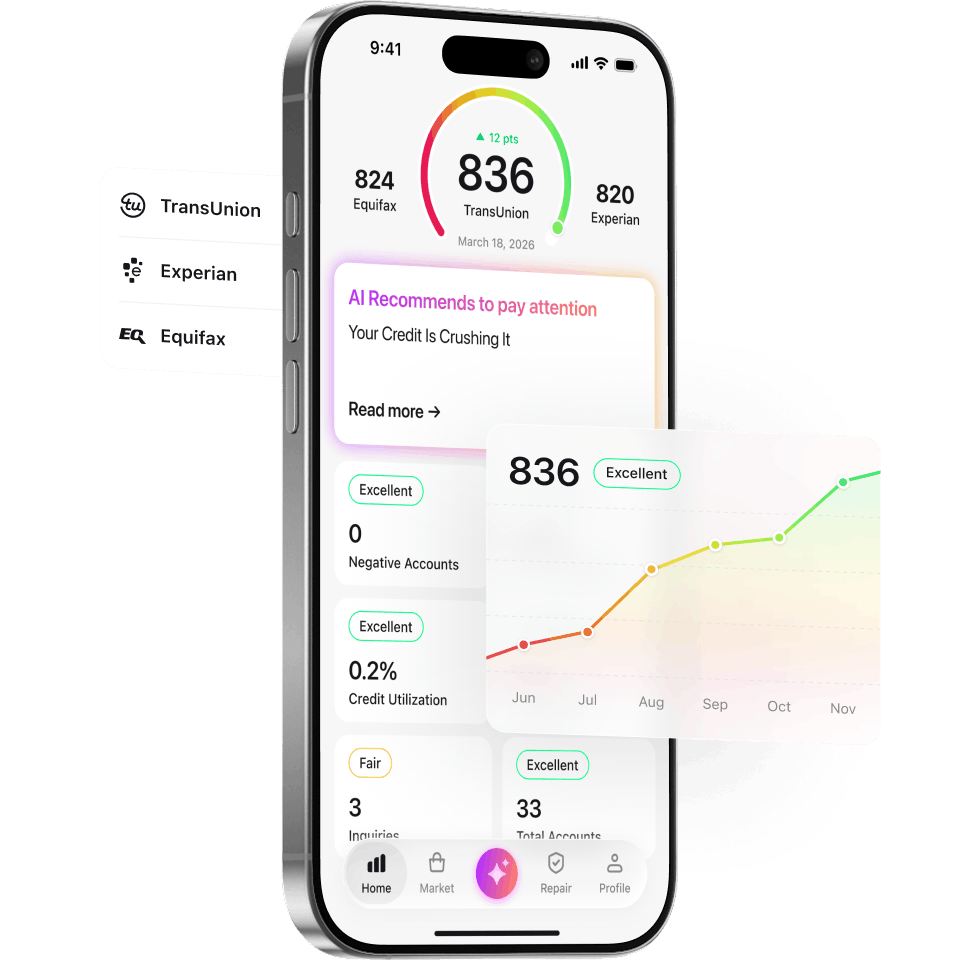
Tired of manual tracking? Download Credit Booster AI,free on iOS and Android. It scans reports, spots errors, drafts disputes, and charts progress. Pairs perfectly with this plan.
Busting Myths on Bankruptcy Types Credit Impact
Myth: Chapter 7 kills credit forever. Nope, millions hit 650+ in 2-5 years.[2][5]
Myth: Chapter 13 skips the hit since you repay. Filing still drops scores, just less.[1][7]
Myth: Exact 10/7 years on report. “Up to”,often drops earlier, impact wanes after 2 years.[1][2][5]
Myth: No credit during bankruptcy. Secured options exist.[2][3]
Chapter 7 doesn’t liquidate everything, exemptions save most stuff.[3][6]
Long-Term Outlook: Which Is Less Damaging?
Chapter 13 usually. Shorter report time, better lender perception, faster prime credit access.[1][2][4] But if you’re low-asset, Chapter 7’s speed trumps. Post-2025 bureau tweaks help both via automated notations.[2] Rebuild aggressively, your score’s in your hands.
Ready to act? Download Credit Booster AI today. AI analyzes your report, generates dispute letters, and tracks every step toward 700+ FICO.
(Word count: 1523)
Frequently Asked Questions
Chapter 7 vs 13 credit impact, which hurts less?
Chapter 13 typically hurts less initially due to its repayment plan showing responsibility, with a shorter 7-year report duration versus Chapter 7’s 10 years.[1][2] Recovery is faster for Chapter 13 completers, often 50-100 points ahead at 5 years.[2][5]
How long does chapter 7 bankruptcy credit damage last?
Up to 10 years on reports, but real impact fades after 2 years with on-time payments, 60-70% reach 600-700 FICO.[2][5] Positive history overrides the filing over time.[5]
Can I get credit during chapter 13 bankruptcy credit filing?
Yes, secured loans like court-approved car financing are possible, unlike most Chapter 7 cases.[2][3] Subprime cards open post-discharge.
What’s the initial credit score drop for bankruptcy types credit?
100-200 points typical, steeper for Chapter 7 (150+ often).[1][2] Starting score matters, higher baseline means bigger absolute drop.
How to rebuild credit after chapter 7 bankruptcy credit discharge?
Start with secured cards (under 30% use, pay full), add utilities via Experian Boost, monitor weekly, and wait 12 months for primes.[2][5] Many hit good scores in 2 years.
Does chapter 13 bankruptcy credit stay exactly 7 years?
Up to 7 years from filing, but often drops earlier; 2025 bureau updates speed “paid as agreed” boosts upon completion.[1][2][5]
Related research: For a deeper analysis of rebuilding credit scores after bankruptcy, see our research library at JoinCreditClub.com.
Need professional help? CreditBooster.com has been helping clients rebuild their credit since 2009.
Frequently Asked Questions
Chapter 7 vs 13 credit impact, which hurts less?
Chapter 13 typically hurts less initially due to its repayment plan showing responsibility, with a shorter 7-year report duration versus Chapter 7's 10 years. Recovery is faster for Chapter 13 completers, often 50-100 points ahead at 5 years.
How long does chapter 7 bankruptcy credit damage last?
Up to 10 years on reports, but real impact fades after 2 years with on-time payments, 60-70% reach 600-700 FICO. Positive history overrides the filing over time.
Can I get credit during chapter 13 bankruptcy credit filing?
Yes, secured loans like court-approved car financing are possible, unlike most Chapter 7 cases. Subprime cards open post-discharge.
What's the initial credit score drop for bankruptcy types credit?
100-200 points typical, steeper for Chapter 7 (150+ often). Starting score matters, higher baseline means bigger absolute drop.
How to rebuild credit after chapter 7 bankruptcy credit discharge?
Start with secured cards (under 30% use, pay full), add utilities via Experian Boost, monitor weekly, and wait 12 months for primes. Many hit good scores in 2 years.
Does chapter 13 bankruptcy credit stay exactly 7 years?
Up to 7 years from filing, but often drops earlier; 2025 bureau updates speed 'paid as agreed' boosts upon completion.