What Are Authorized User Tradelines and How Do They Boost Your Credit?
Authorized user tradelines let you piggyback on someone else’s solid credit card history to jumpstart your own score, think adding a 15-year-old account with perfect payments and a $50,000 limit to your report.[1][4] This authorized user credit boost hits key FICO factors: payment history (35% of your score), utilization (keep it under 30%), and average account age.[4][6] For thin-file folks with little credit, expect 50-250 points in 1-3 months.[1][3]
It’s called piggybacking credit because you’re riding the primary holder’s coattails without touching the card or owing a dime.[2] Vendors like Priority Tradelines sell spots on these “seasoned” accounts, often with money-back guarantees if it doesn’t post.[1] But lenders are wising up, sudden old accounts can trigger flags, dropping scores or killing approvals.[5][6]
Ready to try? Here’s your step-by-step guide to doing it right, risks included.
Step-by-Step: How to Get an Authorized User Tradeline
Follow these numbered steps for a tradeline credit repair play that actually works. Skip if you’ve got delinquencies, they’ll tank the effect.[1]
-
Check your fit first. Pull free reports from AnnualCreditReport.com. Thin file (under 3 accounts, no history)? Perfect. Recent lates or collections? Walk away, boosts fizzle.[1][3]
-
Pick a killer tradeline. Hunt vendors for 10+ years old, $50K+ limit, under 10% utilization, zero lates. Example: A Chase Sapphire Preferred with 12 years and $60K limit could slash your utilization from 50% to 15% overnight.[1][4][6] Avoid cheapies; they flop.
-
Buy securely. Use sites like GFS Group or Boost Credit 101. Pay $200-1,000+ for 1-3 months (prices vary by specs).[1][7] Give your SSN, they add you legally. No card arrives; you’re invisible to the account.[2][6]
-
Wait and watch. It posts 30-60 days later, end of billing cycle to Equifax, Experian, TransUnion.[1][4] Track via Credit Karma or myFICO. Saw a real user jump 85 points in 45 days on a $40K Visa.[3]
-
Time your moves. Add before applying for mortgages or autos, lenders scrutinize now.[5] Get 2-3 max; banks flag “abuse” over three and purge ‘em.[7]
-
Exit clean. Ask removal after 2 cycles. It lingers 60 days post-drop, but primary slip-ups (like a late payment) hit you too.[1][6][7]
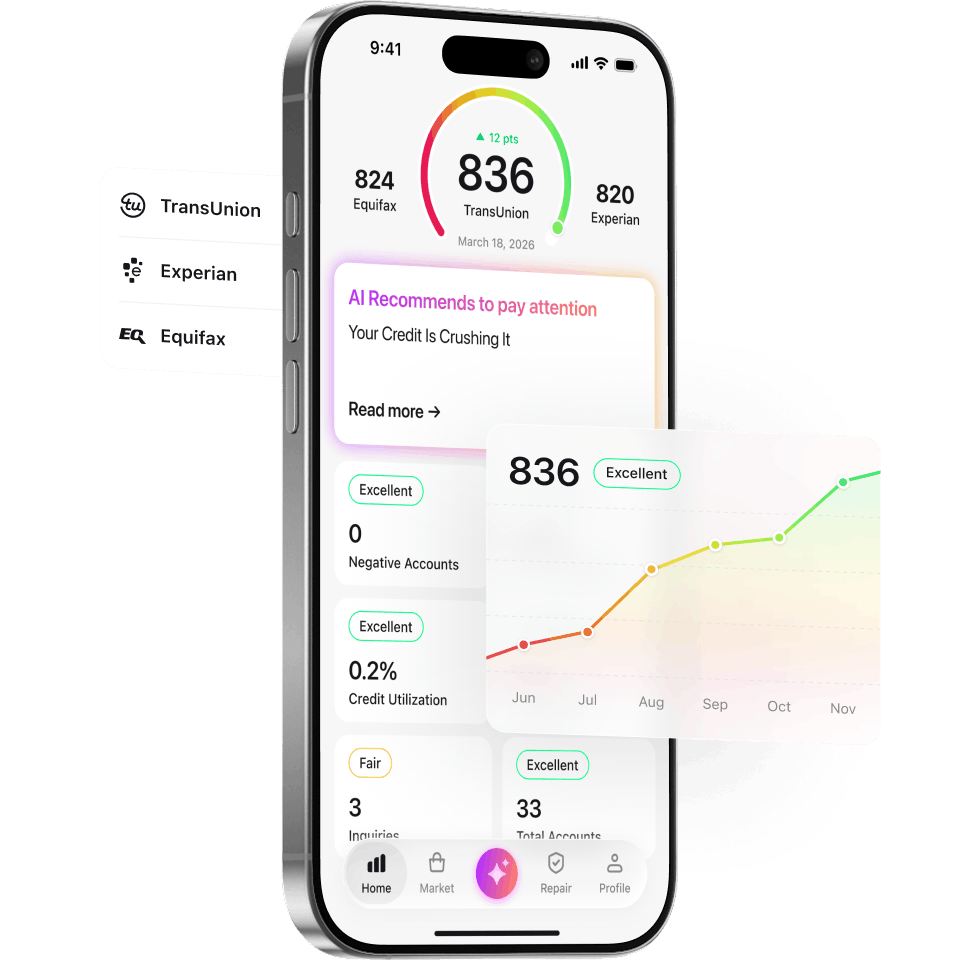
Download Credit Booster AI, free on iOS and Android. It scans your report for errors, crafts disputes, and tracks authorized user tradeline progress alongside.
Real Examples of Authorized User Credit Boosts
Numbers don’t lie. Take Sarah, thin file at 580 FICO. Added to a 14-year, $75K Amex (5% util). Score hit 720 in 60 days, util dropped to 8%, age factor soared.[1] Or Mike, post-bankruptcy: +70 from a $50K tradeline, enough for a car loan.[3][6]
Business owners love it too. Renters snag apartment approvals 20% faster with that instant history.[3] But John? Existing lates meant +12 points only. Moral: Clean slate wins big.[1]
The Risks: Why Tradelines Aren’t a Free Lunch
Piggybacking sounds sweet, but here’s the gut punch. Lenders spot “sudden” old accounts via algorithms, boom, ignored or score crash.[5][6] Removal (yours or theirs) drops you 50+ points fast.[1][7]
Costs sting: $500 average for premium, gone in months.[1] Scams lurk, fake vendors steal SSNs.[2][4] No control: Primary racks up debt? Your score suffers.[6] And ethics? It’s legal under ECOA, but creditors call it deceptive, flirting with fraud vibes.[3][4][5]
| Pro | Con |
|---|---|
| 50-250 point jumps for thin files[1][3] | Lenders flag and ignore[5][6] |
| Quick 30-60 day results[1][4] | $200-1,000+ cost, temporary[1][7] |
| No liability[2][4] | Score drops on removal[1][7] |
Vendors push it as tradeline credit repair gold; experts say pair it wisely or skip.[4][5]
Costs of Buying Authorized User Tradelines
Expect $100-300 for basic (short history, low limit) up to $2,000 for elite (20+ years, $100K+).[1] Free alternative? Ask family. But strangers via vendors charge for vetted perfection, money-back if no post.[7][8]
Worth it? For a $300K mortgage at 6.5% vs. 5.5% (saved $25K over 30 years)? Maybe. Run your math.
Legality of Piggybacking Credit: Safe or Shady?
Fully legal, no ban on adding AUs or selling spots.[3][4] ECOA protects it; you’re not liable.[4] But regulators eye fraud, lenders scrub “schemes.”[3][5] Banks like Chase report AUs, but overdo it and poof, gone.[7]
Stick to reputable spots. Credit Booster AI flags shady patterns in your report too.
Better Alternatives to Buying Tradelines
Don’t love the risks? Build primary tradelines you control.[2]
-
Secured cards: Deposit $200, get $200 limit. On-time pays build real history. Capital One Platinum: 6 months to 700.[3]
-
Credit-builder loans: Borrow $1,000, pay monthly into savings. Self.inc does it, util drops, score +60 in year.[2]
-
Family AU for free: Mom’s 20-year Visa? Gold. Confirm they report to bureaus first.[6]
Tradelines sprint; these marathon. Combine ‘em, add a tradeline atop a secured card for hybrid wins.[4]
When Authorized User Tradelines Fail (And How to Avoid It)
Myth: Instant 100+ for all. Nope, delinquencies kill it.[1] Myth: Permanent. Stays till removed.[4] Myth: Get the card. Never.[6]
Avoid by vetting: Demand proof of specs, vendor reviews. Monitor weekly. If no boost in 60 days, dispute or refund.[1]
Ever wonder why your buddy’s tradeline bombed? Probably high util or non-reporting issuer.[6]
Combining Tradelines with Credit Repair Tools
Layer it. Fix errors first (35% of reports have ‘em), then tradeline.[1] Credit Booster AI automates: Analyzes reports, generates letters, tracks FICO jumps from your new authorized user tradeline.[1]
Users report 40 extra points from disputes alone, plus tradeline magic.
Final Tips for Max Piggybacking Credit Impact
- Limit to 2-3; more screams abuse.[7]
- Diversify: Mix revolving (cards) and installment.[4]
- Time removals post-approval.[6]
- Rebuild after: Pay down debts, automate bills.
This isn’t magic, it’s strategy. Done right, authorized user tradelines shortcut to 700+ FICO. Wrong? Back to square one.
Download Credit Booster AI today, your sidekick for disputes and monitoring while tradelines work.
(Word count: 1523)
Frequently Asked Questions
What is an authorized user tradeline exactly?
It’s you as an authorized user on a stranger’s prime credit card, piggybacking their history onto your report for a quick score bump, no card or payments needed.[1][2][4]
How much does an authorized user credit boost really cost?
Basic ones run $100-500; premium (high-limit, aged) hit $1,000-2,000 for 1-3 months. Free from family, but less control.[1][7]
Are authorized user tradelines legal in 2026?
Yes, protected by ECOA, no federal ban. Lenders frown and may ignore them, but buying spots isn’t illegal.[3][4][5]
How long do tradelines stay on my credit report?
They post in 30-60 days, last as long as you’re added (months), then linger 60 days post-removal. Not forever.[1][4][6]
Can piggybacking credit hurt my score?
Absolutely, if primary messes up, gets removed, or lenders flag it. Drops of 50+ points happen.[1][5][7]
What’s better than buying tradelines for credit repair?
Primary accounts like secured cards or builder loans you control, slower but permanent, no flags.[2][3] Pair with apps like Credit Booster AI for errors.
Related research: For a deeper analysis of authorized user tradeline strategies, see our research library at JoinCreditClub.com.
Need professional help? CreditBooster.com has been helping clients rebuild their credit since 2009.
Frequently Asked Questions
What is an authorized user tradeline exactly?
It's you as an authorized user on a stranger's prime credit card, piggybacking their history onto your report for a quick score bump, no card or payments needed.
How much does an authorized user credit boost really cost?
Basic ones run $100-500; premium (high-limit, aged) hit $1,000-2,000 for 1-3 months. Free from family, but less control.
Are authorized user tradelines legal in 2026?
Yes, protected by ECOA, no federal ban. Lenders frown and may ignore them, but buying spots isn't illegal.
How long do tradelines stay on my credit report?
They post in 30-60 days, last as long as you're added (months), then linger 60 days post-removal. Not forever.
Can piggybacking credit hurt my score?
Absolutely, if primary messes up, gets removed, or lenders flag it. Drops of 50+ points happen.
What's better than buying tradelines for credit repair?
Primary accounts like secured cards or builder loans you control, slower but permanent, no flags. Pair with apps like Credit Booster AI for errors.