Fix Credit Report Errors: Why This Is Worth Your Evening
The FTC’s national accuracy study found that one in five consumers had a confirmed error on at least one of their three credit reports, and one in twenty had an error serious enough to make their loans more expensive. Those are the best odds in credit repair: an error is the one negative item the law forces off your file on a deadline, for free.
This page is the process, end to end. If you want to know what you are hunting for first, the field guide to the most common credit report errors catalogs them with real examples.
Step Zero: Get All Three Reports
Pull Equifax, Experian and TransUnion at AnnualCreditReport.com, free every week. All three matters: the bureaus do not share fixes, and an error frequently appears on one file and not the others. Read every tradeline, every balance, every date. Mark anything that does not match your records.
The seven error types worth hunting: accounts that are not yours, a mixed file where someone else’s data landed on yours, wrong account status such as a paid account showing delinquent, wrong dates on a delinquency, wrong balances or credit limits, the same debt listed twice, and negatives too old to report, generally seven years for most items and ten for Chapter 7 bankruptcy.
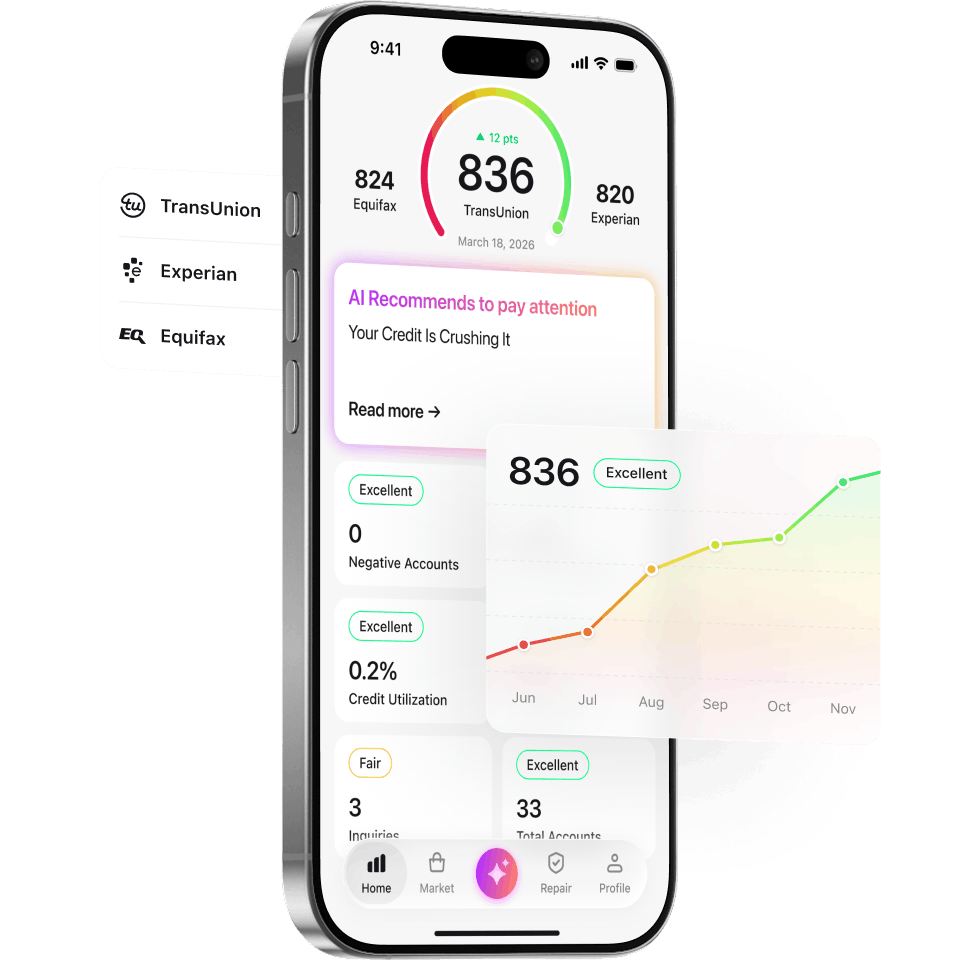
Reading three reports line by line is the part most people skip. Download Credit Booster AI, free on iOS and Android, and it reads all three for you and flags the items that look wrong.
The FCRA Process, Step by Step
The Fair Credit Reporting Act gives the dispute process real teeth, and the deadlines are the teeth.
- Write a dispute letter to each bureau showing the error. Your name and address, each item identified, why it is wrong, and copies of your proof. The CFPB publishes sample letters. Certified mail gives you a dated paper trail.
- The bureau has 5 business days to forward your dispute and evidence to the furnisher, the company that reported the data.
- The investigation must finish within 30 days, extendable by up to 15 days if you send additional relevant information during the review.
- Anything that cannot be verified must be deleted. That is the core of FCRA Section 611: unverifiable means removed, not “benefit of the doubt.”
- Written results within 5 business days of completion, including a free copy of your report if the dispute changed it.
- Dispute with the furnisher too. The CFPB recommends both tracks, because correcting the source stops the error from flowing back on the next monthly update. Furnishers generally must investigate within 30 days as well.
- Deleted items cannot quietly return. Reinsertion requires the furnisher to certify the item is complete and accurate, and the bureau must notify you within 5 business days of any reinsertion.
For the exact wording that invokes your right to see the file behind an item, the 609 dispute letter guide has the template, and the broader walkthrough with screenshots is how to dispute your credit report step by step.
When the Answer Comes Back “Verified”
Verified does not mean true. It means the furnisher told the bureau the data matched its records. Your moves, in order of effort:
- Round two with better evidence. A bank statement beats an assertion. A payoff letter beats both.
- Go at the furnisher directly with the same evidence, in writing.
- File a CFPB complaint at consumerfinance.gov/complaint. Companies must respond, and the complaint record helps if the dispute ever becomes a legal claim.
- Add a statement of dispute to your file, up to 100 words that future lenders see beside the item.
What you should not do is fire identical letters every week. Bureaus can dismiss repeat disputes with nothing new as frivolous, which is why each round needs new documentation.
What This Means For Your File
An error on a credit report is a legal claim you have not filed yet. The process costs stamps, runs on federal deadlines, and removes the only negatives that can be forced off a file, the false ones. Clearing genuine errors typically moves a score 30 to 60 points, over one to a few months, when a real error was doing real damage.
Credit Booster AI reads all three bureau reports, flags the items that look inaccurate, drafts the challenge letters for you to approve, and tracks what came off after each round.


Plans start at $9.99 a month with a 7-day free trial.
Frequently Asked Questions
How long does it take to fix a credit report error?
The legal clock is concrete: a bureau must finish its reinvestigation within 30 days of receiving your dispute, extendable by up to 15 days if you send relevant information mid-review, and must mail you written results within 5 business days of finishing. So one clean round runs four to seven weeks. Stubborn items that need a second round with better evidence, or a furnisher-side dispute, take longer.
Can I fix credit report errors myself for free?
Yes, completely. The FCRA requires bureaus to investigate disputes free of charge, and your reports are free every week at AnnualCreditReport.com. Companies that fix errors for a fee use the same process you can, and under the Credit Repair Organizations Act they cannot legally charge you before their work is done or promise results.
Do I dispute with the credit bureau or the creditor?
Both, and the CFPB says to start with the bureaus. The bureau dispute triggers the FCRA’s deadlines and forces verification. Disputing with the furnisher, the creditor or collector that reported the data, fixes it at the source so the same error does not flow back next month. Send each its own letter with your evidence.
Will fixing a credit report error raise my score?
When the error was hurting you, yes. A wrong balance can inflate utilization, and a wrongly reported late payment strikes at the largest factor in your score. Clearing genuine errors typically moves a score 30 to 60 points, over one to a few months. Fixing a misspelled name or old address will not move a score, but it prevents mixed-file errors later.
What if the bureau says the error was verified?
You have four moves: dispute again with stronger evidence, dispute directly with the furnisher, file a complaint with the CFPB, or add a 100-word statement of dispute to your file. A verified result means the furnisher told the bureau the data was right, it does not make the data right, and better documentation wins second rounds.
Can a deleted error come back on my report?
Only under strict conditions. Reinsertion is legal only if the furnisher certifies the information is complete and accurate, and the bureau must notify you in writing within 5 business days of putting it back. If a deleted item reappears without that notice, that is itself an FCRA violation worth a CFPB complaint.
Related reading: Start with what to hunt for in the most common credit report errors, grab exact wording from the 609 dispute letter guide, and if bad credit is the bigger picture, the full plan is how to fix bad credit fast.
Sources
Every claim on this page traces to one of these, checked on July 25, 2026.
By the numbers
Consumers with a confirmed error on at least one report
1 in 5
The FTC's national accuracy study, the benchmark figure on report errors.
FTC, credit report accuracy study, July 25, 2026
Errors serious enough to change loan terms
5%
One consumer in twenty was paying more for credit because of a report error.
FTC, credit report accuracy study, July 25, 2026
Days a bureau has to investigate
30
Extendable by up to 15 days if you add information mid-review. Unverified items must come off.
FCRA Section 611, 15 U.S.C. 1681i, July 25, 2026
Source: FTC, credit report accuracy study. Pulled July 25, 2026.
Fixing a credit report error, start to finish
The seven steps of the federal dispute process, with the deadlines the law sets.
Pull all three of your credit reports
Free every week at AnnualCreditReport.com. An error often sits on one bureau's file and not the other two, so you need all three.
Mark every error, by type
Accounts that are not yours, mixed files, wrong account status, wrong dates, wrong balances or limits, duplicate debts, and negatives too old to report.
Gather your proof
Statements, payoff letters, a copy of your ID. Send copies, never originals, and keep everything you mail.
File a dispute with each bureau that shows the error
In writing, with your evidence attached. The bureau must pass your dispute to the company that furnished the data within 5 business days.
Dispute with the furnisher too
The CFPB advises going to the source as well as the bureau, so the bad data stops flowing before the next update.
Wait out the investigation
The bureau has 30 days, extendable by up to 15 more if you add information mid-review, then must send written results within 5 business days of finishing.
Escalate if the error survives
Re-dispute with new evidence, file a CFPB complaint, or add a statement of dispute to your file. Deleted items cannot quietly return: reinsertion requires furnisher certification and notice to you within 5 business days.
Source: CFPB, how to dispute an error on your credit report. Pulled July 25, 2026.
Loving This Info? You'll Love Our App.
Everything you just read, plus AI-powered tools to understand and master your credit. 7 day free trial.
Get the AppFrequently Asked Questions
How long does it take to fix a credit report error?
The legal clock is concrete: a bureau must finish its reinvestigation within 30 days of receiving your dispute, extendable by up to 15 days if you send relevant information mid-review, and must mail you written results within 5 business days of finishing. So one clean round runs four to seven weeks. Stubborn items that need a second round with better evidence, or a furnisher-side dispute, take longer.
Can I fix credit report errors myself for free?
Yes, completely. The FCRA requires bureaus to investigate disputes free of charge, and your reports are free every week at AnnualCreditReport.com. Companies that fix errors for a fee use the same process you can, and under the Credit Repair Organizations Act they cannot legally charge you before their work is done or promise results.
Do I dispute with the credit bureau or the creditor?
Both, and the CFPB says to start with the bureaus. The bureau dispute triggers the FCRA's deadlines and forces verification. Disputing with the furnisher, the creditor or collector that reported the data, fixes it at the source so the same error does not flow back next month. Send each its own letter with your evidence.
Will fixing a credit report error raise my score?
When the error was hurting you, yes. A wrong balance can inflate utilization, and a wrongly reported late payment strikes at the largest factor in your score. Clearing genuine errors typically moves a score 30 to 60 points, over one to a few months. Fixing a misspelled name or old address will not move a score, but it prevents mixed-file errors later.
What if the bureau says the error was verified?
You have four moves: dispute again with stronger evidence, dispute directly with the furnisher, file a complaint with the CFPB, or add a 100-word statement of dispute to your file. A verified result means the furnisher told the bureau the data was right, it does not make the data right, and better documentation wins second rounds.
Can a deleted error come back on my report?
Only under strict conditions. Reinsertion is legal only if the furnisher certifies the information is complete and accurate, and the bureau must notify you in writing within 5 business days of putting it back. If a deleted item reappears without that notice, that is itself an FCRA violation worth a CFPB complaint.