What Credit Score Do You Need to Finance a Pool?
Here is the short answer: it depends on the type of loan. Unsecured pool loans and home-improvement loans start anywhere from about 580 to 680 depending on the lender, while a home equity loan or a HELOC usually needs 720 and up.
A pool is a big purchase, so lenders offer more than one way to pay for it, and each path has a different bar. An unsecured personal loan is the most forgiving on score but carries a higher rate. A home equity loan or HELOC asks for a stronger score and real equity in your house, and rewards you with a lower rate.
Across every path, the best pricing goes to higher scores, generally 700 and up. So the question is less whether you can finance a pool and more which route fits your score and your equity.
Ways to Finance a Pool
| Financing type | Typical minimum score | What to know |
|---|---|---|
| Unsecured personal or home-improvement loan | About 580 to 680, varies by lender | No collateral, faster to fund, higher rate. |
| Home equity loan or HELOC | Usually 720 and up | Secured by your home, lower rate, requires enough equity. |
| Best rates on any path | 700 and up | Where the lowest pricing opens up. |
If you have strong credit and equity, the home equity route is usually cheapest. If you would rather not put your house on the line, or you are short on equity, the personal-loan route is available at a lower score for a higher rate.
What Lenders Really Score
Your credit score is not one mysterious number. It is built from five factors, and the two biggest are the two you can move fastest. Payment history is about 35 percent and amounts owed is about 30 percent, so together they make up roughly two thirds of a FICO score. Amounts owed is mostly your credit card utilization, which you can lower in a single billing cycle, which makes these the fastest levers you have before you apply.
Beyond the Score: What Else Pool Lenders Weigh
Even a strong score is only part of the decision. Pool financing also turns on:
- Income and proof of it. Pay stubs, bank statements, or tax returns. They want to see you can carry a large payment.
- Debt-to-income ratio. Your monthly debts divided by your monthly income. A lower ratio is better, and a high one can offset a good score.
- Home equity. For a home equity loan or a HELOC, how much equity you have is essential. No equity, no secured loan.
- Soft versus hard pull. Many personal-loan lenders let you check your rate with a soft pull, then run a hard pull only when you accept.
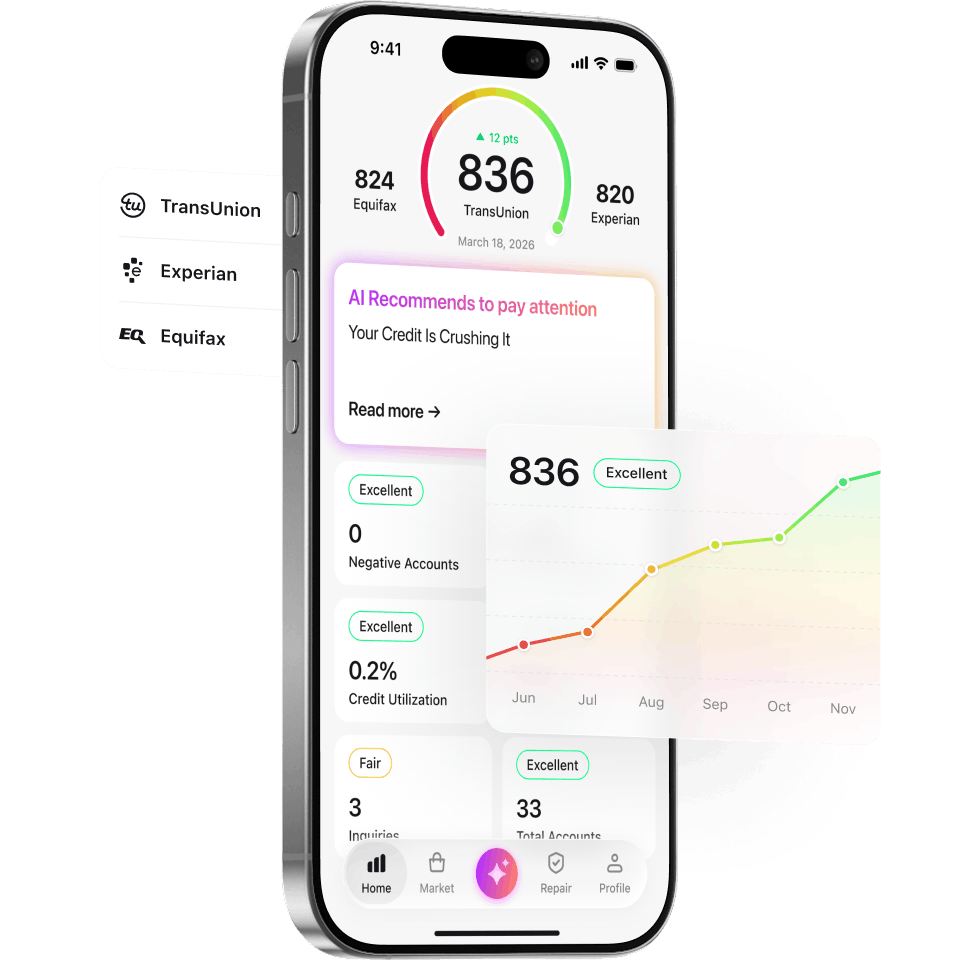
Download Credit Booster AI on iOS and Android before you apply. It reads all three of your credit reports, flags the errors that drag your score down, and shows which paydown moves lift it the most, so you qualify for the cheaper financing route.
How to Improve Your Score Before You Apply
You do not need a perfect score to finance a pool. You need to cross into the next band, because rates and options move in steps.
- Lower your card utilization. Getting balances under 30 percent of their limits, and ideally under 10 percent, is the quickest win. Amounts owed is about 30 percent of your score.
- Fix report errors. About one in five credit reports carries a mistake. Clearing a wrong late payment can lift your score fast.
- Do not open new accounts right before applying. Fresh inquiries and new credit lower your average account age at the worst time.
- Keep paying on time. Payment history is about 35 percent of the score, so a clean recent stretch matters.
A realistic 90-day improvement from these moves is 30 to 60 points. That can be the difference between an unsecured loan and qualifying for a lower-rate home equity option.
The Bottom Line
Financing a pool is very doable. Unsecured pool loans start from about 580 to 680 depending on the lender, home equity loans and HELOCs usually want 720 and up, and the best rates on any route go to 700 and up. Match the path to your score and your equity, and compare the total cost, not just the monthly payment.
Before you apply, spend a few weeks pulling down card balances and clearing errors. A 30 to 60 point move can open a cheaper route. Download Credit Booster AI on iOS and Android to see your reports, catch what is holding your score back, and fix it before you sign.
Related reading: See where your score puts you for pet financing, a wedding loan, and furniture financing. The overview lives in the credit score for a personal loan.
Sources
- Forbes Advisor, Best Pool Loans: forbes.com
- NerdWallet, Best Pool Financing Options: nerdwallet.com
- The Mortgage Reports, How To Finance a Pool: themortgagereports.com
- FICO, What Makes Up Your Credit Score (myFICO): myfico.com
Frequently Asked Questions
What credit score do you need to finance a pool?
It depends on the type of financing. Pool loans that are unsecured personal loans or home-improvement loans range in minimum from about 580 to 680, depending on the lender. Financing a pool through a home equity loan or a HELOC typically needs 720 and up. Across all of these, the best rates go to higher scores, generally 700 and up.
Can I finance a pool with a 600 credit score?
Often, yes. Some personal-loan and home-improvement lenders set their minimum as low as about 580, so a 600 can qualify with the right lender. Expect a higher rate than a top-tier borrower, and know that home equity products will be tougher at that score since they usually want 720 and up.
What credit score do I need for a home equity loan or HELOC to build a pool?
Home equity loans and HELOCs typically want a score of 720 and up, because the loan is larger and secured by your house. In exchange for the higher bar and the collateral, these products usually carry lower rates than an unsecured pool loan, provided you have enough equity.
What is the best way to finance a pool?
It comes down to your score and your equity. If you have strong credit and home equity, a home equity loan or HELOC usually offers the lowest rate. If you would rather not tie the loan to your house, or you do not have much equity, an unsecured personal loan is faster and available from about 580 to 680, at a higher rate.
What else do pool lenders look at besides my score?
Income and proof of it, your debt-to-income ratio, and, for home equity products, how much equity you actually have in the home. A strong income and a low debt-to-income ratio help on any pool loan, and enough equity is essential for a home equity loan or a HELOC.
By the numbers
Personal-loan minimum
580-680
Varies by lender.
Forbes Advisor, Best Pool Loans, July 22, 2026
Via home equity or HELOC
720+
Secured by the home, usually a lower rate.
The Mortgage Reports, How To Finance a Pool, July 22, 2026
Best rates
700+
Where the lowest pool-loan pricing opens up.
NerdWallet, Best Pool Financing Options, July 22, 2026
Source: Forbes Advisor, Best Pool Loans. Pulled July 22, 2026.
What actually moves the score a pool lender pulls
The five factors behind every FICO score, by weight. Payment history and amounts owed together are about two thirds of it.
Source: FICO, myFICO credit education (what makes up a FICO Score). Pulled July 22, 2026.
Table view
| Item | Share of your FICO Score |
|---|---|
| Payment history (whether you pay on time) | 35% |
| Amounts owed (mostly credit utilization) | 30% |
| Length of credit history (how old your accounts are) | 15% |
| New credit (recent applications and inquiries) | 10% |
| Credit mix (cards, loans, mortgage) | 10% |
Loving This Info? You'll Love Our App.
Everything you just read, plus AI-powered tools to understand and master your credit. 7 day free trial.
Get the AppFrequently Asked Questions
What credit score do you need to finance a pool?
It depends on the type of financing. Pool loans that are unsecured personal loans or home-improvement loans range in minimum from about 580 to 680, depending on the lender. Financing a pool through a home equity loan or a HELOC typically needs 720 and up. Across all of these, the best rates go to higher scores, generally 700 and up.
Can I finance a pool with a 600 credit score?
Often, yes. Some personal-loan and home-improvement lenders set their minimum as low as about 580, so a 600 can qualify with the right lender. Expect a higher rate than a top-tier borrower, and know that home equity products will be tougher at that score since they usually want 720 and up.
What credit score do I need for a home equity loan or HELOC to build a pool?
Home equity loans and HELOCs typically want a score of 720 and up, because the loan is larger and secured by your house. In exchange for the higher bar and the collateral, these products usually carry lower rates than an unsecured pool loan, provided you have enough equity.
What is the best way to finance a pool?
It comes down to your score and your equity. If you have strong credit and home equity, a home equity loan or HELOC usually offers the lowest rate. If you would rather not tie the loan to your house, or you do not have much equity, an unsecured personal loan is faster and available from about 580 to 680, at a higher rate.
What else do pool lenders look at besides my score?
Income and proof of it, your debt-to-income ratio, and, for home equity products, how much equity you actually have in the home. A strong income and a low debt-to-income ratio help on any pool loan, and enough equity is essential for a home equity loan or a HELOC.