Can a Cell Phone Bill Collection Wreck Your Credit: Not the Bill, the Collection
Your phone bill does almost nothing to your credit while you pay it. Then it can do real damage the moment it goes unpaid and hits collections. That is the whole asymmetry, and it surprises people.
Here is the honest shape of it. Carriers like Verizon and AT&T do not report your account as a normal credit line, so on-time payments earn you nothing and a paid bill is invisible to the bureaus. But miss it for about 60 days, and the carrier can charge it off and sell it to a collection agency, which reports a collection under its own name. That collection is scored like any other, and it drags your number for years.
So the danger was never the monthly bill. It is letting it slide long enough to become somebody’s collection account.
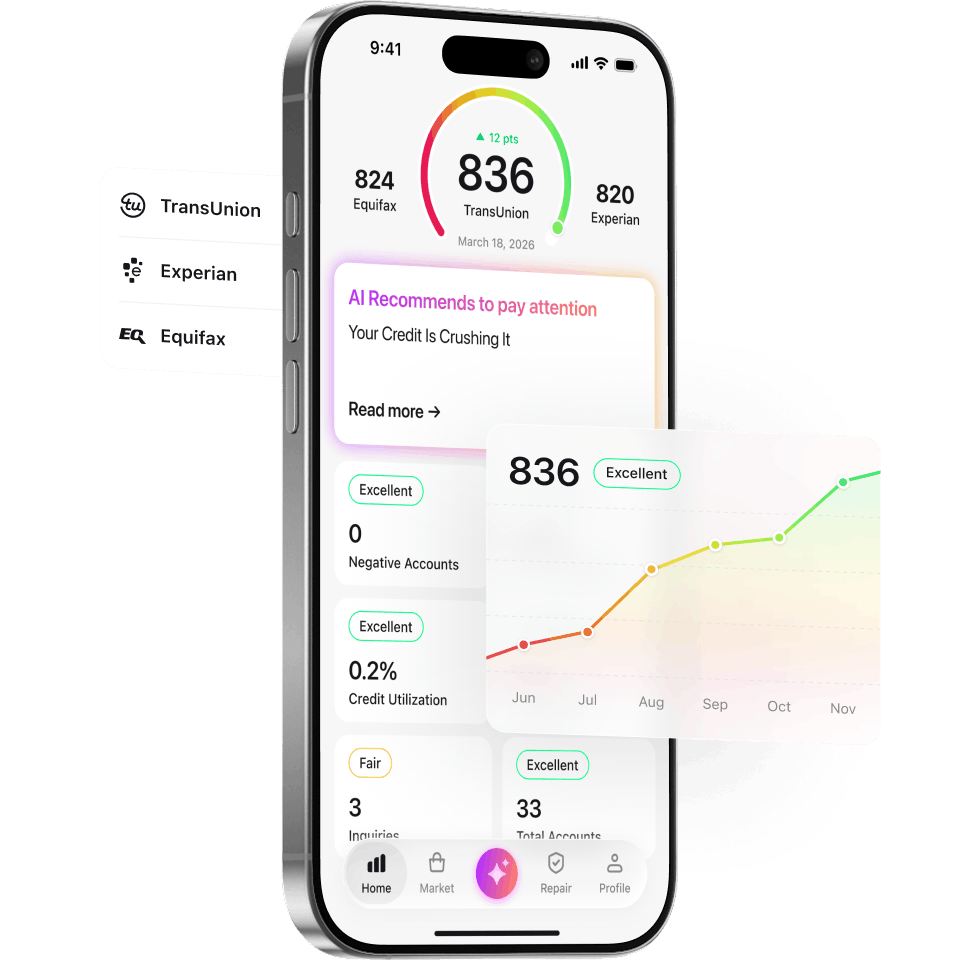
Worried a phone bill already turned into a collection on your file? Download Credit Booster AI, free on iOS and Android, and read all three reports in one place.
Why Paying On Time Does Nothing
This part frustrates people, and it is worth being straight about.
Most major carriers do not furnish your account to the credit bureaus at all. So the two years of perfect, on-time phone payments you are proud of are not building your score, because the bureaus never see them. The only way a phone bill helps your traditional credit is through a separate reporting service or a tool like Experian Boost that adds telecom payments to your file on purpose.
The concession here is a genuinely unfair one: the phone bill is happy to hurt you and unwilling to help you. It stays off your report while you pay, and only shows up when you do not. Knowing that is exactly why the unpaid case deserves attention the paid case never gets.
The 60-Day Line
There is a rough window between a missed payment and a credit hit, and it is your chance to act.
For the first couple of months, nonpayment brings late notices and maybe a suspended line, not a credit mark. Verizon postpaid accounts are often reported around 62 days late, and AT&T around 60, at which point the debt tends to move to a third-party collector. That collector then reports a collection, which is the actual credit damage. Everything before that line is a warning, not a verdict.
So the move on a missed phone bill is the same as any other: close it before it crosses into collections, because a collection is far harder to undo than a bill is to pay.
What This Means For Your File
A phone bill collection is a real derogatory mark, and it plays by collection rules: seven years from the first missed payment, scored against you, especially under the most common lender model. The good news is that these debts are often small and frequently reported with errors, which is exactly where you have leverage.
Credit Booster AI reads all three bureau reports, shows every collection and what it came from, and flags a phone-bill collection that is inaccurate, duplicated, not yours, already paid, or past its seven-year window, so you can challenge the ones that should not be there. Clearing genuine errors typically moves a score 30 to 60 points, over one to a few months, when there is a real error to clear.


Plans start at $9.99 a month with a 7-day free trial. It will not delete an accurate, unpaid collection, but it will catch the wrong ones, and phone-bill collections are wrong more often than most.
The Verdict
Can a cell phone bill collection wreck your credit? The bill itself does little while you pay it, because carriers do not report on-time payments. But an unpaid bill can be charged off around 60 days and sold to a collector, and that collection is a real, years-long derogatory mark. So the risk is entirely in letting it go unpaid.
Two things to remember. One, paying on time builds no credit here, so do not expect it to. Two, the collection is the damage, so close a missed phone bill before it crosses the 60-day line.
For handling the collector, see collection agency tactics and how to remove collections from your credit report.
Frequently Asked Questions
Does an unpaid cell phone bill hurt your credit?
It can, once it goes to collections. Carriers like Verizon and AT&T do not report your account as a normal tradeline, so a bill in good standing is invisible to the bureaus. But when it goes unpaid for around 60 days, the carrier can charge it off and sell it to a collection agency, and that agency reports a collection. That collection is a derogatory mark that can drag your score for years.
When do Verizon and AT&T report to collections?
After roughly two months of nonpayment. Verizon postpaid accounts are often reported around 62 days late, and AT&T around the 60-day mark, at which point the debt typically moves to a third-party collector. Before that you get late notices and possibly a suspended line, not a credit hit. The collection appears under the collector’s name, not the carrier’s, which is why people miss the connection.
Does paying my phone bill on time build credit?
Usually not by itself. Most major carriers do not report your on-time payments to the credit bureaus, so a perfect phone-pay history does nothing for your score on its own. If you want your phone bill to help, you generally need a separate service that reports it, or a tool like Experian Boost that adds telecom payments. The bill only touches your traditional credit when it goes unpaid and lands in collections.
How do I get a phone bill collection off my credit report?
If it is inaccurate, not yours, duplicated, already paid, or past the seven-year window, you can challenge it, and the bureau must correct or delete what it cannot verify. If it is an accurate, unpaid collection, you cannot force it off, but you can sometimes negotiate, and it is worth asking the collector in writing whether they will remove it in exchange for payment. Otherwise it ages off about seven years from the first missed payment.
How long does a cell phone collection stay on your credit?
About seven years from the date of first delinquency, the same as any collection. Paying it does not delete it, though under newer scoring models a paid collection is ignored while an unpaid one still counts. The statute of limitations for a collector to sue you is separate and often shorter, sometimes around two years, but a debt too old to sue over can still sit on your report until the seven years run out.
Related reading: See how to report your phone bill to credit, how to report utilities to the bureaus, and whether paying off collections helps. For timing, read how long collections stay on your credit.
Sources
Every claim on this page traces to one of these, checked on July 20, 2026.
By the numbers
When a carrier can report an unpaid bill
~60 days
Verizon postpaid around 62 days late, AT&T around 60, then the debt heads to a collection agency.
WalletHub, What Cell Phone Companies Report to the Credit Bureaus, July 20, 2026
How long a phone-bill collection stays
7 years
Seven years from the first missed payment, like any other collection.
CFPB, How long negative information stays on your report, July 20, 2026
Credit a paid phone bill usually builds
$0
Most carriers do not report on-time payments, so paying does not raise your score by itself.
Bankrate, Can Your Cellphone Bill Improve Your Credit Score, July 20, 2026
Source: WalletHub, What Cell Phone Companies Report to the Credit Bureaus. Pulled July 20, 2026.
Loving This Info? You'll Love Our App.
Everything you just read, plus AI-powered tools to understand and master your credit. 7 day free trial.
Get the AppFrequently Asked Questions
Does an unpaid cell phone bill hurt your credit?
It can, once it goes to collections. Carriers like Verizon and AT&T do not report your account as a normal tradeline, so a bill in good standing is invisible to the bureaus. But when it goes unpaid for around 60 days, the carrier can charge it off and sell it to a collection agency, and that agency reports a collection. That collection is a derogatory mark that can drag your score for years.
When do Verizon and AT&T report to collections?
After roughly two months of nonpayment. Verizon postpaid accounts are often reported around 62 days late, and AT&T around the 60-day mark, at which point the debt typically moves to a third-party collector. Before that you get late notices and possibly a suspended line, not a credit hit. The collection appears under the collector's name, not the carrier's, which is why people miss the connection.
Does paying my phone bill on time build credit?
Usually not by itself. Most major carriers do not report your on-time payments to the credit bureaus, so a perfect phone-pay history does nothing for your score on its own. If you want your phone bill to help, you generally need a separate service that reports it, or a tool like Experian Boost that adds telecom payments. The bill only touches your traditional credit when it goes unpaid and lands in collections.
How do I get a phone bill collection off my credit report?
If it is inaccurate, not yours, duplicated, already paid, or past the seven-year window, you can challenge it, and the bureau must correct or delete what it cannot verify. If it is an accurate, unpaid collection, you cannot force it off, but you can sometimes negotiate, and it is worth asking the collector in writing whether they will remove it in exchange for payment. Otherwise it ages off about seven years from the first missed payment.
How long does a cell phone collection stay on your credit?
About seven years from the date of first delinquency, the same as any collection. Paying it does not delete it, though under newer scoring models a paid collection is ignored while an unpaid one still counts. The statute of limitations for a collector to sue you is separate and often shorter, sometimes around two years, but a debt too old to sue over can still sit on your report until the seven years run out.