Reporting Utility Bills: They Don’t Count Until You Make Them
Paying the electric bill on time feels like it should build credit. It doesn’t, and the reason is simple.
Utility companies don’t report on-time payments. Electric, gas, water: none of them tell the bureaus you paid.
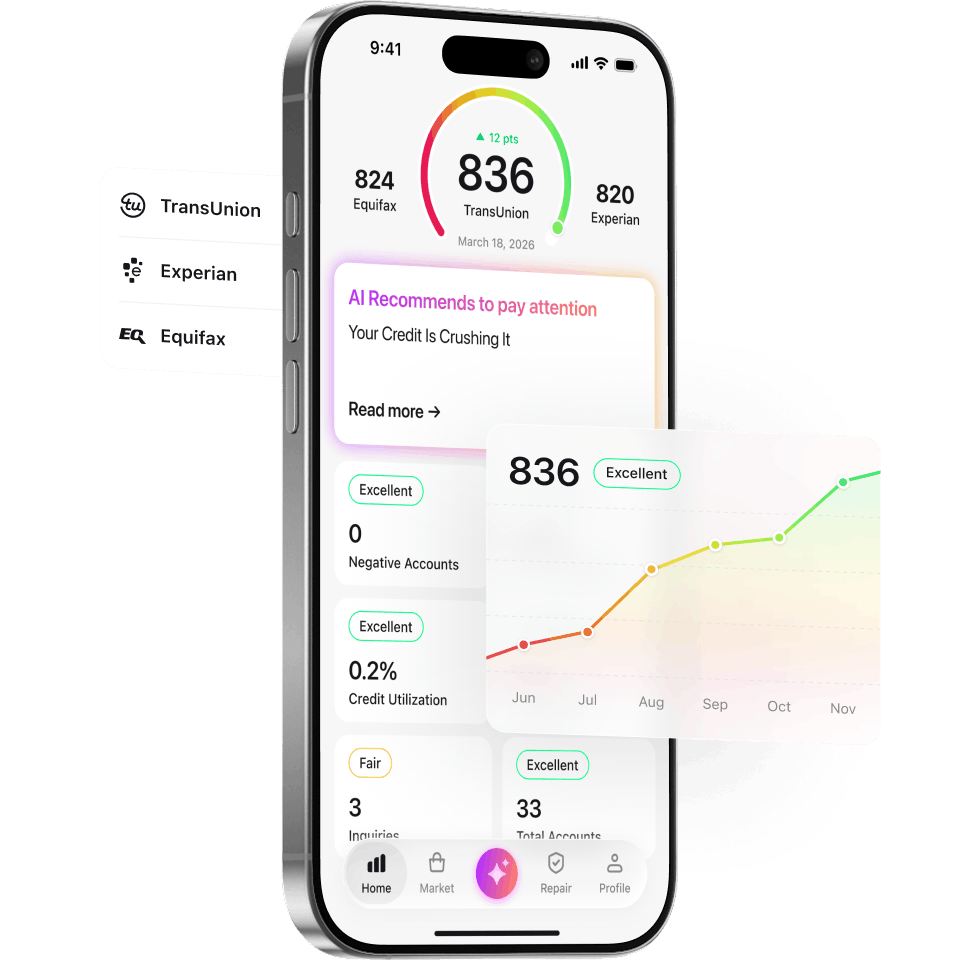
They keep credit reporting for one thing, an unpaid bill they can send to collections. So on-time utilities are invisible to your score by default, and the only utility news that reaches your report is bad news. To make the good months count, you report them yourself through a tool. And that tool won’t fix an error already on your report. Credit Booster AI reads all three reports, drafts the paperwork to challenge errors, and reports rent and bills, for $9.99 a month.
Why Utilities Aren’t Already There
It’s the same math as rent and phone. Reporting your good payments helps you, not the utility, so they don’t.
A utility furnishing on-time payments would spend money and effort for the customer’s benefit. There’s no business reason to, so they skip it and hold reporting in reserve for a default they can send to collections. That’s why years of paying the gas bill on time build nothing on their own.
The fix is a tool that furnishes the on-time payment for you, and the free one is Experian Boost.
The Steps
Getting utilities to count follows a clear order.
First, understand they aren’t reported by default, so paying on time changes nothing by itself. Start with Experian Boost because it’s free: it scans your bank history and adds on-time utility, phone and streaming payments to your Experian file. If you want more than one bureau, add a paid reporter that covers utilities, and confirm the exact bills and bureaus first. Make sure the utility is in your name, since a bill in someone else’s name won’t help you. And remember which scores count it: utilities help VantageScore 4.0 and newer FICO, not the FICO 8 most card issuers pull.
Free and Experian-only is fine for a thin file. It’s weaker if a lender pulls a bureau Boost doesn’t touch.
What Utility Reporting Can’t Do
Utility reporting is addition, and it carries the same limits as rent.
It doesn’t count on FICO 8. Utility payments help VantageScore 3.0 and 4.0 and newer FICO, but FICO 8 ignores them, so a free tool can lift a VantageScore while a card application shows no change. Our own test of Experian Boost found a modest single-digit average bump, which is about what a free single-bureau tool should do.
And it doesn’t remove anything. A wrong late payment, a charge-off, a collection: reporting new on-time utilities sits next to those without touching them. On a damaged file, utilities add a line, they don’t repair the one that’s hurting.
The Bottom Line
Utility companies won’t report your on-time payments, so the job is yours. Experian Boost does it free for one bureau, and a paid reporter can go wider for a fee. For a thin file, the free route is a sensible, no-cost thickener, as long as the account is in your name.
But keep it in proportion. Utility reporting helps modern scores, not FICO 8, and it fixes nothing on a damaged report. If your number is low because something on the file is wrong, that’s the real lever.
Credit Booster AI is built for that. It scans your Experian, Equifax and TransUnion reports, flags the errors likely dragging your score, drafts the paperwork to challenge them, and reports your rent and bills to build history, for $9.99 a month. On the right file the two together are worth 30 to 60 points. Free to download on iOS and Android, with a 7-day trial. Thin file, add the free utility route. Damaged file, start with the scan.
Related reading: See the existing guide on using utility bills to build credit, how to report your phone bill, or Experian Boost vs rent reporting.
Getting utilities to count
From why they aren't reported, to matching the tool to the score you care about.
Understand why utilities are not already there
Electric, gas and water companies do not report on-time payments to the bureaus. Like phone carriers, they mostly report you only when an unpaid bill goes to collections.
Start with Experian Boost, because it is free
Boost scans your bank history and adds on-time utility, phone and streaming payments to your Experian file. Free, instant, and Experian only. Our own test found a modest single-digit bump for most files.
Add a paid reporter if you want more than one bureau
Some rent and bill services will also report utilities to more than one bureau for a monthly fee. Confirm the exact bureaus and the exact bills before you subscribe.
Check that the utility is in your name
A bill in a roommate's or a parent's name will not help your file. The account and the bank payment both need to trace to you.
Remember which scores actually count it
Utility payments help VantageScore 4.0 and newer FICO versions. FICO 8, still the most common pull, ignores them, so treat utility reporting as a thin-file thickener, not a fix for a damaged report.
Source: Experian Boost; creditbooster.ai utility guide. Pulled July 20, 2026.
Loving This Info? You'll Love Our App.
Everything you just read, plus AI-powered tools to understand and master your credit. 7 day free trial.
Get the AppFrequently Asked Questions
Do utility bills build credit?
Not on their own. Electric, gas and water companies do not report on-time payments to the bureaus, so paying them does nothing for your credit by default. Like phone carriers, they mostly report you only when an unpaid bill goes to collections. To make on-time utilities count, you use a tool like Experian Boost that reports the payment for you.
How do I report utility payments to the credit bureaus?
Start with Experian Boost, which is free: it scans your bank history and adds on-time utility, phone and streaming payments to your Experian file. For coverage beyond one bureau, some rent and bill services will report utilities to more than one bureau for a monthly fee. Confirm the exact bills and bureaus before you subscribe.
Do utility payments help every credit score?
No. Utility payments count on VantageScore 3.0 and 4.0 and newer FICO 9 and 10T, but the FICO 8 most card issuers pull ignores them. So utility reporting can lift a VantageScore while a FICO 8 card application shows no change. Treat it as a thin-file thickener for modern scores, not a universal boost.
Does the utility have to be in my name?
Yes. A bill in a roommate's or a parent's name will not help your file, because the account and the bank payment both need to trace to you. If you want utilities to count, make sure the account is in your name and paid from your account before you set up reporting.
Is reporting utilities worth it?
For a thin file, adding on-time utilities through a free tool like Experian Boost is a reasonable, no-cost way to thicken the file. Our own test of Experian Boost found a modest single-digit average bump. For a thick file with existing accounts, it adds little, and it does nothing about errors on your report.
What if my score is low from errors, not thin history?
Then utility reporting is the wrong first move. Adding utility payments does not remove a wrong late payment or a collection. Credit Booster AI scans all three reports, drafts the paperwork to challenge errors, and reports rent and bills, for $9.99 a month, so you fix the file before thickening it with utilities.