How to Build US Credit With an ITIN: The Legal Path, No SSN Needed
You can build a real US credit file with an ITIN, no Social Security number required. The path is legal, it is not complicated, and it starts with a card that reports to the bureaus.
Here is the honest shape of it. An ITIN is a legitimate number the IRS issues, and many major banks accept it in place of an SSN on a credit application. Once you have a reporting card, your on-time payments build history under your ITIN, the same way they would under a Social Security number. It is slower than a shortcut, and there is no legal shortcut worth taking, which is the whole point of doing it this way.
So the plan is simple: get the number, get a reporting account, and feed it clean months.
Want to track your new file as it forms, across all three bureaus? Download Credit Booster AI, free on iOS and Android, and read all three reports in one place.
ITIN vs CPN: Get This Right First
Before the steps, one distinction that separates a clean credit file from a criminal charge.
An ITIN is real and legal. The IRS issues it, it is tied to you, and using it on a credit application is exactly how newcomers are supposed to build credit without an SSN. A CPN, a so-called credit privacy number, is the opposite: it is marketed as an SSN replacement, it is not government-issued, it is frequently a stolen Social Security number, and putting one on a credit application is a federal crime. If a service tells you to build credit with a “new number” that is not an ITIN, walk away. The ITIN is the door; the CPN is the trap dressed up like the door.
The ITIN Path
The steps below are the legal route in order. Each one reports real payment history to the bureaus, which is the only thing that actually builds a score.
Which Cards Accept an ITIN
You have more options than most newcomers realize, and knowing the names saves you wasted applications.
Capital One, Bank of America, Citi, Wells Fargo, and American Express accept an ITIN in place of an SSN, and so do many credit unions. For a first card, a secured option is the most reliable, because it approves thin and brand-new files: put down a refundable deposit that becomes your limit, use it lightly, and pay in full. If you have a credit history from your home country, a newcomer card such as Zolve can use that profile, and American Express can pull your home-country history through Nova Credit.
The concession worth stating: approval is not guaranteed on any specific card, and terms change, so treat a name here as a starting point to confirm, not a promise. A secured card is the option least likely to turn you down while your US file is empty.
What This Means For Your File
The real work is boring and it works: one reporting account, used lightly, paid on time, month after month. That is what turns an empty ITIN file into a score, and it is entirely legal.
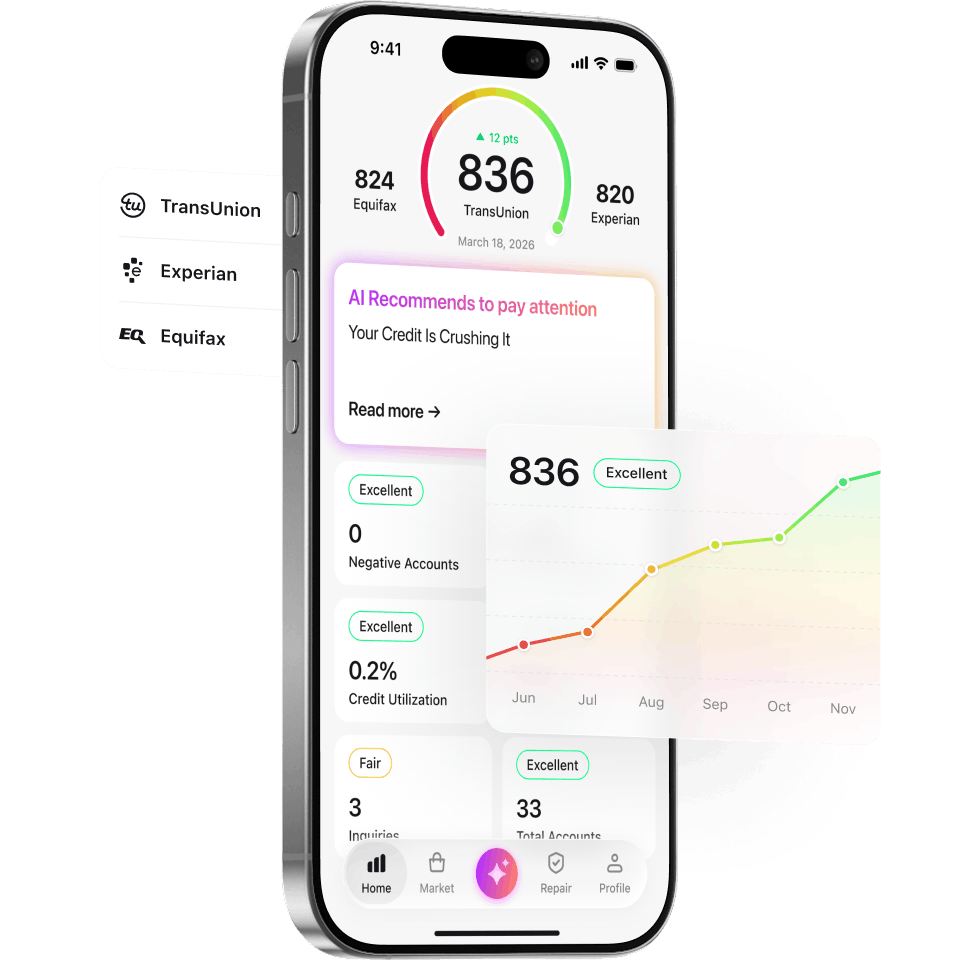
Credit Booster AI reads all three bureau reports, so you can watch your new history appear, confirm your card is actually reporting, and catch any error early. Clearing genuine errors typically moves a score 30 to 60 points, over one to a few months, when there is a real error to clear, and for a new file, catching a reporting mistake fast keeps your foundation clean.


Plans start at $9.99 a month with a 7-day free trial. It cannot open a card for you, and it will not sell you a CPN, because the ITIN is the legal path and the CPN is the crime.
The Verdict
How do you build US credit with an ITIN? Get the ITIN from the IRS, open a reporting card that accepts it, ideally a secured card, use it lightly and pay in full, then add an authorized-user account and rent reporting to thicken the file. A VantageScore can show in a month or two, a FICO score in about six months, and a strong score in a year or two of clean payments.
Two things to remember. One, an ITIN is legal and a CPN is a federal crime, so never confuse them. Two, the first reporting account is the whole foundation, so protect it with autopay and low balances.
For the broader newcomer plan, see build US credit in your first 90 days and credit repair for immigrants.
Frequently Asked Questions
Can you build credit with an ITIN instead of an SSN?
Yes. An Individual Taxpayer Identification Number, or ITIN, can be used in place of a Social Security number on many credit card applications. Once you have a card that reports to the bureaus, your on-time payments build a real US credit file under your ITIN. Capital One, Bank of America, Citi, Wells Fargo, American Express, and many credit unions accept an ITIN, and a secured card is the most reliable place to start.
Which credit cards accept an ITIN?
Several major issuers do. Capital One, Bank of America, Citi, Wells Fargo, and American Express accept an ITIN in place of an SSN, as do many credit unions. Secured cards such as those from Capital One, Wells Fargo, and OpenSky are the most dependable starting point because they approve thin or new files. Newcomer cards like Zolve use your home-country profile rather than a US credit history.
Is an ITIN the same as a CPN?
No, and this matters. An ITIN is a legitimate number the IRS issues for tax purposes, and using it on a credit application is legal. A CPN, a so-called credit privacy number, is marketed as an SSN replacement but is not government-issued, is often a stolen Social Security number, and using one on a credit application is a federal crime. If you do not have an SSN, an ITIN is the legal path; a CPN is the trap.
How long does it take to build credit with an ITIN?
A VantageScore can appear within a month or two of your first reporting account, while a FICO score generally needs about six months of history. Reaching a strong score, in the 700s, typically takes 12 to 24 months of consistent on-time payments. So the first card is the foundation, and the timeline is measured in months of clean history, not days.
How do I get an ITIN?
File IRS Form W-7 with proof of identity and foreign status, usually alongside a federal tax return, or apply through an IRS-authorized acceptance agent or certifying acceptance agent. The IRS issues the ITIN, and you then use it on bank and credit applications. It is a real, legal number tied to you, which is exactly why it works for building credit and a CPN does not.
Related reading: Compare the best credit card with no SSN, see whether Zolve is legit, and read the Zolve credit card review. Just arrived? Follow building credit in your first 90 days in the US.
Sources
Every claim on this page traces to one of these, checked on July 20, 2026.
The ITIN credit-building path
A legal, four-step route to a real US credit file, no SSN required.
Get an ITIN from the IRS
File Form W-7 with proof of identity and foreign status, usually alongside a tax return or through an IRS-authorized acceptance agent. This is your legal number, not a CPN.
Open a US bank account and a card that accepts an ITIN
Capital One, Bank of America, Citi, Wells Fargo, American Express and many credit unions accept an ITIN in place of an SSN. A secured card is the most reliable start.
Use it lightly and pay in full on autopay
Keep the balance well under the limit, set autopay for the full amount, and let the card report on-time payments to all three bureaus every month.
Add an authorized-user tradeline and rent or utility reporting
Ask a trusted person to add you to an old, low-balance card, and report rent or utilities to thicken a thin file faster.
Source: IRS Form W-7 (ITIN); Capital One and Experian guidance on ITIN credit applications. Pulled July 20, 2026.
Loving This Info? You'll Love Our App.
Everything you just read, plus AI-powered tools to understand and master your credit. 7 day free trial.
Get the AppFrequently Asked Questions
Can you build credit with an ITIN instead of an SSN?
Yes. An Individual Taxpayer Identification Number, or ITIN, can be used in place of a Social Security number on many credit card applications. Once you have a card that reports to the bureaus, your on-time payments build a real US credit file under your ITIN. Capital One, Bank of America, Citi, Wells Fargo, American Express, and many credit unions accept an ITIN, and a secured card is the most reliable place to start.
Which credit cards accept an ITIN?
Several major issuers do. Capital One, Bank of America, Citi, Wells Fargo, and American Express accept an ITIN in place of an SSN, as do many credit unions. Secured cards such as those from Capital One, Wells Fargo, and OpenSky are the most dependable starting point because they approve thin or new files. Newcomer cards like Zolve use your home-country profile rather than a US credit history.
Is an ITIN the same as a CPN?
No, and this matters. An ITIN is a legitimate number the IRS issues for tax purposes, and using it on a credit application is legal. A CPN, a so-called credit privacy number, is marketed as an SSN replacement but is not government-issued, is often a stolen Social Security number, and using one on a credit application is a federal crime. If you do not have an SSN, an ITIN is the legal path; a CPN is the trap.
How long does it take to build credit with an ITIN?
A VantageScore can appear within a month or two of your first reporting account, while a FICO score generally needs about six months of history. Reaching a strong score, in the 700s, typically takes 12 to 24 months of consistent on-time payments. So the first card is the foundation, and the timeline is measured in months of clean history, not days.
How do I get an ITIN?
File IRS Form W-7 with proof of identity and foreign status, usually alongside a federal tax return, or apply through an IRS-authorized acceptance agent or certifying acceptance agent. The IRS issues the ITIN, and you then use it on bank and credit applications. It is a real, legal number tied to you, which is exactly why it works for building credit and a CPN does not.