The Best App for a Thin File Depends on One Question
Is your file only thin, or thin with a mistake in it? That’s the question, and it decides the tool.
If it’s thin and clean, a cheap builder does the job: Self for a builder loan, or the Chime Card if you bank with Chime. Both add on-time history to all three bureaus.
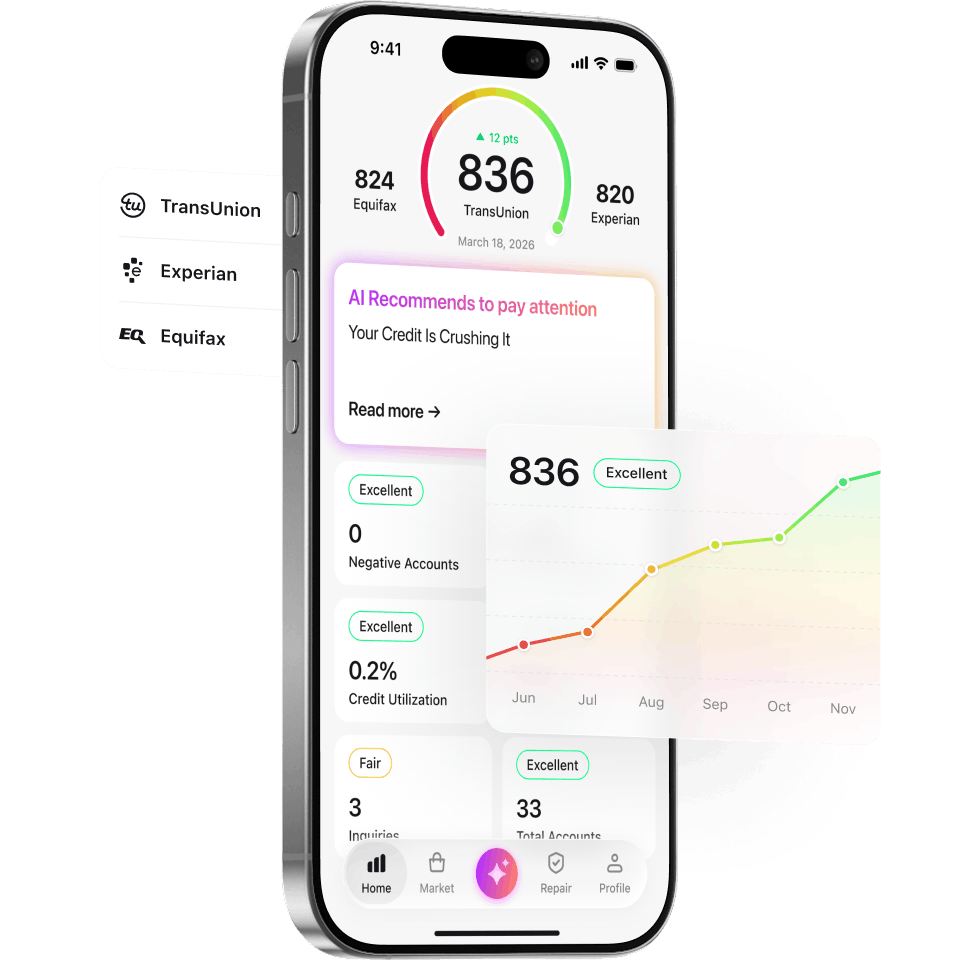
If you’re not sure a hidden error is also hurting you, use an app that checks and builds at once. Credit Booster AI reviews all three reports for what looks wrong and builds history through rent and bill reporting, for $9.99 a month, so you’re not guessing.
Most people default to building without checking. On a thin file that’s usually fine. But if a wrong late payment is sitting there, building alone leaves it working against you.
The Picks for a Thin File
Three apps, three jobs. All report to all three bureaus, none needs a hard credit pull to start.
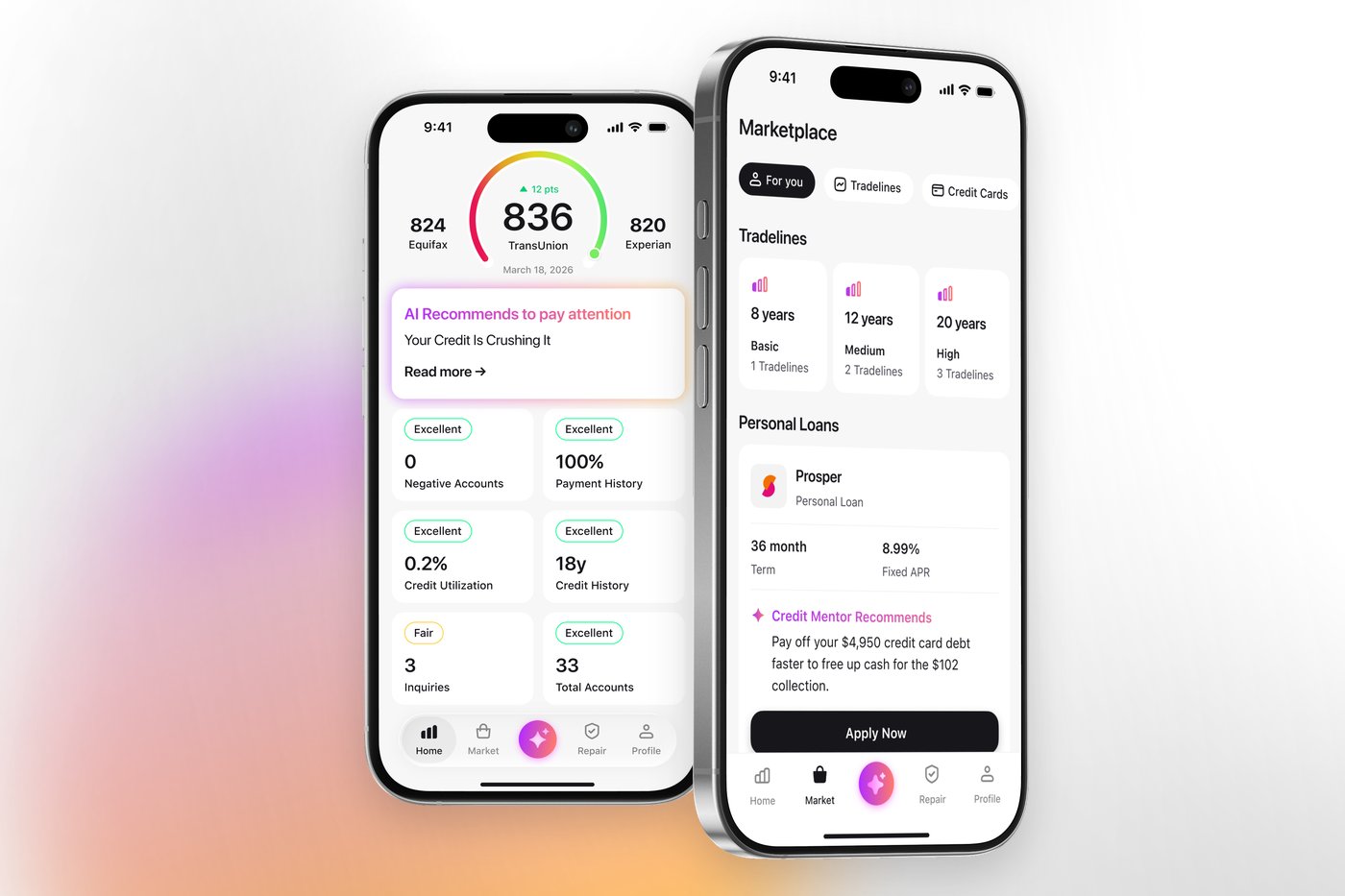
- Credit Booster AI best when you want to build and confirm your reports are clean at the same time. Reviews all three reports, builds through rent and bill reporting, $9.99 a month.
- Self best for a structured builder loan. Plans from $25 to $150 a month, and the card that follows.
- Chime Card best if you already bank with Chime. Free to use as a builder, no credit check.
1. Credit Booster AI: Build and Check Together
A thin file has one obvious problem, missing history, and one hidden risk, an error you haven’t spotted. Most builder apps only address the first. This one addresses both.
It scans all three of your reports and flags anything that looks inaccurate, and it builds positive history through rent and bill reporting. So instead of paying to build while a mistake quietly drags you down, you find out on day one whether your file is only thin or also carrying something wrong. For $9.99 a month, that’s the difference between building blind and building informed. If your file turns out to be spotless, you’ve lost nothing and gained the history. If it isn’t, you caught it.
2. Self: The Structured Builder
Self is the pick if you want a defined, finish-it plan. Its Credit Builder Account is an installment loan with 24-month plans from $25 to $150 a month. Your payments build both a savings balance and payment history, and you get the savings back at the end, minus interest. There’s no hard pull to start.
Once you’ve built enough savings progress, that money can become the deposit for the Self Visa secured card, so you graduate from a loan to a card inside one app. It’s a clean, structured path for a thin file that wants a plan with an endpoint.
3. Chime Card: Free If You Already Bank There
Short, because it’s simple. The Chime Card, the successor to Chime Credit Builder, turns money you move into your own account into spending power, reports to all three bureaus, and does no credit check. There’s no annual fee and no interest, because you’re spending your own funds.
The catch is the requirement: a Chime account with a qualifying direct deposit. If you already bank with Chime, it’s the cheapest builder here. If you don’t, the setup may not be worth switching for.
What Didn’t Make the List, and When to Skip an App Entirely
The honest cut. If your file is thin, clean, and you can get approved for a no-annual-fee secured card, a card may beat all of these on cost, because a refundable deposit undercuts a monthly fee over time and a card helps utilization directly. An app isn’t automatically the answer just because your file is thin.
And no app here removes a negative that’s accurate. Building adds; it doesn’t erase. If your problem turns out to be a real reported item, that’s a different job than building a thin file.
The Verdict
For a thin file, first figure out if it’s only thin. If you want to build and confirm your reports are clean in one move, Credit Booster AI does both for $9.99 a month. If it’s thin and clean and you want a structured plan, Self. If you bank with Chime, the Chime Card is the cheapest builder.
Whatever you choose, the goal is the same: on-time history across all three bureaus, and enough time for account age to catch up. Credit Booster AI reads all three reports, tells you whether your file is thin or damaged, and builds history either way. Free to download on iOS and Android.
Sources
- Self Credit Builder Account and Visa secured card (plans $25 to $150, three-bureau reporting, no hard pull): self.inc/pricing and self.inc/visa-secured-credit-card (verified 2026-07-20)
- Chime Card, secured, no credit check, no annual fee, three-bureau reporting: chime.com/credit/credit-builder (verified 2026-07-20)
- Credit Booster AI: creditbooster.ai (verified 2026-07-20)
Related reading: See do credit builder apps actually work, or how to build US credit in your first 90 days.
Credit apps for a thin file, compared
All three build on-time history. Only one also checks your reports for errors while it builds.
| Feature | Self | Chime Card | Credit Booster AIThis is us |
|---|---|---|---|
| What it is | Builder loan plus a secured card | Secured card via a Chime account | App that scans reports and builds history |
| Monthly cost | $25 to $150 builder plans | $0, needs a Chime account | $9.99 |
| Reports to all 3 bureaus | Yes | Yes | Yes |
| Adds on-time payment history | Yes | Yes | Yes |
| Finds and disputes report errors | No | No | Yes |
| Hard credit check to start | No | No | No |
Source: Product pages: self.inc, chime.com, creditbooster.ai. Pulled July 20, 2026.
Loving This Info? You'll Love Our App.
Everything you just read, plus AI-powered tools to understand and master your credit. 7 day free trial.
Get the AppFrequently Asked Questions
What is a thin credit file?
A thin file is a credit report with too little history for lenders to score confidently, usually fewer than a handful of accounts or not enough age on them. It is common for young adults, newcomers to the US, and anyone who has avoided credit. The fix is adding positive, on-time history that reports to all three bureaus, which is exactly what a good credit app or a secured card does.
What is the best credit app for a thin file?
It depends on whether your file is only thin or also has errors. If it is thin and clean, a cheap builder like Self or the Chime Card adds on-time history. If you are not sure whether a mistake is also hurting you, Credit Booster AI reviews all three reports and builds history at the same time for $9.99 a month, so you fix and build together instead of guessing.
Do credit apps work for building a thin file?
Yes, that is the one thing they do well. A thin file is missing payment history, and a builder app or secured card adds an on-time tradeline every month, reported to all three bureaus. On a genuinely thin, clean file, that can move a score 30 to 60 points over several months. What an app cannot do is remove a negative if one is also present, so confirm your file is only thin first.
How long does it take to build a thin file?
Expect a few months before the first meaningful move and roughly a year to build a solid base. Payment history and low utilization show up first; account age only comes with time, and nothing speeds that up. Adding a second positive account and keeping every payment on time is the fastest honest path, but there is no overnight fix for a thin file.
Is a secured card or an app better for a thin file?
For a thin, clean file, a no-annual-fee secured card is often the cheapest complete build, because it adds payment history and a real limit that helps utilization, and it refunds your deposit. An app makes sense if you cannot get approved, cannot spare a deposit, or you want your reports checked for errors while you build. Match the tool to whether your file is only thin or also damaged.
Can building a thin file raise my score fast?
It can move meaningfully, not magically. On a thin, clean file, a new on-time tradeline plus low utilization can add 30 to 60 points over several months. Anyone promising a specific number in days is selling something. The honest path is steady on-time payments across all three bureaus, and time, which builds the account age a thin file is missing.