How Student Loans Affect Your Credit Score
Your student loans are doing something right now, whether they’re helping or hurting your credit. The difference comes down to one thing: how you manage them. Student loans can boost your credit score by establishing your payment history and diversifying your credit mix, or they can tank it if you miss payments and fall into default. Here’s what you need to know to keep your loans working for you instead of against you.
The Five Ways Student Loans Impact Your Credit Score
Student loans influence your credit through five specific factors, and understanding each one helps you make smarter financial decisions[1].
Payment history (35%) is the heaviest hitter. This factor tracks whether you pay on time, and it’s the single most important component of your credit score. On-time payments build your score; missed or late payments damage it[1][3].
Amounts owed (30%) looks at how much available credit you’re using overall. With student loans, this factors in your installment loan utilization and your debt-to-income ratio[3]. The less of your available credit you’re using, the better.
Length of credit history (15%) rewards you for having credit accounts open over time. If you took out student loans early in your financial journey, they can establish and extend your credit history, particularly valuable if you’re just starting out[1][2].
New credit accounts (10%) tracks how often you apply for new credit. Multiple applications within a short timeframe signal to lenders that you might be taking on more debt than you can handle[1].
Credit mix (10%) is about variety. Lenders want to see you managing different types of credit, credit cards (revolving), car loans (installment), and student loans (installment). Student loans add installment loan diversity to your profile[1][2].
How Student Loans Can Boost Your Credit
If you’re handling your student loans responsibly, they’re working hard to improve your credit.
Building payment history is the biggest win. Every on-time payment strengthens the most important factor in your credit score. Over time, this consistent responsibility translates directly into score increases[1][2][4].
Establishing credit early matters more than most people realize. Young adults without extensive credit history benefit significantly from student loans. Taking them out early increases the average age of your credit accounts, which can raise your score substantially. When you’re just starting out with limited open credit lines, student loans carry more weight in your credit profile[1].
Diversifying your credit mix shows lenders you can juggle different types of debt. Combining installment loans (student loans, car loans) with revolving credit (credit cards) demonstrates financial responsibility and flexibility[1][2][4].
The key to all these benefits? Consistent, on-time payments. That’s non-negotiable.
How Student Loans Can Hurt Your Credit
The damage happens fast once you slip behind.
Late payments start damaging your score immediately. A single missed payment can cause a noticeable dip[3]. Multiple late payments or delinquencies have compounding, long-lasting impacts that can take years to recover from[3][5].
The 90-day threshold is critical. After 90 days past due, your loan servicer reports the delinquency to the three major credit bureaus (Equifax, Experian, TransUnion)[2][4]. This is when serious credit damage occurs. Research shows that borrowers with superprime credit scores (760+) experience average credit score declines of 171 points when a 90+ day delinquency is reported, while those with subprime scores see average declines of 87 points[5].
Default happens after 270 days of missed payments on federal loans[4]. At this point, your entire loan balance becomes due immediately, along with accrued interest, fines, and penalties. Default severely damages your credit and can remain on your report for up to seven years[3][5]. It also makes you ineligible for additional federal aid and can prevent you from qualifying for personal loans, credit cards, mortgages, or other credit products[3].
A counterintuitive hit occurs when you pay off your loans completely. The account closes, potentially causing a temporary score drop because you lose the positive payment history contribution and remove an active account from your credit mix[2]. However, your score typically rebounds as you maintain other positive credit behaviors.
Understanding Delinquency vs. Default
These terms get confused, but they mean very different things.
Delinquency starts the moment you miss a payment. Your loan is considered delinquent as soon as a payment is late[3]. At 30 days late, it may be reported to credit bureaus and lower your score[2]. At 90 days late, it definitely gets reported and has a greater impact[2].
Default is the nuclear option. For federal student loans, default occurs after 270 days of non-payment[4]. Once you’re in default, the entire loan balance is due immediately. You lose eligibility for federal aid, and the government can pursue wage garnishment and tax refund offset[3]. Late payments can stay on your credit report for up to seven years after they’re first reported[3].
The critical window is those first 90 days. If you’re struggling, contact your loan servicer immediately, don’t wait until you hit 90 days past due.
Recent Changes Affecting Your Credit (2025-2026)
Here’s what changed recently and why it matters.
The payment pause ended. For years during the COVID-19 pandemic, federal student loan payments were paused and delinquencies weren’t reported to credit bureaus. That ended in 2025. The federal government resumed normal reporting of past-due balances, which means delinquencies now show up on credit reports again[5].
Millions of borrowers faced credit hits. Researchers from the Federal Reserve Bank of New York estimated that more than nine million student loan borrowers would face substantial credit score drops once delinquencies appeared on credit reports in early 2025[5]. If you missed payments during the pause and didn’t resume when repayment restarted, your credit likely took a hit.
The on-ramp program provided temporary relief. A temporary on-ramp program for federal student loan repayment ran from October 2024 through September 2025[4]. This program temporarily shielded borrowers from the most immediate consequences of delinquency and default, giving people time to adjust to resumed payments. However, this protection is now expired.
What this means for you: If you’re behind on payments, act now. The grace period has passed, and normal consequences are back in effect.
Strategic Moves to Protect Your Credit
Set up automatic payments. Since payment history is 35% of your score, set up automatic payments or calendar reminders to ensure you never miss a due date[1][3]. This is the single most important thing you can do.
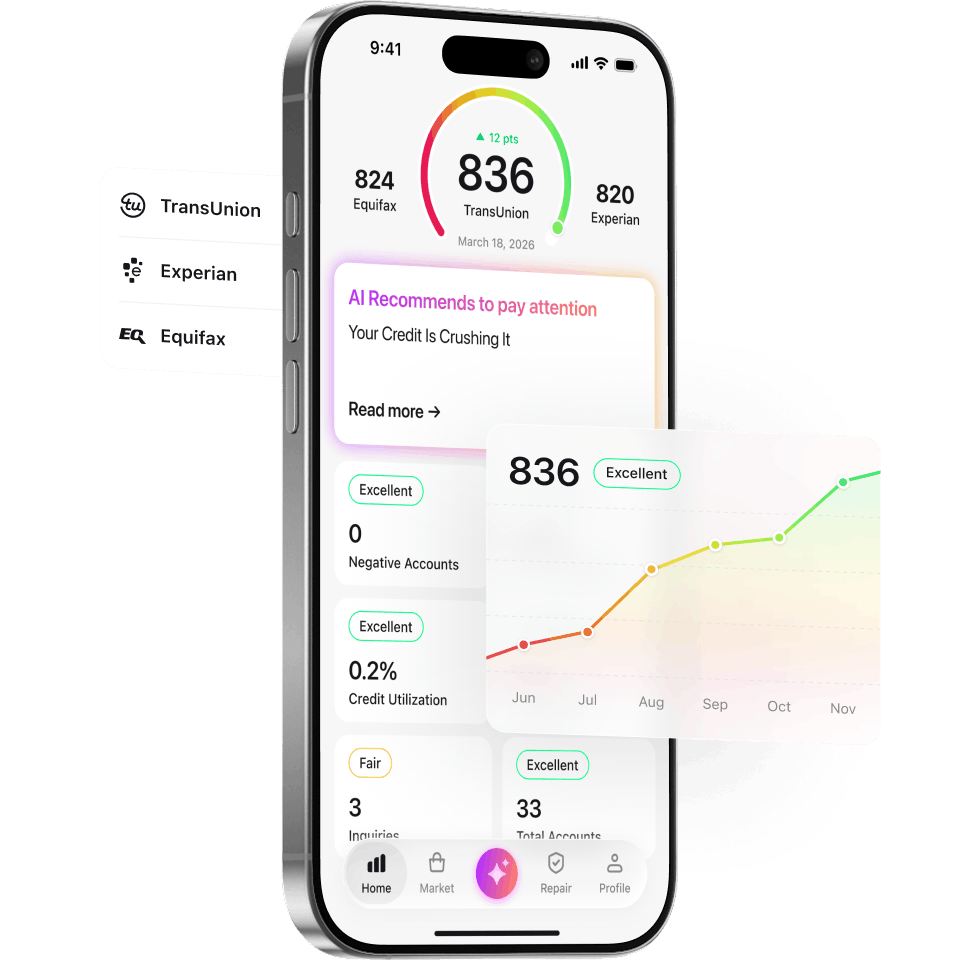
Understand your loan type. Federal and private student loans may have different reporting timelines and options. Know your loan servicer and their policies[2]. Download Credit Booster AI, free on iOS and Android, to track all your loans in one place and get alerts before payment due dates.
Act fast if you miss a payment. The longer a payment remains past due, the more damage it causes[2]. If you miss a payment, contact your loan servicer immediately. Explore options like deferment, forbearance, or income-driven repayment plans if you’re struggling.
Monitor your credit report regularly. Check your credit report through AnnualCreditReport.com (the federally mandated free service) to verify that student loan information is accurate and to catch errors early[5]. Errors do happen, and disputing them can protect your score.
Consider refinancing strategically. If you have good credit and can secure a significantly lower interest rate, refinancing may be worthwhile despite the short-term credit inquiry impact[4]. A hard inquiry causes a temporary, minor score decrease, but the long-term interest savings often outweigh this[4].
Explore income-driven repayment plans. If you’re struggling with standard payments, income-driven repayment plans can make payments more manageable and help you avoid delinquency and default[4]. These plans cap your payment at a percentage of your discretionary income.
Plan for loan payoff strategically. As you approach paying off your student loans, understand that closing the account may temporarily lower your score[2]. Maintain other positive credit behaviors, on-time payments on other accounts and low credit card balances, to offset this effect.
Download Credit Booster AI to analyze your credit report, identify negative items, and generate dispute letters for inaccuracies. The app uses AI to track your progress and show you exactly what’s impacting your score.
Common Misconceptions About Student Loans and Credit
Misconception: Student loans always hurt your credit. Reality: Student loans can significantly help your credit if managed responsibly. Consistent on-time payments, establishing credit history, and diversifying your credit mix all provide positive benefits[1][2][4].
Misconception: One late payment means default. Reality: Default occurs only after 270 days of missed payments on federal loans[4]. A single late payment damages your score but doesn’t trigger default. However, the damage compounds with additional missed payments[2][3].
Misconception: Paying off student loans always improves your score. Reality: While paying off debt is financially healthy, closing a paid-off student loan account can temporarily lower your score by reducing your credit mix and removing positive payment history from active accounts[2]. The score typically rebounds as you maintain other positive credit behaviors.
Misconception: You should avoid student loans to protect your credit. Reality: Strategic borrowing can actually build your credit. The key is managing the debt responsibly, not avoiding it entirely.
Rehabilitation: Getting Back on Track
If you’ve already defaulted on federal student loans, there’s a path forward: rehabilitation.
Federal student loans in default can be rehabilitated by making nine consecutive on-time monthly payments within 20 days of the due date[3]. Once you successfully complete rehabilitation, the default status is removed from your credit report, though the delinquency history may still be visible. This gives you a fresh start and restores your eligibility for federal student aid.
It takes discipline, but it works. If you’re in default, contact your loan servicer about setting up a rehabilitation plan.
The Bottom Line
Your student loans are either building your financial future or derailing it. The difference comes down to one simple habit: paying on time. Payment history is 35% of your credit score, and it’s the one factor you control most directly. Miss payments, and you’ll face a credit score drop of 87 to 171 points, depending on your starting score[5]. Stay current, and you’ll build a strong credit profile that opens doors to better rates on mortgages, car loans, and credit cards.
If you’re struggling with payments, act now. Contact your loan servicer about income-driven repayment plans or deferment options. Don’t wait until you hit 90 days past due, that’s when the credit bureaus get involved and the real damage happens[2].
Your student loans don’t have to be a credit liability. Treat them as a credit-building tool, and they’ll reward you for years to come.
Frequently Asked Questions
How long do late student loan payments stay on your credit report?
Late payments remain on your credit report for up to seven years after they’re first reported to the credit bureaus[3]. However, their impact on your credit score typically decreases over time as the payments age.
Can student loans help build credit if I’m just starting out?
Yes. Student loans are particularly valuable for young adults without extensive credit history. Taking out student loans early increases the average age of your credit accounts and adds installment loan diversity to your credit mix, both of which can raise your score[1][2].
What happens if I default on my federal student loans?
Default occurs after 270 days of missed payments on federal loans[4]. Once in default, your entire loan balance becomes due immediately, you lose eligibility for federal student aid, and the government can pursue wage garnishment and tax refund offset. Default can remain on your credit report for up to seven years[3].
Does paying off my student loans improve my credit score?
Paying off student loans is financially healthy, but it can temporarily lower your score by reducing your credit mix and removing an active account from your credit profile[2]. However, your score typically rebounds as you maintain other positive credit behaviors like on-time payments on remaining accounts.
Will refinancing my student loans hurt my credit?
Refinancing involves a hard credit inquiry, which causes a temporary, minor credit score decrease[4]. However, if you limit loan shopping to a short period, multiple inquiries are typically treated as a single inquiry with minimal impact. The long-term interest savings often outweigh the short-term score dip.
What should I do if I’m about to miss a student loan payment?
Contact your loan servicer immediately before the payment is due. Explore options like deferment, forbearance, or income-driven repayment plans. Acting proactively can help you avoid the 90-day delinquency threshold when credit bureaus get involved[2].
Related research: For a deeper analysis of student loan disputes and credit impact, see our research library at JoinCreditClub.com.
Need professional help? CreditBooster.com has been helping clients rebuild their credit since 2009.
Frequently Asked Questions
How long do late student loan payments stay on your credit report?
Late payments remain on your credit report for up to seven years after they're first reported to the credit bureaus. However, their impact on your credit score typically decreases over time as the payments age.
Can student loans help build credit if I'm just starting out?
Yes. Student loans are particularly valuable for young adults without extensive credit history. Taking out student loans early increases the average age of your credit accounts and adds installment loan diversity to your credit mix, both of which can raise your score.
What happens if I default on my federal student loans?
Default occurs after 270 days of missed payments on federal loans. Once in default, your entire loan balance becomes due immediately, you lose eligibility for federal student aid, and the government can pursue wage garnishment and tax refund offset. Default can remain on your credit report for up to seven years.
Does paying off my student loans improve my credit score?
Paying off student loans is financially healthy, but it can temporarily lower your score by reducing your credit mix and removing an active account from your credit profile. However, your score typically rebounds as you maintain other positive credit behaviors like on-time payments on remaining accounts.
Will refinancing my student loans hurt my credit?
Refinancing involves a hard credit inquiry, which causes a temporary, minor credit score decrease. However, if you limit loan shopping to a short period, multiple inquiries are typically treated as a single inquiry with minimal impact. The long-term interest savings often outweigh the short-term score dip.
What should I do if I'm about to miss a student loan payment?
Contact your loan servicer immediately before the payment is due. Explore options like deferment, forbearance, or income-driven repayment plans. Acting proactively can help you avoid the 90-day delinquency threshold when credit bureaus get involved.