What Credit Score Do You Need for a Startup Business Loan?
Here is the short answer: with no business track record yet, lenders lean on your personal FICO. Online lenders often approve from about 580 to 600, traditional banks want 680 and up, and SBA-backed startup options generally want 650 and up.
A startup has little or no financial history for a lender to review, so the decision falls back on you personally. Your personal score, a credible business plan, your tax returns, and your bank statements are what the lender reads. The stronger those are, the wider your options and the better your rate.
Most lenders also want to see at least 6 months in business before they will lend. Below the bank and SBA bands, online lenders are usually the realistic path, at a higher cost that prices in the added risk of a young company.
Startup Loan Requirements by Lender Type
Here is how the main paths compare when the business is new.
| Lender type | Personal FICO | What to expect |
|---|---|---|
| Online lender | About 580 to 600 | Most flexible, faster funding, higher rates. |
| SBA-backed | 650 and up | Government-backed terms, more paperwork, strong plan needed. |
| Traditional bank | 680 and up | Lowest cost, strictest file, hardest for a young business. |
Across all three, plan on at least about 6 months in business plus a business plan, tax returns, and bank statements. With no company history, those documents and your personal score do the talking.
What Lenders Really Score
For a startup, your personal credit is the center of the decision, because the business has no track record of its own yet. That score is built from five factors, and the two biggest are the two you can move fastest. Payment history (35 percent) and amounts owed (30 percent) together make up roughly two thirds of a FICO score, and amounts owed is mostly your credit card utilization, which you can lower in a single billing cycle. Since a startup lender leans on your personal FICO, cleaning these up before you apply moves the number that carries the file.
Beyond the Score
With little business history to review, the rest of your application matters more, not less. Lenders also weigh:
- Your business plan. A clear, credible plan is how a new business proves it can repay.
- Time in business. Most lenders want at least about 6 months.
- Tax returns and bank statements. Personal and business, to show income and cash flow.
- Collateral. Assets you can pledge, which can offset a young company’s lack of history.
A strong supporting file can lift a borderline score into an approval, and a weak one can sink a good score, because the lender is betting on the whole picture.
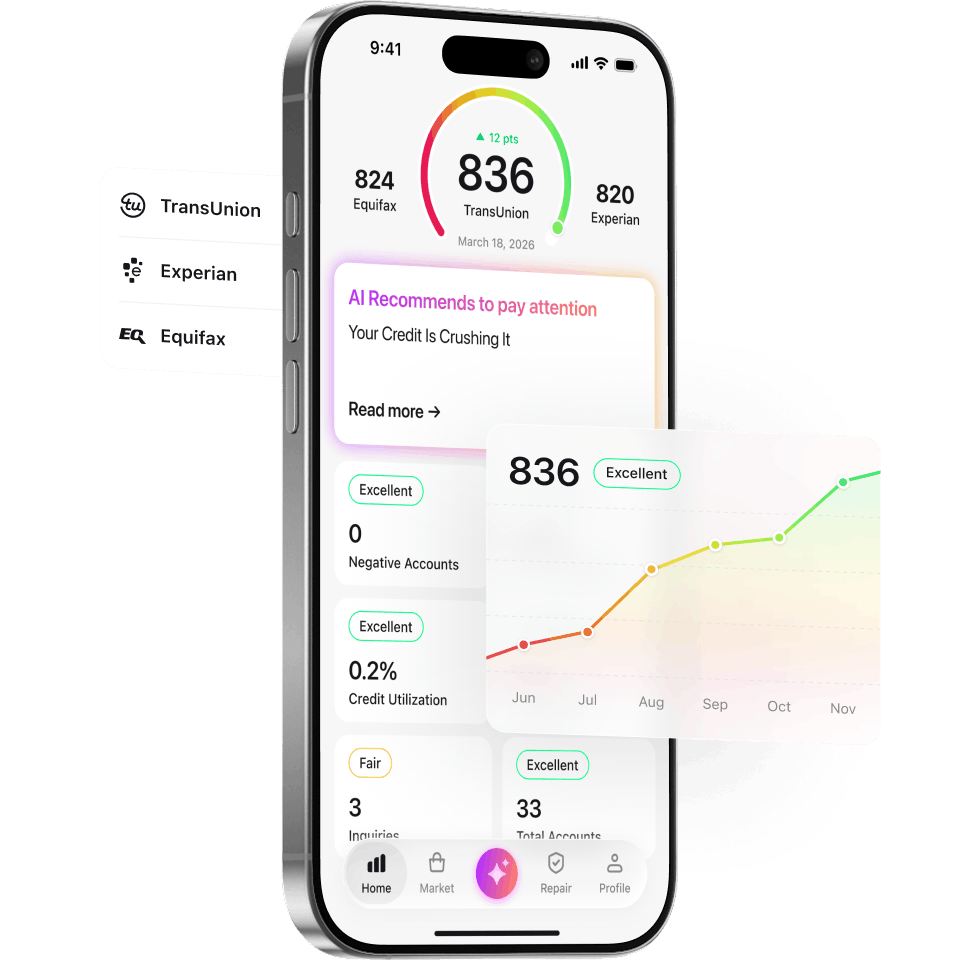
Download Credit Booster AI before you apply. It reads all three of your personal credit reports, flags the errors that drag your score down, and shows which paydown lifts your score the most, so you apply from the strongest position you can reach.
How to Improve Your Score Before You Apply
Because a startup lender leans on your personal FICO, moving that number is the highest-leverage thing you can do.
- Lower your card utilization. Getting balances under 30 percent of their limits, and ideally under 10 percent, is the quickest win. Amounts owed is about 30 percent of your score.
- Fix report errors. One in five reports carries a mistake. Removing a wrong late payment or a paid collection can move your score fast.
- Keep every payment on time. Payment history is 35 percent of the score, and lenders read the recent months closely.
- Avoid new personal debt right before applying. Fresh inquiries and new accounts can nick your score at the worst moment.
A realistic 90-day improvement from these moves is 30 to 60 points, often enough to move from an online lender’s rate up to an SBA-backed or bank option.
The Bottom Line
A startup loan comes down to your personal credit, because the business cannot vouch for itself yet. Online lenders approve from about 580 to 600, SBA-backed options want 650 and up, and banks want 680 and up. Across all of them, expect to show at least about 6 months in business, a business plan, tax returns, and bank statements.
Before you apply, spend a few weeks pulling down card balances and clearing report errors. A 30 to 60 point move can upgrade both your lender and your rate. Download Credit Booster AI on iOS and Android to see your reports, catch what is holding your score back, and fix it before the lender pulls your file.
Related reading: Compare what it takes for a merchant cash advance, equipment financing, and a business line of credit. Start with the credit score for a business loan.
Sources
- Ramp, What Is a Startup Business Loan: ramp.com
- NerdWallet, Best Startup Business Line of Credit: nerdwallet.com
- SBA, Funding Programs and Loans: sba.gov
- FICO, What Makes Up Your Credit Score (myFICO): myfico.com
Frequently Asked Questions
What credit score do you need for a startup business loan?
With no business track record yet, lenders lean on your personal FICO. Online lenders often approve from about 580 to 600, traditional banks want 680 and up, and SBA-backed startup options generally want 650 and up. Most lenders also want at least 6 months in business plus a business plan, tax returns, and bank statements.
Can I get a startup loan with no business history?
Yes, but the lender leans harder on you personally. Without business financials to review, your personal FICO, a solid business plan, your tax returns, and your bank statements carry the file. Online lenders are the most flexible at about 580 to 600, while banks and SBA-backed options want higher scores and more documentation.
What credit score do banks want for a startup loan?
Traditional banks generally want a personal FICO of 680 and up for a startup loan, because a new business is riskier without a track record. SBA-backed startup options generally want 650 and up. If your score sits below those, online lenders are usually the more realistic path at about 580 to 600, at a higher cost.
What documents do startup lenders require?
Most want a business plan, your personal and business tax returns, and bank statements, along with at least about 6 months in business. Because the business has little or no history, these documents plus your personal FICO are how the lender judges the risk. A clear, credible plan strengthens a borderline file.
How can I qualify for a startup loan with a lower score?
Start with online lenders, which approve from about 580 to 600, and bring the strongest supporting file you can: a detailed business plan, tax returns, bank statements, and any collateral. Improving your personal FICO before you apply is the highest-leverage move, since with no business history the personal score carries the decision.
By the numbers
Online lender minimum
580-600
With no track record, lenders lean on personal FICO.
Ramp, What is a startup business loan, July 22, 2026
Bank minimum
680+
Traditional banks want the strongest credit.
NerdWallet, Best startup business line of credit, July 22, 2026
SBA-backed options
650+
SBA-backed startup options generally want 650 and up.
SBA, Funding programs and loans, July 22, 2026
Source: Ramp, What is a startup business loan. Pulled July 22, 2026.
What actually moves the personal score a startup lender pulls
The five factors behind every FICO score, by weight. Payment history and amounts owed together are about two thirds of it.
Source: FICO, myFICO credit education (what makes up a FICO Score). Pulled July 22, 2026.
Table view
| Item | Share of your FICO Score |
|---|---|
| Payment history (whether you pay on time) | 35% |
| Amounts owed (mostly credit utilization) | 30% |
| Length of credit history (how old your accounts are) | 15% |
| New credit (recent applications and inquiries) | 10% |
| Credit mix (cards, loans, mortgage) | 10% |
Loving This Info? You'll Love Our App.
Everything you just read, plus AI-powered tools to understand and master your credit. 7 day free trial.
Get the AppFrequently Asked Questions
What credit score do you need for a startup business loan?
With no business track record yet, lenders lean on your personal FICO. Online lenders often approve from about 580 to 600, traditional banks want 680 and up, and SBA-backed startup options generally want 650 and up. Most lenders also want at least 6 months in business plus a business plan, tax returns, and bank statements.
Can I get a startup loan with no business history?
Yes, but the lender leans harder on you personally. Without business financials to review, your personal FICO, a solid business plan, your tax returns, and your bank statements carry the file. Online lenders are the most flexible at about 580 to 600, while banks and SBA-backed options want higher scores and more documentation.
What credit score do banks want for a startup loan?
Traditional banks generally want a personal FICO of 680 and up for a startup loan, because a new business is riskier without a track record. SBA-backed startup options generally want 650 and up. If your score sits below those, online lenders are usually the more realistic path at about 580 to 600, at a higher cost.
What documents do startup lenders require?
Most want a business plan, your personal and business tax returns, and bank statements, along with at least about 6 months in business. Because the business has little or no history, these documents plus your personal FICO are how the lender judges the risk. A clear, credible plan strengthens a borderline file.
How can I qualify for a startup loan with a lower score?
Start with online lenders, which approve from about 580 to 600, and bring the strongest supporting file you can: a detailed business plan, tax returns, bank statements, and any collateral. Improving your personal FICO before you apply is the highest-leverage move, since with no business history the personal score carries the decision.