What Credit Score Do You Need for a Security Clearance?
Here is the short answer: a security clearance has no minimum credit score. Adjudicators do not use a FICO score at all. They pull your credit report and read it for patterns, not for a number.
The framework is SEAD 4, the federal adjudicative guidelines. Financial behavior falls under Guideline F, Financial Considerations, one of 13 guidelines. An investigator reviews your report and asks a human question: are you handling your obligations, or are there signs of risk. A modest score with steady, documented paydown can beat a higher score with unexplained problems.
This matters more than most people realize, because financial issues are the single most common reason clearances are denied or revoked. The good news is that it is about behavior you can show, not a grade you are stuck with.
What Is and Is Not Reviewed
The clearance process reads your credit report, then judges the story it tells. Here is the split.
What is reviewed under Guideline F:
- Large unpaid or delinquent debts
- Unexplained affluence (spending or assets that do not match your income)
- Unpaid taxes
- Gambling problems
- Whether you are actively addressing what you owe
- Your honesty about all of it on the SF-86
What is not used:
- A FICO score. There is no number to hit and no minimum to clear.
The theme is consistency and candor. A large debt with a documented payment plan reads very differently from the same debt ignored, or worse, hidden on the form.
What Lenders Really Score
An adjudicator reads no score, but it helps to know what shapes the report they do read. A credit report is the raw material a FICO score is built from, and that score comes from five factors. The two biggest are payment history and amounts owed, which together make up roughly two thirds of a FICO score.
Those same behaviors, paying on time and not letting debts pile up unpaid, are exactly what an investigator traces through your report under Guideline F. Handle them well and the report tells a clean story, score or no score.
Beyond the Score
Because there is no number to hit, what carries weight is how you handle what you owe and how honest you are about it:
- Active repayment. Payment plans and resolved collections show you are addressing the debt, which is a recognized mitigating condition.
- Full honesty on the SF-86. Concealing a debt is often more damaging than the debt itself. Disclose everything.
- Extenuating circumstances. Debts from events beyond your control, such as a job loss, illness, or divorce, can mitigate the concern when documented.
- Good-faith effort. Even partial, consistent progress counts. Adjudicators look for a genuine plan, not instant perfection.
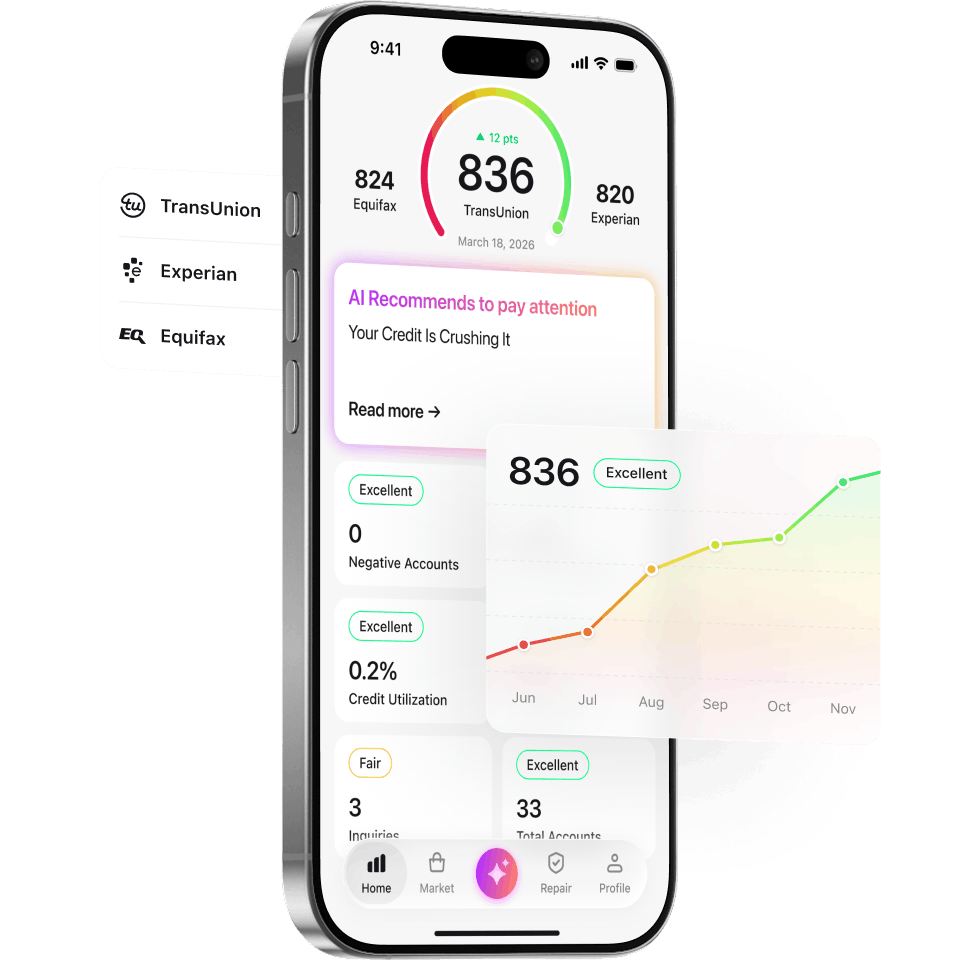
Download Credit Booster AI on iOS and Android before an investigation. It reads all three of your credit reports, flags the errors that could look like a red flag under Guideline F, helps you fix them, and lets you track your paydown so you can show the progress that mitigates a concern.
How to Strengthen Your Profile Before You Apply
There is no score to chase, so the goal is a clean report and a documented record of handling your debts.
- Pull all three reports and read them. Find every delinquent debt, collection, lien, or tax issue, and note anything that is wrong or already resolved.
- Fix report errors. About one in five reports has a mistake. A wrong delinquency or a paid item still marked open can misrepresent you to an investigator.
- Set up and document payment plans. Resolving collections and getting current on taxes, with records of every step, is what mitigates a Guideline F concern.
- Be fully honest on the SF-86. Disclose it all. Candor is the strongest thing you bring to the process.
If you also want to raise your score along the way, a realistic 90-day improvement from paying down balances and fixing errors is 30 to 60 points. It will not appear in the adjudication, but the paydown behind it is exactly what an investigator wants to see.
The Bottom Line
There is no credit score requirement for a security clearance. Adjudicators read your report under SEAD 4 Guideline F, looking at patterns like unpaid debts, unpaid taxes, and unexplained affluence, and at whether you are actively addressing them. Finances are the top single reason clearances are denied or revoked, so this is where to focus.
Do not chase a number. Resolve your debts, document the effort, fix report errors, and be completely honest on the SF-86. Download Credit Booster AI on iOS and Android to see your reports, catch and fix errors, and track the paydown that protects your clearance.
Related reading: See where your score puts you for an employment background check and an insurance quote. The overview lives in what counts as a good credit score.
Sources
- Military Money, Security Clearance Requirements: militarymoney.com
- SEAD 4, Guideline F (Financial Considerations), the federal adjudicative guidelines for national security eligibility.
- FICO, What Makes Up Your Credit Score (myFICO): myfico.com
Frequently Asked Questions
What credit score do you need for a security clearance?
There is no minimum credit score for a security clearance. Adjudicators do not use a FICO score. Under SEAD 4, the federal adjudicative guidelines, they pull a credit report and review it under Guideline F, Financial Considerations. What matters is the pattern of how you handle money, not a number. Someone with a modest score who is actively paying down debt can fare better than someone with a higher score and unexplained problems.
Can you get a security clearance with debt?
Yes. Debt by itself does not disqualify you. What adjudicators look at is whether the debt is handled: are you on a payment plan, are collections being resolved, are you honest about it on the SF-86. Large unpaid or delinquent debts, unpaid taxes, and unexplained affluence raise flags. A genuine, documented plan to address what you owe is what mitigates the concern.
What is Guideline F?
Guideline F, Financial Considerations, is one of 13 guidelines in SEAD 4, the federal adjudicative guidelines for national security eligibility. It covers financial behavior: unpaid or delinquent debts, unexplained affluence, unpaid taxes, and gambling problems. Investigators pull a credit report to assess it, and financial issues under Guideline F are the single most common reason clearances are denied or revoked.
Can bad credit cost you a security clearance?
It can, but not because of the score. A pattern of large unpaid debts, defaults, unpaid taxes, or unexplained affluence signals risk under Guideline F, and finances are the top single reason clearances are denied or revoked. The way to protect yourself is to address the underlying debts, document your efforts, and be fully honest on the SF-86, since concealment is often worse than the debt.
How do I prepare my finances for a clearance investigation?
Pull your credit reports, fix any errors, and get ahead of the real negatives. Set up payment plans, resolve collections where you can, and keep records of every step. File and pay any outstanding taxes. Be completely honest on the SF-86. Mitigating conditions exist for debts from circumstances beyond your control and for good-faith repayment, so documentation of your efforts is what carries weight.
By the numbers
Minimum credit score for a clearance
None
Adjudicators read a report, not a score.
What is reviewed
Guideline F
SEAD 4 financial considerations.
Top single reason for denials
Finances
Financial issues are the most common reason clearances are denied or revoked.
Source: Military Money, Security Clearance Requirements. Pulled July 22, 2026.
What actually shapes the report an investigator reads
The five factors behind every FICO score, by weight. Payment history and amounts owed together are about two thirds of it.
Source: FICO, myFICO credit education (what makes up a FICO Score). Pulled July 22, 2026.
Table view
| Item | Share of your FICO Score |
|---|---|
| Payment history (whether you pay on time) | 35% |
| Amounts owed (mostly credit utilization) | 30% |
| Length of credit history (how old your accounts are) | 15% |
| New credit (recent applications and inquiries) | 10% |
| Credit mix (cards, loans, mortgage) | 10% |
Loving This Info? You'll Love Our App.
Everything you just read, plus AI-powered tools to understand and master your credit. 7 day free trial.
Get the AppFrequently Asked Questions
What credit score do you need for a security clearance?
There is no minimum credit score for a security clearance. Adjudicators do not use a FICO score. Under SEAD 4, the federal adjudicative guidelines, they pull a credit report and review it under Guideline F, Financial Considerations. What matters is the pattern of how you handle money, not a number. Someone with a modest score who is actively paying down debt can fare better than someone with a higher score and unexplained problems.
Can you get a security clearance with debt?
Yes. Debt by itself does not disqualify you. What adjudicators look at is whether the debt is handled: are you on a payment plan, are collections being resolved, are you honest about it on the SF-86. Large unpaid or delinquent debts, unpaid taxes, and unexplained affluence raise flags. A genuine, documented plan to address what you owe is what mitigates the concern.
What is Guideline F?
Guideline F, Financial Considerations, is one of 13 guidelines in SEAD 4, the federal adjudicative guidelines for national security eligibility. It covers financial behavior: unpaid or delinquent debts, unexplained affluence, unpaid taxes, and gambling problems. Investigators pull a credit report to assess it, and financial issues under Guideline F are the single most common reason clearances are denied or revoked.
Can bad credit cost you a security clearance?
It can, but not because of the score. A pattern of large unpaid debts, defaults, unpaid taxes, or unexplained affluence signals risk under Guideline F, and finances are the top single reason clearances are denied or revoked. The way to protect yourself is to address the underlying debts, document your efforts, and be fully honest on the SF-86, since concealment is often worse than the debt.
How do I prepare my finances for a clearance investigation?
Pull your credit reports, fix any errors, and get ahead of the real negatives. Set up payment plans, resolve collections where you can, and keep records of every step. File and pay any outstanding taxes. Be completely honest on the SF-86. Mitigating conditions exist for debts from circumstances beyond your control and for good-faith repayment, so documentation of your efforts is what carries weight.