Where beginners start
Most beginners start with no score at all, then land in Poor or Fair. Building history is what lifts it.
The latest US average FICO Score 8, against the five official FICO bands.
Source: FICO score ranges and US average FICO Score 8. Pulled July 19, 2026.
Table view
| Band | Range | Contains this value |
|---|---|---|
| Poor | 300 to 579 | No |
| Fair | 580 to 669 | No |
| Good | 670 to 739 | Yes, 714 |
| Very Good | 740 to 799 | No |
| Exceptional | 800 to 850 | No |
The Best Credit Repair App for Beginners
The best app for beginners is Credit Booster AI. But if you are a true beginner with no credit history at all, hold on, because there may be nothing here to repair yet.
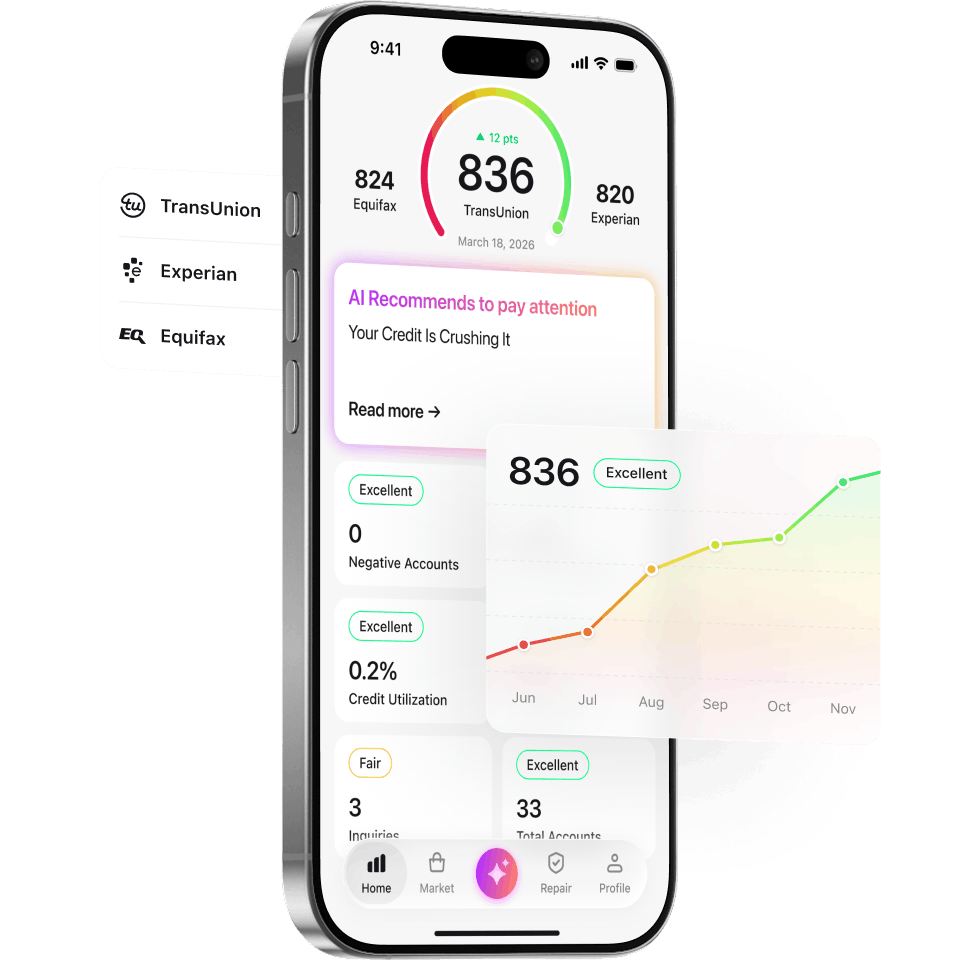
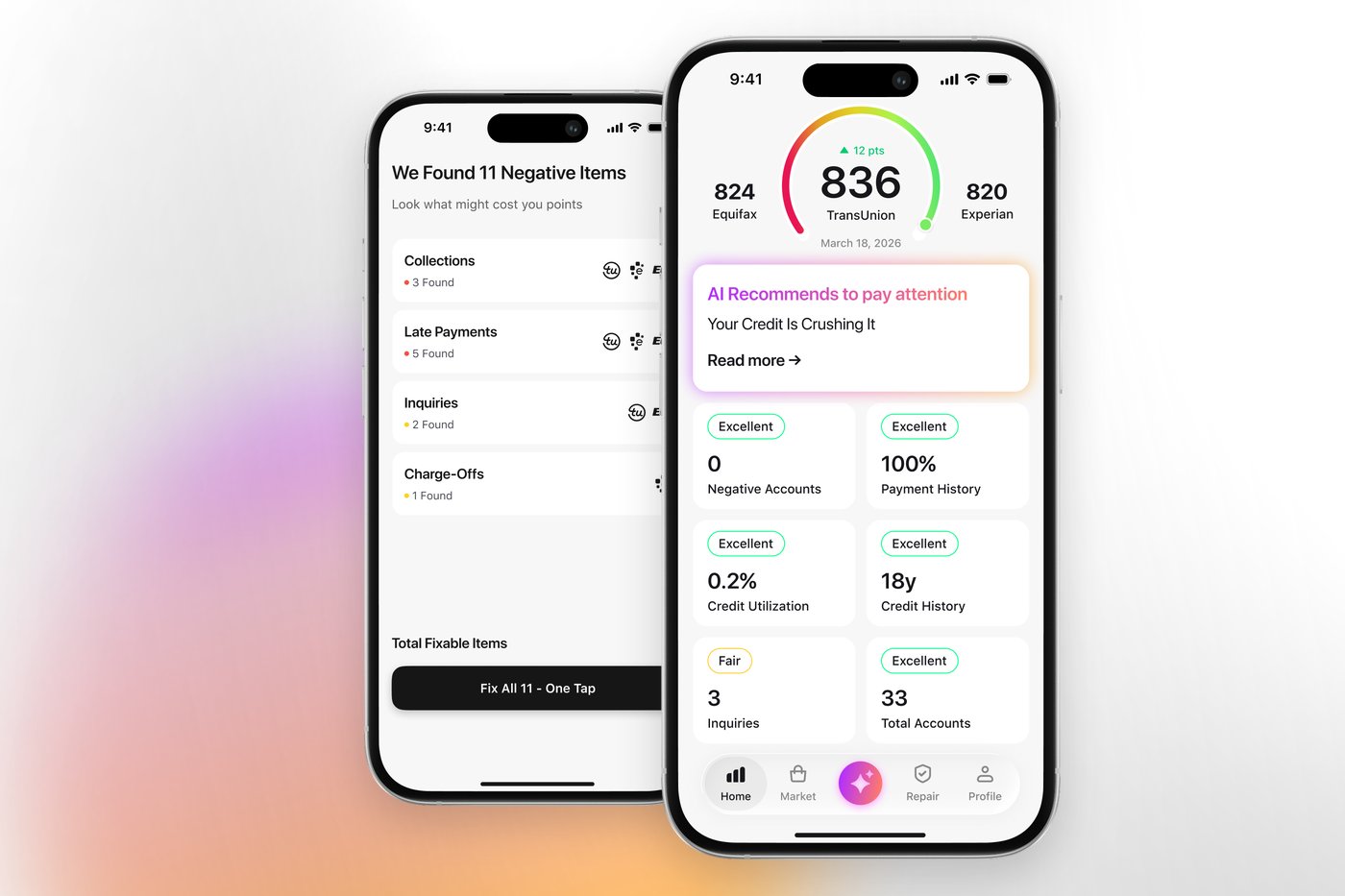
Beginners get overwhelmed for a good reason: the credit world hides the ball. Credit Booster AI is the pick that stops hiding it. It reads all three bureaus, explains each item in words you can actually use, and tells you what a fix would likely do to your score before you touch anything. That last part is what beginners need most. Not another dashboard of numbers. A guide that says do this, skip that, here is why. About one in four people find an error on a report that could cost them points, per the FTC, and a first-timer almost never spots it alone. But here is the catch, and it is the whole game for a beginner: if you have no file yet, there is nothing to dispute. You build first, then clean later.
Quick verdict: Best overall for beginners is Credit Booster AI, from $9.99 a month. Best free starting dashboard is Credit Karma. Best fee-free way to build a no-history file is Chime Credit Builder. Best builder that also saves money is Self. Best free automated dispute is Dovly AI.
The Ranked List for a Beginner
Five picks. Which one is right depends on one question: do you have a credit file yet, or not?
- Credit Booster AI, best overall. Reads all three bureaus, explains every item, and predicts each fix before you make it. From $9.99 a month, 7-day free trial. Best once you have a file with something to fix.
- Credit Karma, best free dashboard. Free forever, shows two of your three bureaus, and has a simulator to learn how the score reacts. No repair, but a great place to look first.
- Chime Credit Builder, best for no history. A secured card with no annual fee, no interest, no credit check, and no minimum deposit, reporting to all three bureaus. Needs a Chime checking account.
- Self, best builder with savings. A builder loan that reports on-time payments to all three bureaus and hands most of the money back at the end.
- Dovly AI, best free automated dispute. Files one item a month free, once you actually have items to dispute.
New to all of this and not sure where you stand? Download Credit Booster AI, free on iOS and Android. It reads your report, tells you in plain terms what is on it, and shows whether your next move is building or fixing.
What Each Beginner App Actually Does
The table splits the five by the only thing that matters for a beginner: does it build a file, or fix one? Here is how to read it. Credit Booster AI reads and explains a file and disputes the errors, and its coaching guides the habits that build one. Credit Karma watches your file for free and teaches you the moves with a simulator. Chime and Self build history from nothing. Dovly disputes, once there is something to dispute. Almost no beginner needs all five, but most need two: something that builds, and something that watches or explains.
Now the concession that loses us the sale, and it is the most important line on this page. If you are a true beginner with no credit history at all, there is nothing to repair, so do NOT pay a repair tool yet. You cannot dispute your way onto a report. Start with a builder or a secured card instead: Chime is fee-free, Self adds savings you get back, and both report new on-time payments to all three bureaus. Give it a few months. Once there is a real file, come back and clean up anything that landed wrong.
How Building Credit From Scratch Actually Works
For a beginner, one number runs the show.
Payment history is 35 percent of a FICO score, the single biggest slice. That is the whole reason a builder works: it creates a record of on-time payments where there was none, and every month you pay on time, that 35 percent slice fills in. A secured card or a builder loan reports those payments to the bureaus, a score forms, and it climbs. There is no dispute involved. There is nothing to dispute yet. It is just history, built one on-time payment at a time.
Here is the beginner version in practice. Open a fee-free builder card, put one small recurring bill on it, and set autopay for the full balance. That is it. Every month the on-time payment reports, your file grows, and a score forms out of nothing. Six months in, you have real history and a habit that costs you no effort, and only then does an error, if one ever shows up, become worth disputing.
The second thing a beginner should know early is utilization. Once you have a card, how much of the limit you use starts to matter fast, so keeping the balance low from day one saves you a cleanup later. Credit Booster AI’s coaching teaches this before you form a bad habit, which is worth more to a beginner than any letter.
So where does repair fit for a beginner? Later, and only if needed. Once you have built a file, errors can still creep in: a payment marked late that was not, an account that is not yours, a balance that is wrong. That is when an app that reads all three bureaus and drafts the letters earns its keep. What it cannot do, ever, is invent history or remove an accurate late payment. Clearing genuine errors moves a score 30 to 60 points. Building from zero is slower and steadier, and there is no shortcut worth trusting.
Pricing for a Beginner
Money is usually tight when you are starting out, so here is the honest cost of each.
| App | Cost | Free way in | What you get |
|---|---|---|---|
| Credit Booster AI | From $9.99/mo, three tiers up to $99.99 | 7-day free trial | Three-bureau read, plain explanations, letters, coaching |
| Credit Karma | Free | Free | Monitoring and a simulator, two bureaus, no repair |
| Chime Credit Builder | $0, no annual fee | Free (needs Chime checking) | Secured card, no interest, no credit check, all 3 bureaus |
| Self | Builder loan, about $25 to $150/mo | No, but most comes back | On-time history to all 3 bureaus, then a secured card |
| Dovly AI | Free Basic; paid Premium $39.99/mo | Yes, one item a month | Automated filing, TransUnion focus |
Start free. Credit Karma costs nothing, and Chime’s builder card has no fee, no interest, and no credit check, so a beginner can literally begin building at zero cost. Credit Booster AI runs from $9.99 a month with a 7-day free trial, and it is the pick that explains what you are looking at and predicts each fix, which is the part that saves a first-timer from expensive mistakes. Self costs money monthly, but most of it comes back at the end, so treat it as savings with a credit report attached. And the rule that protects every beginner: never pay a large fee before any work is done. That is illegal under the Credit Repair Organizations Act, and it is the scam that targets newcomers most.
Download Credit Booster AI, free on iOS and Android, and start the trial before you spend a dollar.
Best Beginner App by Situation
You have no credit history at all
Chime Credit Builder or Self, not a repair app. With nothing on file, there is nothing to fix, and the only move is building. Chime is fee-free; Self adds savings you get back. Come back to repair once you have a file.
You want to learn before you spend
Credit Karma. It is free, it shows you two of your bureaus, and its simulator lets you see how the score reacts before real money is on the line. A great first look, but it will not fix anything.
You have a file and want to understand it
Credit Booster AI. This is its sweet spot: reading all three bureaus, explaining each item in words you can use, and showing what each fix would do before you act. For a first-timer, the guidance is the value.
You found an error on your new file
Credit Booster AI, or Dovly AI if you want a free filing. A wrong late payment on a young file hurts more because you have so little history to cushion it, so clean it early.
You want to build for as little as possible
Chime, at zero fee. It reports to all three bureaus with no interest and no credit check, which is the cheapest honest way to start a file from nothing.
Pros and Cons, Honestly
Credit Booster AI
Pros: reads all three bureaus, explains each item, and predicts every fix before you make it, which is exactly what a beginner needs. From $9.99 a month. Cons: it is a repair and coaching tool, so if you have no file yet, there is nothing for it to dispute. You mail the letters yourself.
Best once you have a file and want to understand and fix it.
Credit Karma
Pros: free, easy, good alerts, and a simulator that teaches how scoring works. Cons: two bureaus, no Experian, and it repairs and builds nothing.
The free classroom, not the fix.
Chime Credit Builder
Pros: no annual fee, no interest, no credit check, no minimum deposit, and it reports to all three bureaus. Cons: needs a Chime checking account, and it builds history rather than fixing anything.
Self
Pros: builds real installment history to all three bureaus, and you get most of the money back. Cons: a monthly cost while it runs, and there is a small admin fee. It builds, it does not repair.
Dovly AI
Pros: a free tier that actually files disputes. Cons: TransUnion only on the free plan, and nothing to do until you have a file with errors.
The Verdict
For a beginner, Credit Booster AI is the best app the moment you have a file to understand and fix: it reads all three bureaus, explains everything in plain terms, and shows what each fix will do, from $9.99 a month. But if you are starting from zero with no history, do not pay for repair yet. Build first with a fee-free card like Chime or a builder like Self, watch it free on Credit Karma, and once a real file exists, come back to clean up anything wrong. Beginners do not fail because they pick the wrong app. They fail by paying to repair a file that does not exist yet.
Not sure whether you should be building or fixing? Download Credit Booster AI, free on iOS and Android. It reads your report and tells you which one you actually need.
Frequently Asked Questions
What is the best credit app for beginners in 2026?
Credit Booster AI is the best credit app for beginners because it does the thing first-timers need most. It reads all three bureaus and explains each item in words you can use, then predicts what a fix would do before you act, from $9.99 a month. Credit Karma is the best free dashboard to look at first, Chime Credit Builder is the best fee-free way to build a file from nothing, and Self is the best builder that also saves money. The right one depends on whether you already have a credit file or are starting from zero.
Where do I start if I have no credit at all?
With a builder, not a repair app. If nothing is on your report yet, there is nothing to dispute, so the first move is creating on-time history. A fee-free secured card like Chime or a builder loan like Self reports new payments to all three bureaus, and a score forms over a few months. Once you have a file, an app like Credit Booster AI can read it and fix anything that landed wrong.
Is Credit Karma enough on its own?
For watching your credit, it is a solid free start, but it is not the whole toolkit. Credit Karma shows two of your three bureaus (it skips Experian) and has a simulator that teaches how the score reacts, which is genuinely useful for a beginner. What it does not do is build history for a thin file or dispute errors for you. Most beginners pair it with a builder to create history and an app like Credit Booster AI to understand and fix the report.
Is there a free way for a beginner to start?
Yes, more than one. Credit Karma is free forever for monitoring and learning, and Chime’s builder card has no fee, no interest, and no credit check, so you can start building at zero cost. Dovly AI’s free tier files one dispute a month once you have items to challenge. Credit Booster AI adds a 7-day free trial so you can see your full three-bureau read before paying. A beginner can get moving without spending anything.
How long before a beginner sees progress?
Building from scratch is a slow, steady climb. A score usually forms within a few months of your first reported on-time payments, then rises as the history lengthens. Fixing an error is faster: the bureaus get 30 days to investigate, up to 45 if you add information partway through, and clearing a genuine error can move a score 30 to 60 points. Payment history is 35 percent of your score, so the single best habit is paying on time, every time, from the very first month.
Do beginners need credit repair or credit building?
Almost always building first. Repair only helps if there is already a file with something wrong on it, and a true beginner usually has neither. So do not pay a repair tool when you have no history to repair. Build a file with a fee-free card or a builder loan, keep utilization low, and pay on time. Once a real report exists, then an app like Credit Booster AI is worth it to read it, explain it, and clean up any errors that appear.
Related reading: New to this? Start with the best credit repair app for bad credit or the best credit builder apps for 2026, and compare the tools in AI credit repair tools compared.
Monitor your credit score and protect your identity with Credit Club, our credit monitoring and identity protection membership.
Need professional help? CreditBooster.com has been helping clients rebuild their credit since 2009.
By the numbers
Consumers who found a report error that could affect their score
1 in 4
A first-timer almost never spots it without help.
FTC national study of credit report accuracy, July 19, 2026
Share of your FICO score set by payment history alone
35%
Why paying on time from day one matters most for a beginner.
FICO published score composition, July 19, 2026
Typical point gain from clearing genuine errors
30 to 60
A range, never a promise, and only once you have a file with errors.
Credit Booster AI, July 19, 2026
Source: FTC national study of credit report accuracy. Pulled July 19, 2026.
Beginner apps, split by the one thing that matters
For a beginner the question is simple: does it build a file, or fix one? Most people need one of each.
| Feature | Credit Booster AIThis is us | Credit Karma | Dovly AI | Self | Chime Credit Builder |
|---|---|---|---|---|---|
| Explains each item and what to do | Yes | No | No | No | No |
| Predicts score impact before you act | Yes | Simulator | No | No | No |
| Reads all 3 bureau reports | Yes | EQ + TU only | TransUnion | No | No |
| Finds and disputes errors | Yes | No | Yes | No | No |
| Builds credit for a no-history file | Habit coaching | No | No | Yes | Yes |
| Fee-free way to build history | No | No | No | $9 admin fee | Yes |
| Free way to start | 7-day trial | Free | Free tier | No | $0 |
Source: Each tool's own published plan and feature pages, plus Credit Booster AI product scope. Pulled July 19, 2026.
Loving This Info? You'll Love Our App.
Everything you just read, plus AI-powered tools to understand and master your credit. 7 day free trial.
Get the AppFrequently Asked Questions
What is the best credit app for beginners in 2026?
Credit Booster AI is the best credit app for beginners because it does the thing first-timers need most. It reads all three bureaus and explains each item in words you can use, then predicts what a fix would do before you act, from $9.99 a month. Credit Karma is the best free dashboard to look at first, Chime Credit Builder is the best fee-free way to build a file from nothing, and Self is the best builder that also saves money. The right one depends on whether you already have a credit file or are starting from zero.
Where do I start if I have no credit at all?
With a builder, not a repair app. If nothing is on your report yet, there is nothing to dispute, so the first move is creating on-time history. A fee-free secured card like Chime or a builder loan like Self reports new payments to all three bureaus, and a score forms over a few months. Once you have a file, an app like Credit Booster AI can read it and fix anything that landed wrong.
Is Credit Karma enough on its own?
For watching your credit, it is a solid free start, but it is not the whole toolkit. Credit Karma shows two of your three bureaus (it skips Experian) and has a simulator that teaches how the score reacts, which is genuinely useful for a beginner. What it does not do is build history for a thin file or dispute errors for you. Most beginners pair it with a builder to create history and an app like Credit Booster AI to understand and fix the report.
Is there a free way for a beginner to start?
Yes, more than one. Credit Karma is free forever for monitoring and learning, and Chime's builder card has no fee, no interest, and no credit check, so you can start building at zero cost. Dovly AI's free tier files one dispute a month once you have items to challenge. Credit Booster AI adds a 7-day free trial so you can see your full three-bureau read before paying. A beginner can get moving without spending anything.
How long before a beginner sees progress?
Building from scratch is a slow, steady climb. A score usually forms within a few months of your first reported on-time payments, then rises as the history lengthens. Fixing an error is faster: the bureaus get 30 days to investigate, up to 45 if you add information partway through, and clearing a genuine error can move a score 30 to 60 points. Payment history is 35 percent of your score, so the single best habit is paying on time, every time, from the very first month.
Do beginners need credit repair or credit building?
Almost always building first. Repair only helps if there is already a file with something wrong on it, and a true beginner usually has neither. So do not pay a repair tool when you have no history to repair. Build a file with a fee-free card or a builder loan, keep utilization low, and pay on time. Once a real report exists, then an app like Credit Booster AI is worth it to read it, explain it, and clean up any errors that appear.